


Former President George M. Weah has once again returned to familiar political ground—defending his long-publicized acts of generosity while throwing a pointed challenge at current President Joseph N. Boakai’s pre-presidential record.
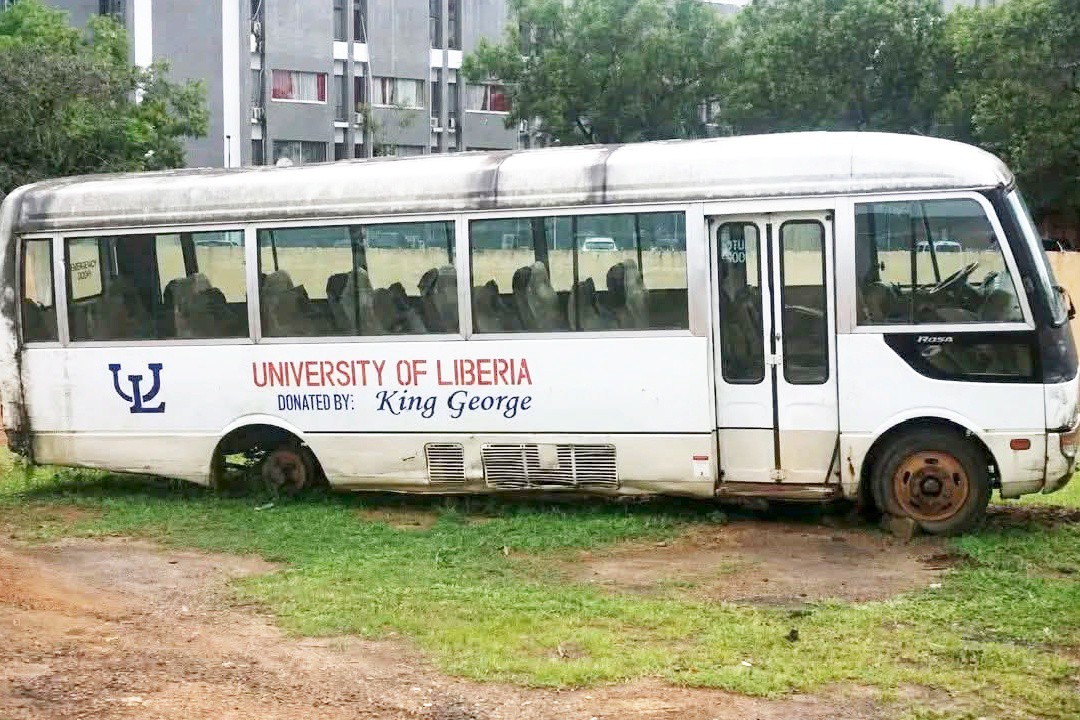
At the center of the latest political exchange is Weah’s repeated claim that, long before entering politics, he used his football earnings to support ordinary Liberians, including donating buses to students and staff of the University of Liberia. A statement once dismissed by critics is now being revived by his supporters as proof that Weah’s contributions to national life began well before he occupied public office.
For Weah’s camp, the message is straightforward: his legacy did not begin at the Executive Mansion. They argue that while others built careers through decades in government, Weah was already investing in people—from education support to scholarships and public assistance—during his years as an international football icon. Supporters point to his humanitarian profile, which has long highlighted scholarship programs, direct support to vulnerable Liberians, and aid to refugees during the civil war years.
That argument has now evolved into a sharper political attack.
Weah is now openly questioning what Joseph Boakai tangibly contributed to ordinary Liberians before rising through the ranks of public service—as Director, Minister, Vice President, and eventually President. The comparison is meant to draw a contrast between a man whose influence began through private generosity and another whose legacy was built almost entirely through state power.
Boakai’s defenders, however, are unlikely to accept that framing without challenge. His allies often point to his long record in public administration, noting his rise from modest beginnings to senior leadership through decades of civil service, including his work in agriculture, state enterprise reform, and national governance. His supporters argue that Boakai’s contribution was not rooted in celebrity philanthropy, but in decades of institutional service and public sector leadership.
The renewed debate reflects more than a clash of personalities—it underscores a familiar divide in Liberian politics: philanthropy versus public administration, symbolism versus bureaucracy, celebrity impact versus institutional experience.
As both camps sharpen their narratives ahead of the next political cycle, the real contest may not simply be about who gave more, but whose record the public believes delivered more lasting value.


