


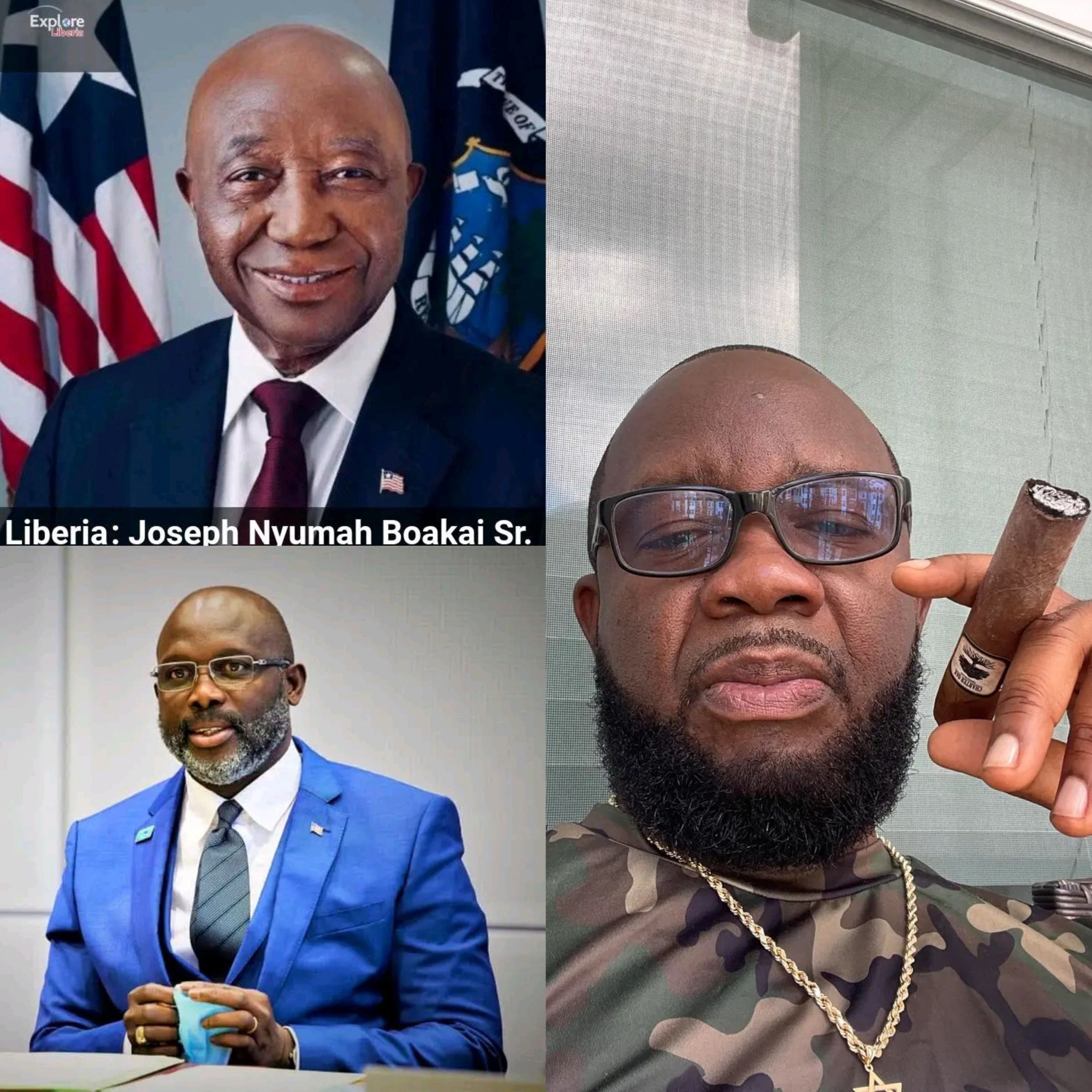
A new political dispute is gaining momentum after Congress for Democratic Change (CDC) executive Keff Hassan publicly challenged members of the Boakai administration to produce evidence backing claims that President Joseph Boakai gifted a vehicle to former President George Weah.
In a sharply worded social media post that quickly drew national attention, Hassan questioned the credibility of the claim and called on government officials to publicly provide proof. His message, direct and confrontational, has since reignited partisan debate and added another layer of tension to Liberia’s already charged political climate.
Rather than treating the issue as routine political banter, Hassan framed the matter as a test of credibility and public honesty. His argument was simple: if such a gesture was made, the government should have no difficulty presenting evidence. If not, he suggested, then the claim amounts to political fiction being pushed into public discourse.
The challenge has resonated across Liberia’s political space, where both ruling party loyalists and CDC supporters have seized on the exchange as another flashpoint in the growing contest for public trust. In a political environment already shaped by suspicion, rivalry, and constant messaging battles, Hassan’s statement has become more than a question about a vehicle—it has become a broader argument about truth, narrative control, and political accountability.
The dispute also highlights the increasingly central role of social media in Liberia’s political communication. What might once have remained a passing accusation has instead become a widely circulated national talking point, fueled by digital engagement and partisan amplification. Platforms like Facebook are no longer just spaces for commentary; they have become frontline arenas where political narratives are tested, challenged, and weaponized in real time.
Supporters of Hassan have praised his remarks as a necessary demand for proof and transparency, arguing that public officials should be held to the same standard of evidence they often demand from others. Critics, however, have pushed back on both the tone and delivery of the challenge, saying political accountability should not come at the expense of civility.
Still, the core issue remains unresolved: whether evidence exists to support the claim. Until that question is answered, the controversy is likely to remain active, feeding further speculation and deepening partisan interpretation on both sides.
At its heart, the episode reflects a larger reality in Liberian politics—where even the smallest claim can quickly evolve into a national political contest, and where public trust is increasingly shaped not just by policy, but by who can prove their version of events first.


