


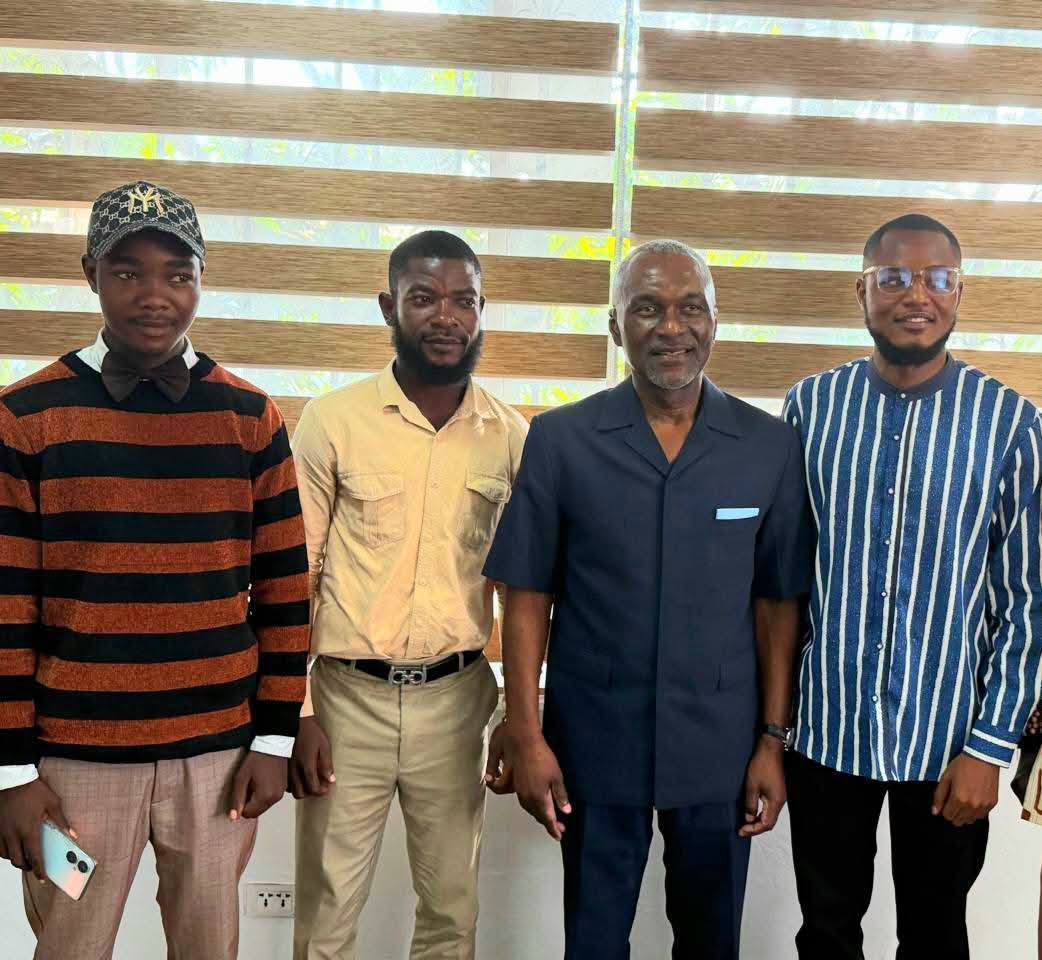
The recent meeting between the leadership of the CDC–Council of Patriots (CDC-COP) and Alexander B. Cummings is less about immediate political outcomes and more about long-term positioning within Liberia’s evolving opposition landscape. At its core, the engagement reflects a growing recognition that fragmented opposition politics has historically benefited incumbency—and that any serious challenge in 2029 will require early coordination, not last-minute coalitions.
Led by its National Chairman Foday N. Massaquoi, the CDC-COP approached the meeting with a dual objective: to initiate dialogue across political lines and to test the viability of a broader opposition convergence. The tone of the discussions—described as reflective and respectful—signals an attempt to move beyond personality-driven politics toward a more structured alliance-building process.
From an analytical standpoint, this meeting represents the early stages of what could become a coalition framework. Liberia’s opposition has often struggled with internal divisions, competing leadership ambitions, and weak coordination mechanisms. By engaging Alternative National Congress leader Cummings, the CDC-COP appears to be probing whether a shared platform—centered on governance reform, accountability, and national development—can override these historical fault lines.
Cummings’ response is equally strategic. By acknowledging the relevance of the CDC-COP’s advocacy and signaling openness to collaboration, he positions himself as both a unifying figure and a pragmatic actor within the opposition space. This approach allows him to maintain political independence while keeping coalition options open—an important balance in a pre-election cycle where alliances remain fluid.
The CDC-COP, for its part, is attempting to redefine its role beyond that of a traditional political movement. By framing itself as a “bridge for unity,” it is effectively seeking to occupy the middle ground between competing opposition actors. This positioning is significant: in fragmented political environments, intermediaries often play a decisive role in shaping coalition outcomes, particularly when trust deficits exist among major players.
Equally notable is the movement’s declaration of 2026 as a year of “patriotic expansion.” This signals a shift toward grassroots consolidation and organizational strengthening—two critical components of electoral competitiveness. In practical terms, this means building local networks, increasing political visibility, and creating a support base that can be leveraged in future alliance negotiations.
However, the path to a unified opposition remains complex. Structural challenges persist, including leadership rivalries, ideological differences, and the absence of a clear coalition framework. Early engagement, while necessary, does not guarantee eventual alignment. The success of such efforts will depend on whether participating actors can move from informal dialogue to formalized agreements with defined roles, shared messaging, and coordinated campaign strategies.
Timing is another critical factor. By initiating talks in 2026, opposition actors are effectively extending the pre-election cycle, allowing more room for negotiation and adjustment. This contrasts with previous election cycles where coalition-building efforts often occurred too late to produce meaningful cohesion.
Ultimately, the significance of this meeting lies not in any immediate agreement, but in what it represents: a shift toward strategic patience and calculated alliance-building within Liberia’s opposition politics. Whether this approach yields a unified front in 2029 will depend on sustained engagement, compromise, and the ability to translate shared intent into operational political machinery.


