


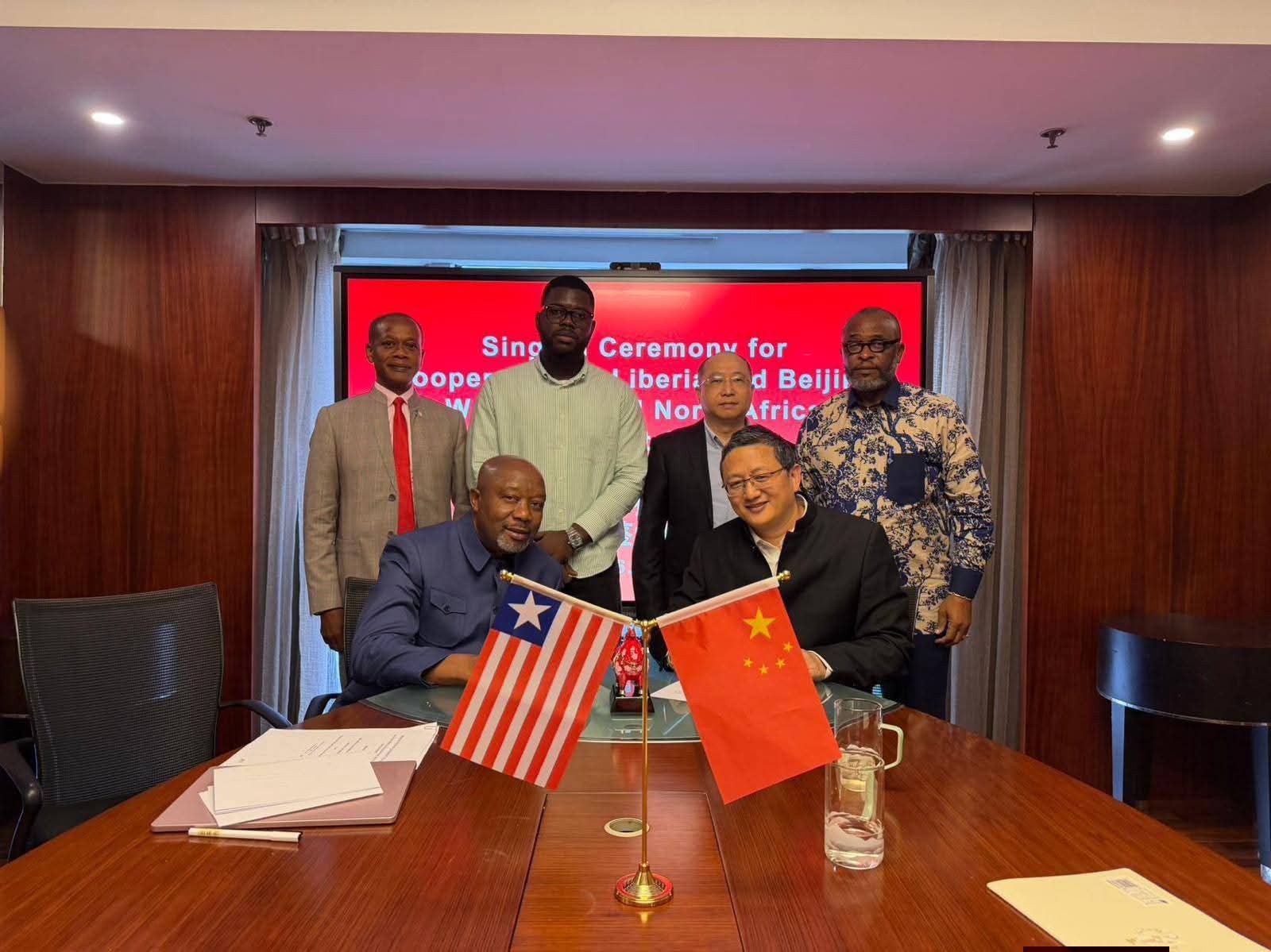
In a move that signals both ambition and caution, Liberia has entered into a high-stakes investment framework with a Chinese firm, potentially reshaping the country’s economic trajectory over the next decade. The agreement, signed in Beijing on May 5, 2026, positions foreign capital as a central driver of Liberia’s development agenda—but also raises important questions about long-term control and sustainability.
At the center of the deal is a Memorandum of Agreement between Liberia’s National Investment Commission (NIC) and Beijing West Asia and North Africa Investment Co., Ltd. (BWANA). The arrangement outlines a proposed investment ranging from $500 million to $3 billion over five years, targeting sectors widely regarded as the backbone of economic transformation.
Rather than a single-project deal, the framework emphasizes multi-sector engagement. Infrastructure development—covering roads, ports, and logistics—appears to be the immediate priority, reflecting Liberia’s ongoing struggle with connectivity and trade efficiency. Energy investment, particularly in renewable sources and distribution systems, suggests an attempt to stabilize one of the country’s most persistent bottlenecks.
Agriculture and natural resources round out the focus areas, with plans for mechanization, processing, and expanded exploration of oil, gas, and minerals. While these sectors offer high growth potential, they also historically expose developing economies to volatility and external dependency if not carefully managed.
A notable feature of the agreement is BWANA’s role in initiating feasibility studies and mobilizing global expertise. This effectively gives the company early influence over which projects move forward. Even more significant is the inclusion of a “right of first refusal,” granting BWANA priority access to projects it helps identify—an element that could streamline investment but may limit competitive bidding.
From a governance perspective, Liberia’s NIC is tasked with coordinating implementation and ensuring regulatory compliance. Both parties have publicly committed to adhering to the legal frameworks of Liberia and China, a reassurance that underscores awareness of past criticisms surrounding opaque international deals.
However, beyond the formal language of cooperation lies a broader strategic question: does this agreement represent a pathway to accelerated development, or a deeper entrenchment of foreign influence in key sectors of Liberia’s economy?
As global competition for resources and influence intensifies, Liberia’s partnership with BWANA reflects a growing trend among developing nations—leveraging large-scale foreign investment to fast-track growth. The real test will be whether this capital translates into inclusive, sustainable development, or reinforces structural dependencies that are harder to unwind over time.


