


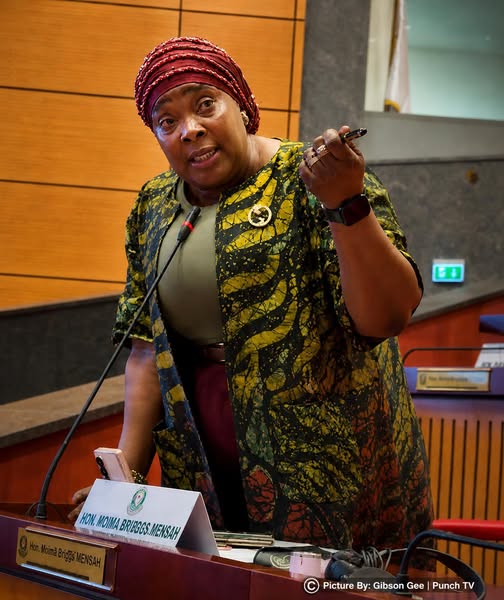
At a session of the ECOWAS Parliament, Liberian Representative Moima Briggs Mensah has raised strong concerns over the treatment of Liberian nationals in Ghana while also warning regional leaders about West Africa’s growing dependence on external energy sources.
Addressing fellow lawmakers, Rep. Mensah said Liberia is now preparing to receive a significant number of citizens who have reportedly expressed interest in returning home from Ghana due to difficult living conditions.
She disclosed that the Liberian Embassy in Accra recently communicated that about 802 family heads have signaled their intention to repatriate, citing what she described as worsening conditions and lack of structured support.
According to her, Liberians in Ghana are no longer living under refugee protection arrangements and have largely been left to manage their own accommodation and survival needs. She noted that many are now requesting assistance to return to Liberia.
The lawmaker traced part of the situation to the closure of the Buduburam refugee settlement in 2024, stating that the shutdown left many Liberians without stable shelter. She said some were temporarily housed in churches and other informal spaces before limited government intervention helped facilitate their return.
Beyond migration issues, Rep. Mensah also used her address to spotlight Liberia’s vulnerability in the energy sector, particularly its reliance on imported electricity from Côte d’Ivoire. She questioned the reliability of the current arrangement and called for clearer assurances on supply stability.
She warned that continued dependence on external energy providers places Liberia and the wider ECOWAS region in a fragile position, urging member states to prioritize investment in domestic energy production.
“If we fail to develop our own resources, we will remain exposed to external pressures,” she cautioned, framing energy independence as a key component of regional stability and economic sovereignty.
Rep. Mensah further called on ECOWAS leaders to take migration and security concerns more seriously, arguing that delayed responses risk escalating into broader socio-economic challenges across the region.
She emphasized that coordinated regional action is needed to address both the movement of displaced populations and the structural weaknesses in West Africa’s energy systems.


