


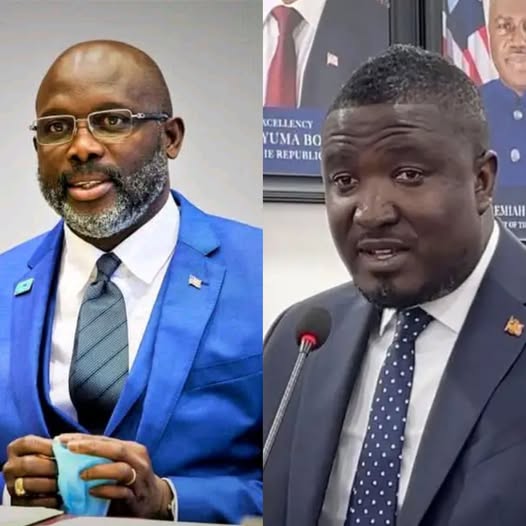
A recent social media post by a senior government official has ignited a broader national discussion in Liberia, not only about political criticism but also about the boundaries of public communication for those in office.
Daniel O. Sando, Deputy Minister at the Ministry of Information, Cultural Affairs and Tourism (MICAT), drew attention after publicly criticizing the conduct of a former national leader in a Facebook post. While the statement itself was brief, its implications have extended beyond the immediate remark, prompting scrutiny of how government officials engage in political discourse in the digital age.
The episode underscores a growing tension between personal expression and institutional responsibility. As a representative of a key government ministry responsible for public communication, Sando’s comments are being interpreted by some as reflective of broader government sentiment, even if expressed on a personal platform.
Analysts note that such instances highlight the evolving role of social media in governance, where the lines between private opinion and official position are often blurred. In this context, public officials face increasing pressure to balance transparency and accountability with the need to maintain decorum and institutional neutrality.
Public reaction has been mixed, illustrating a divided but highly engaged audience. While some citizens view the remarks as a legitimate critique and an example of open expression in a लोकतांत्रिक society, others argue that direct criticism of former leaders by sitting officials risks deepening political polarization and undermining respect for public institutions.
More broadly, the incident reflects a shifting political culture in Liberia, where digital platforms have become central arenas for debate, accountability, and civic participation. It also raises questions about whether clearer guidelines are needed to define the scope of acceptable public commentary by government representatives.
As Liberia’s political landscape continues to evolve, the discussion surrounding this incident points to a deeper issue: how public officials can responsibly navigate communication in an era where every statement has the potential to shape national dialogue.


