


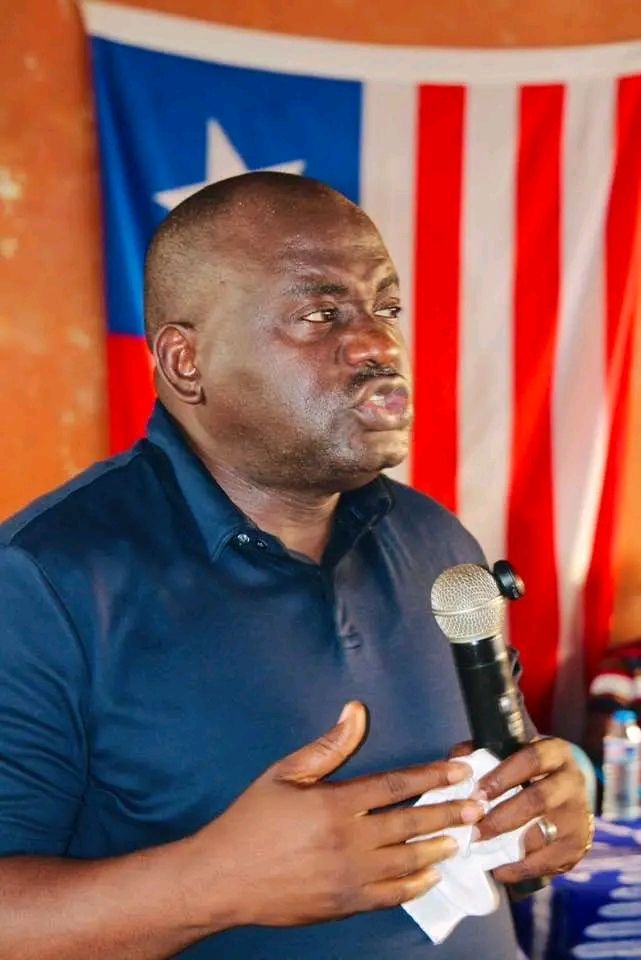
In a sharply reasoned intervention, Musa Hassan Bility reframes Liberia’s ongoing Air Force recruitment debate as a question not of opportunity, but of national judgement. Writing from the United States, he moves beyond surface-level policy discussion to expose what he sees as a deeper structural flaw in how the country approaches military development.
At the core of his argument is a rejection of a widely held assumption—that Liberia lacks capable people to serve. He dismisses this outright, pointing instead to a substantial pool of educated and willing young citizens. Thousands of college graduates and hundreds of thousands of high school completers, he argues, remain underutilised. For Bility, the issue is not supply but system.
“What we are witnessing is not just a policy conversation,” he asserts. “It is a fundamental misunderstanding of what it means to build a military.” This framing sets the tone for an analysis that consistently returns to one central question: what exactly is the state preparing these young recruits to enter?
Bility’s answer is unsettling. He describes a military framework that lacks essential pillars—no fully functional academy to shape officers, insufficient technical institutions to build specialised skills, and inadequate barracks that fail to meet even basic standards of dignity. Under such conditions, he suggests, recruitment becomes less a solution and more an amplifier of existing weaknesses.
“You cannot build an army without first building the institution that sustains it,” he writes, emphasising that personnel expansion without structural readiness risks destabilising the very force it intends to strengthen. In his view, adding numbers to an already strained system is not progress—it is a miscalculation with long-term consequences.
Rather than focusing on new intake, Bility redirects attention to those already serving. He calls for immediate investment in their training, welfare, and professional environment. Improving conditions within the existing force, he argues, is not just a moral obligation but a strategic necessity. Without it, any attempt at expansion lacks credibility and sustainability.
Yet his critique does not stop at internal reform. Bility also challenges Liberia to rethink the broader role of its military in national life. “An army is not only for war. An army is a national asset,” he states, advocating for a model in which the armed forces actively contribute to development. From infrastructure construction to disaster response and agricultural support, he envisions a military that operates as both protector and builder of the nation.
This dual-purpose approach, however, depends entirely on capacity—technical, institutional, and ethical. Without proper training and a clear mandate, such ambitions remain unattainable. Bility warns that failure to define this purpose risks reducing the military to a passive expense rather than an active contributor to national growth.
A particularly urgent dimension of his argument addresses the social composition of potential recruits. Many of those seeking entry into the armed forces, he notes, are young people shaped by frustration, limited opportunity, and systemic neglect. While their energy and desire for purpose are undeniable, he cautions against absorbing them into an unprepared system.
“A professional military cannot be built on desperation,” he writes. “It must be built on discipline, training, and purpose.” Without these elements, recruitment risks transferring societal instability into the institution tasked with safeguarding the nation.
For Bility, the path forward is neither abstract nor optional. It requires deliberate prioritisation—redirecting national resources away from low-impact expenditures and toward building a disciplined, technically competent, and well-supported military structure. Only then, he argues, can recruitment serve as a meaningful tool of national strengthening rather than a symbolic gesture.
His conclusion is as direct as it is consequential: “We must build the institution first. Then we build the army.” In that sequence lies not just a policy recommendation but a blueprint for stability. To reverse it, he warns, is to gamble with the effectiveness of the military and, by extension, the future of the nation itself.


