


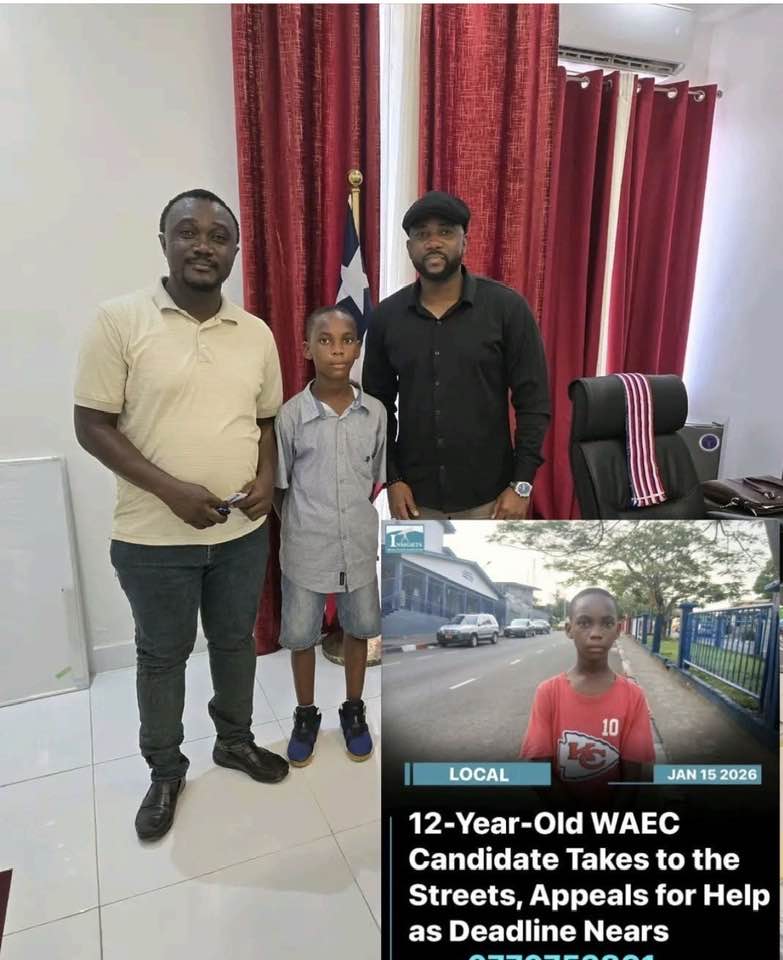
This is not a story that should inspire celebration. Rather, it should provoke deep national concern. A country in which a 12-year-old child must move from radio station to newspaper office pleading for assistance to pay WAEC fees is not demonstrating compassion—it is revealing the depth of its institutional breakdown. This moment is not a feel-good narrative; it is a stark indictment of a system that has failed to protect its most vulnerable citizens.
More troubling is how quickly such situations are reframed as acts of individual heroism, particularly when public officials step in to address problems that functional institutions should already have resolved. When a lawmaker’s intervention becomes the focus of praise, the real issue—the failure of the education and social protection systems—is pushed into the background.
Education should never be contingent on whether a child captures the attention of a politically connected individual. Yet this has become a recurring pattern in Liberian public life. Instead of building and strengthening systems that work for everyone, some leaders wait for crises to erupt, then emerge as saviors. The public applauds the gesture, while the structural failure that created the crisis remains unaddressed. One child is rescued; thousands more remain invisible, and the system continues to falter.
WAEC fees are not a personal favor to be dispensed at will. They are part of a national education framework that lawmakers themselves approve budgets for, oversee, and are mandated to improve. In a properly functioning system, no child would need to beg publicly to sit a national examination. Institutional support mechanisms would already exist to assist students from low-income and struggling families.
Charity, however well-intentioned, is not governance. Paying the fees of a single student does not resolve the chronic underfunding of schools, the weaknesses in education policy, or the absence of effective social safety nets for poor households. Instead, it reinforces a dangerous notion—that access to basic rights and opportunities depends on proximity to power, rather than on reliable public institutions.
The true tragedy in this situation is not that an individual stepped in to help. The tragedy is that the system failed first, and that failure was concealed beneath public applause. Liberians should move beyond asking who intervened and begin demanding answers to a more fundamental question: why was intervention necessary at all?
Until national leaders shift their focus from collecting praise to building strong, responsive institutions, such stories will continue to repeat themselves—children in distress, politicians celebrated, and a broken system left unchanged.


