


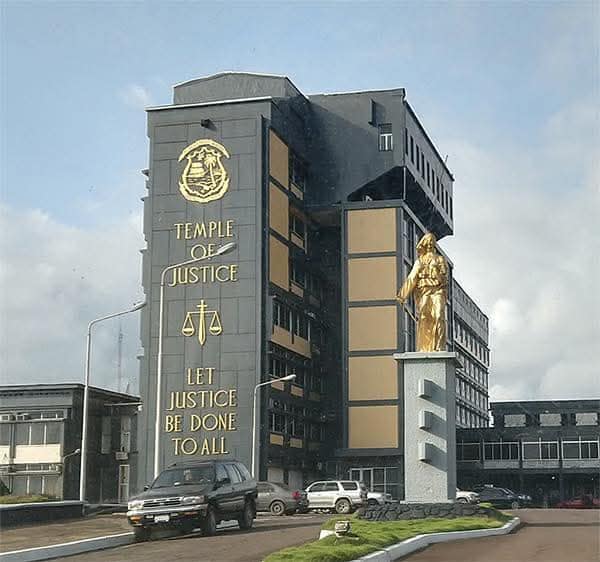
A major constitutional debate is unfolding in Liberia following the recent acquittal of several defendants in a high-profile corruption and economic sabotage trial, with legal scholars now questioning whether the government may still have the power to challenge criminal verdicts on appeal.
While public attention has largely focused on the jury’s not-guilty verdict for two of the accused — including a former Finance and Development Planning Minister — some constitutional experts argue that the case may not be legally concluded.
At the center of the debate is a long-standing provision within Liberia’s Criminal Procedure Law, which has traditionally been interpreted as granting only criminal defendants the right to appeal. For decades, that interpretation has shaped criminal litigation across the country. However, legal analysts are now revisiting whether that statutory limitation can withstand constitutional scrutiny under Liberia’s 1986 Constitution.
According to constitutional scholars, Article 20(b) of the Constitution broadly guarantees the right to appeal without explicitly limiting that right to defendants alone. This has sparked growing discussion over whether the State itself could invoke the same constitutional protection in criminal proceedings.
The issue carries deeper constitutional significance because the Criminal Procedure Law in question predates the current Constitution by more than a decade. Liberia’s present constitutional framework, adopted in 1986, establishes constitutional supremacy over all inconsistent laws. Legal observers argue that any statute conflicting with constitutional guarantees may be declared invalid by the Supreme Court.
As a result, some lawyers believe the current case could evolve into a landmark constitutional challenge capable of reshaping Liberia’s criminal justice system for generations.
The debate gained further momentum after a recent criminal matter reportedly allowed the government to pursue an appeal before the Supreme Court under similar circumstances. That pending case has fueled arguments that prosecutorial appeal rights in Liberia remain unsettled rather than conclusively barred.
Legal experts say the broader implications extend far beyond a single corruption trial. If the Supreme Court ultimately rules that the State possesses constitutional authority to appeal criminal judgments, the decision could significantly expand prosecutorial powers and redefine appellate practice in Liberia.
Others caution that the discussion is not about overturning jury verdicts through political pressure or public opinion, but rather about clarifying whether legislative restrictions can limit rights broadly protected under the Constitution.
The unfolding legal controversy is now drawing attention from lawmakers, attorneys, academics, and civil society groups, many of whom see the matter as a defining constitutional test for Liberia’s judiciary.
As the country awaits potential action from prosecutors and possible review by the Supreme Court, one question continues to dominate legal circles: Does Liberia’s Constitution give the State the same right to appeal that defendants have long enjoyed?
The answer could set a historic precedent for the nation’s criminal jurisprudence.


