


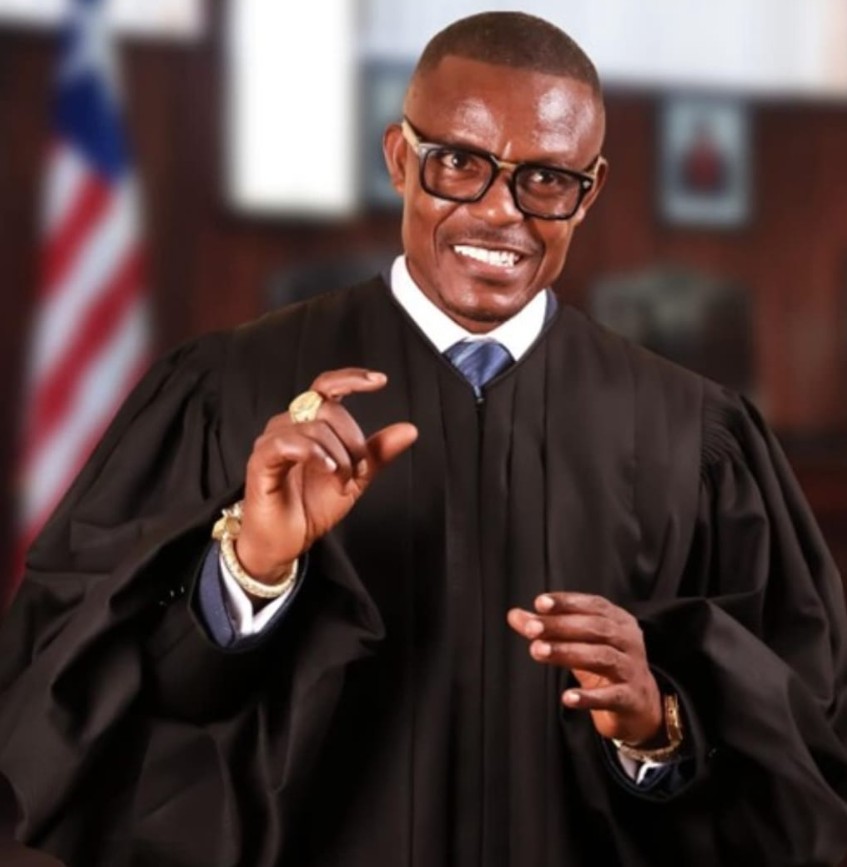
Monrovia, Liberia — Liberia’s high-profile US$6.2 million economic sabotage case has entered another dramatic legal phase as defense lawyers representing former Acting Justice Minister Nyenati Tuan and former National Security Advisor Jefferson S. Karmoh formally seek a new trial following what they describe as a legally inconsistent and contradictory jury verdict.
The motion, now before Criminal Court “C” Judge Ousman F. Feika, comes only days after a divided jury delivered one of the most controversial rulings in recent Liberian judicial history. The jury acquitted former Finance Minister Samuel D. Tweah Jr. and former Financial Intelligence Agency Comptroller D. Moses P. Cooper on all charges, while convicting or returning hung verdicts against several co-defendants.
The case, prosecuted by the Liberia Anti-Corruption Commission (LACC), centered on allegations involving the transfer and alleged misuse of more than US$6.2 million and L$1 billion reportedly allocated for national security operations during the final months of former President George Weah’s administration.
Prosecutors charged the defendants with economic sabotage, theft of property, money laundering, criminal facilitation, conspiracy, fraud on the internal revenue of Liberia, and misuse of public money.
However, in a strongly worded post-verdict motion, defense attorneys argued that the convictions against Tuan and Karmoh cannot legally stand because prosecutors allegedly failed to produce direct evidence linking either man to theft, concealment, unlawful conversion, or personal benefit from government funds.
According to the defense, the prosecution’s case relied heavily on assumptions, interpretations of official communications, and circumstantial inferences rather than concrete evidence establishing criminal intent or unlawful conduct.
“At the center of the motion is the argument that prosecutors failed to present direct evidence proving that either Nyenati Tuan or Jefferson Karmoh personally stole, received, concealed, converted, or benefited from government funds,” the filing reportedly stated.
One of the major issues raised by the defense concerns a September 5, 2023 communication authored by Tuan during his tenure as Acting Justice Minister and head of the Joint Security apparatus. Prosecutors allegedly relied on the communication as evidence of conspiracy and criminal facilitation.
But defense lawyers insist the letter merely informed the Financial Intelligence Agency that funding for Joint Security operations had been secured and that the FIA had been selected as the authorized financial channel for disbursement.
Legal observers say the motion reflects a broader constitutional and evidentiary debate emerging from the case — specifically whether administrative involvement in national security operations can legally amount to criminal conduct without direct proof of unlawful intent or personal enrichment.
Perhaps the most politically explosive aspect of the defense motion is its claim that the acquittals of Tweah and Cooper effectively destroyed the prosecution’s central conspiracy theory.
Defense attorneys argued that prosecutors consistently portrayed Tweah as the principal architect behind the disputed transfers, while Cooper was accused of physically withdrawing the funds through FIA-related transactions. According to the motion, acquitting both men while convicting Tuan and Karmoh creates what the defense describes as an irrational and legally contradictory outcome.
“If the jury acquitted Cooper — the alleged payee and physical withdrawer of the funds — the same jury could not rationally convict Tuan of theft absent separate evidence,” the filing argued.
The defense further maintained that conspiracy charges become legally difficult to sustain once jurors rejected the alleged underlying criminal scheme involving the prosecution’s purported principal actors.
The latest motion has intensified national debate surrounding the credibility and direction of Liberia’s anti-corruption campaign under President Joseph Boakai’s administration. Political analysts say the case has evolved beyond a simple criminal prosecution and now represents a major test of prosecutorial competence, judicial consistency, and the legal boundaries of national security spending.
Some legal experts argue that the divided verdict demonstrates the complexity of prosecuting financial crimes tied to classified or unconventional government security operations, where documentation may be incomplete or shielded from public scrutiny.
Others, however, warn that inconsistent verdicts in politically sensitive corruption cases risk weakening public confidence in Liberia’s justice system and fueling accusations of politically motivated prosecutions.
The court is now expected to determine whether the defense’s arguments warrant a new trial or whether the original verdicts will stand. Regardless of the outcome, the US$6.2 million economic sabotage case continues to reshape national conversations around accountability, due process, and constitutional protections within Liberia’s evolving democratic system.


