


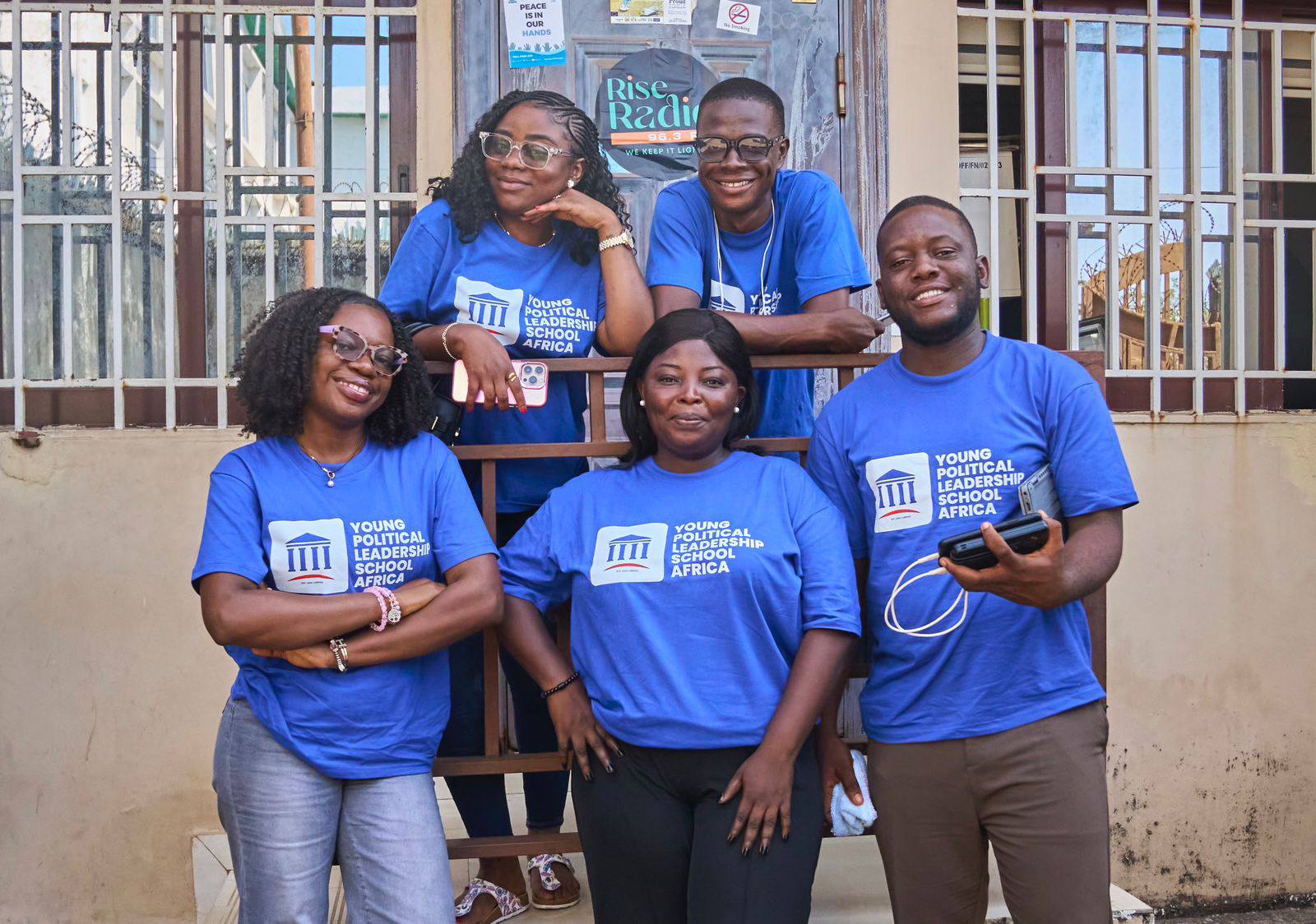
Freetown, Sierra Leone / Monrovia, Liberia — The Young Political Leadership School Africa (YPLS Africa), a flagship initiative of Naymote Partners for Democratic Development, has concluded a weeklong Alumni Peer Reflection and Learning Exchange Mission in Freetown aimed at strengthening youth leadership, democratic governance, and regional cooperation across West Africa.
Held from May 4–8, 2026, the mission brought together YPLS Africa alumni from Liberia and Sierra Leone for a series of institutional engagements, peer-learning sessions, and policy discussions focused on peacebuilding, electoral integrity, civic education, women’s political participation, and youth inclusion in governance.
The initiative reflects growing regional efforts to empower young Africans to move beyond political activism into practical leadership and policymaking roles. Analysts say such exchanges are increasingly important as many African democracies continue to face challenges related to political instability, youth unemployment, weak institutions, and declining public trust in governance systems.
Throughout the mission, participants engaged with major Sierra Leonean institutions, including the Parliament of Sierra Leone, the Electoral Commission for Sierra Leone, the National Youth Commission, and the Ministry of Youth Affairs.
At the Parliament of Sierra Leone, alumni examined the country’s landmark Gender Equality and Women’s Empowerment Act of 2022, signed into law by President Julius Maada Bio on December 23, 2022. The legislation guarantees at least 30 percent women’s representation in public decision-making positions while promoting equal pay, training opportunities, and improved financial access for women.
Participants noted that Sierra Leone’s progress on gender inclusion demonstrates how sustained advocacy and institutional reforms can produce measurable political change. Observers say the law has positioned Sierra Leone as one of the countries making significant efforts toward increasing women’s participation in governance within the region.
At the Electoral Commission for Sierra Leone, alumni explored how technology is being used to strengthen electoral integrity and accountability. Officials showcased digital candidate registration systems designed to enforce gender inclusion by preventing political parties from completing candidate submissions unless at least one out of every three candidates is a woman.
The Commission also highlighted the importance of combining digital civic education campaigns with grassroots outreach in schools, markets, and rural communities. Participants concluded that credible elections depend not only on voting-day procedures but also on strong institutions, informed citizens, and sustained public engagement long before elections occur.
Meanwhile, discussions at the National Youth Commission focused on transitioning young people from advocacy into active decision-making roles. Commissioner Joseph Maada Lahai emphasized the importance of youth participation in policymaking processes.
“Policies change actions, and only politicians approve policies,” Lahai stated. “If you want to change the actions of people, you must be part of the group of people who craft and approve policies.”
Analysts say such messaging reflects a growing shift across Africa, where youth leadership programs increasingly encourage political participation and governance involvement rather than limiting young people to civic activism alone.
The mission also featured a high-level engagement with Sierra Leone’s Minister of Youth Affairs, Ibrahim Sannoh, who praised the impact of YPLS Africa and reaffirmed his commitment to attend the program’s 13th Cohort and 10th Anniversary celebration scheduled to take place in Liberia.
“The generation before us faced societal challenges. Today, we come forward with greater passion and broader experience,” Minister Sannoh said. “We are the ones we have been waiting for. We represent hope for young people to lean on.”
Reflecting on the exchange mission, YPLS Africa Program Manager Alphia Faith Kemokai described the initiative as part of a broader effort to build continental solidarity among emerging African leaders.
“When young people from different countries sit, reflect, and learn together, we are not just exchanging ideas — we are building a shared future for Africa,” she stated.
Similarly, Sierra Leone Chapter Lead Mohamed Harass Barrie stressed that meaningful transformation requires youth-driven institutional engagement rather than symbolic conversations.
“Real change happens when youth move beyond conversation into collective action that influences institutions and transforms societies,” Barrie noted.
Political observers say the exchange mission highlights the increasing role regional youth leadership initiatives are playing in shaping democratic participation and governance reforms across West Africa. However, experts caution that long-term impact will depend on whether governments create meaningful opportunities for young leaders to influence policy and decision-making beyond training programs and conferences.


