


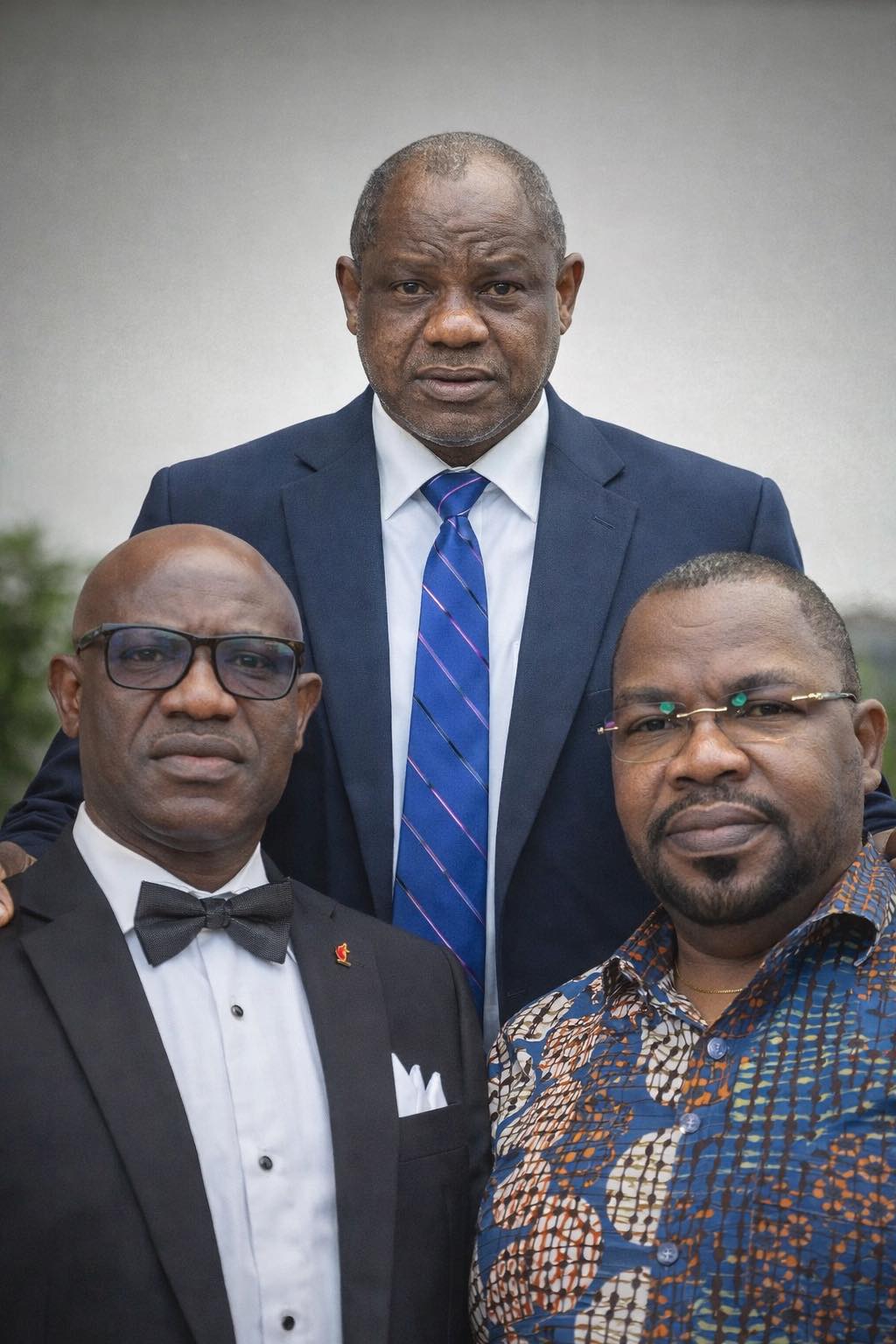
The conclusion of Liberia’s highly publicized US$6.2 million corruption trial involving former officials of the administration of George Weah has triggered celebrations, outrage, political spin, and competing interpretations across the country. Yet beyond the emotional reactions and partisan narratives lies a more important national question: what does this split verdict truly say about Liberia’s justice system, anti-corruption fight, and democratic maturity?
For the D-Kanty News Network (DKNN), the answer is both uncomfortable and encouraging.
The verdict was not a total victory for the prosecution, nor was it a total defeat. It was not a complete vindication for the accused, nor was it proof of a politically coordinated witch-hunt. Instead, the outcome exposed the complicated reality of pursuing accountability in a fragile democracy where politics, public perception, and the justice system frequently collide.
Three former officials were convicted. Two were acquitted. That alone should force Liberians to move beyond simplistic political slogans and examine the legal substance of what occurred inside the courtroom.
The State alleged that millions of dollars belonging to the Liberian people were mismanaged or stolen. The court proceedings ultimately produced convictions against some defendants on charges including theft of public funds, criminal facilitation, conspiracy, and theft of property. From a legal standpoint, this means the prosecution successfully proved parts of its case beyond a reasonable doubt. In any functioning democracy, that constitutes a significant legal victory for the State.
However, the acquittals of former Finance Minister Samuel D. Tweah and former FIA Comptroller General D. Moses P. Cooper also carry equal constitutional importance. Their acquittals demonstrate that Liberia’s judiciary, despite its imperfections, still recognizes a fundamental legal principle: accusation alone is not proof of guilt.
This distinction matters deeply.
In politically charged corruption trials across Africa, there is often public pressure to treat every indictment as automatic evidence of criminality. Yet the jury’s split verdict suggests that Liberia’s legal system—at least in this case—attempted to separate political sentiment from evidentiary standards. The court did not convict all defendants merely because public anger demanded it. Nor did it acquit everyone to protect political elites. Instead, jurors appear to have weighed the evidence individually against each defendant.
That is How Justice Systems are Supposed to Function.
Unfortunately, much of the public discourse following the verdict has reflected Liberia’s persistent political polarization rather than serious legal understanding. Supporters of Tweah celebrated the acquittal as proof that the entire case was fabricated. On the other side, some government supporters framed the convictions as evidence that the entire former CDC administration was criminally corrupt.
Both Interpretations Oversimplify the Reality.
The acquittal of one high-profile defendant does not erase the convictions of others. At the same time, convictions against certain officials do not automatically establish collective criminality across an entire government. Democracies governed by the rule of law must resist the temptation to replace legal nuance with political propaganda.
Equally important is the dangerous and increasingly common use of the phrase “witch-hunt” whenever public officials face prosecution. This rhetoric may energize political supporters, but it weakens public confidence in accountability institutions. If every investigation involving opposition figures is automatically dismissed as political persecution, then no anti-corruption effort will ever be viewed as legitimate.
At the same time, governments must also understand that anti-corruption campaigns lose credibility when prosecutions appear selective, inconsistent, or politically timed. The burden therefore falls heavily on the current administration of Joseph Nyuma Boakai Sr. to ensure that future investigations are driven by evidence, transparency, and due process—not political revenge.
This trial also exposed a broader institutional challenge: Liberia still struggles with weak financial oversight systems, inconsistent accountability mechanisms, and limited prosecutorial capacity in handling complex economic crimes. The mixed verdict indicates that while prosecutors secured important convictions, they may have lacked sufficient evidence to sustain the most serious charges against some defendants.
That should concern both government officials and anti-corruption advocates.
Fighting corruption requires more than arrests, press conferences, or political speeches. It requires forensic investigations, institutional independence, witness protection, financial transparency systems, and competent prosecution strategies capable of surviving rigorous judicial scrutiny. Otherwise, high-profile corruption cases risk becoming political theater rather than meaningful accountability.
Yet despite its imperfections, this trial may still represent progress for Liberia.
For decades, many Liberians complained that powerful public officials operated above the law. This case challenged that perception by bringing senior former officials before a jury and subjecting them to public legal scrutiny. Regardless of political affiliation, that development alone sends an important message: no democracy can mature if public office becomes a shield against accountability.
The reactions from the public also reveal another truth Liberia must confront—the country urgently needs greater civic and legal education. Too many citizens continue to interpret court outcomes solely through partisan lenses rather than constitutional principles. In a democracy, acquittals are not failures of justice when evidence is insufficient, just as convictions are not proof that every accused person is guilty.
Justice is not measured by political satisfaction. It is measured by whether due process is respected.
Ultimately, Liberia’s victory should not be defined by whether one political figure was acquitted or another was convicted. The true test is whether the judiciary remained independent, whether the legal process was respected, and whether the country continues building institutions capable of investigating corruption fairly and professionally.
Liberia now stands at a critical crossroads. The nation can either continue reducing legal accountability to political warfare, or it can strengthen the rule of law as the foundation for democratic stability and national development.
For DKNN, the lesson is clear: Liberia does not win when politicians celebrate or supporters insult each other online. Liberia wins when courts are trusted, evidence matters, corruption is investigated professionally, and justice is allowed to function without fear or political manipulation.
That is the democracy Liberians must fight to protect.


