


Liberia’s labour landscape is undergoing a quiet but meaningful recalibration, and the latest May Day reflections from the state point to a shift in how industrial relations are being governed—less through confrontation, and increasingly through structured dialogue.
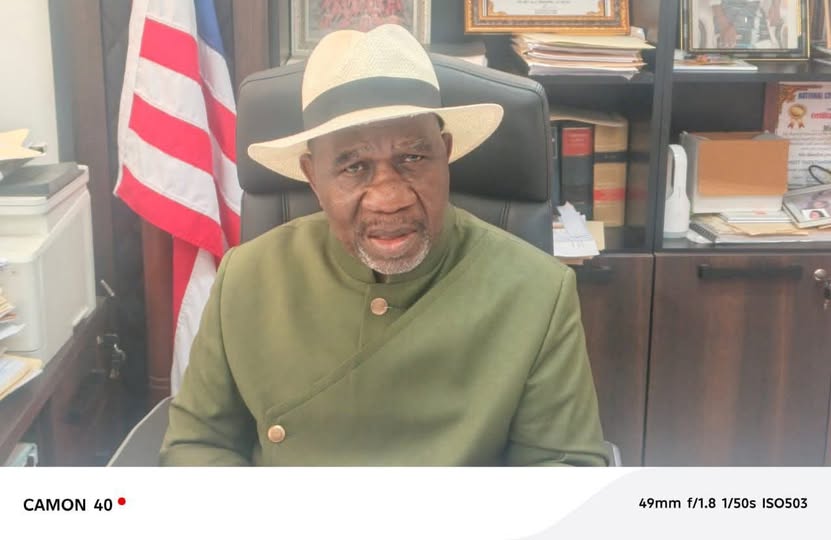
At the center of this evolving dynamic is the Cooper W. Kruah, who used the 2026 International Labour Day commemoration to present a broader assessment of the country’s labour stability trajectory. His remarks, delivered at the J.B. McGill Labour Center in Monrovia, framed recent developments not as isolated achievements, but as indicators of a systemic shift toward negotiated industrial order.
The analytical signal in his statement is clear: Liberia is experiencing a measurable decline in overt labour unrest, including strikes, protests, and workplace disruptions that previously characterized segments of the economy. While he acknowledged that such tensions were once more frequent, he emphasized that strengthened engagement with the Liberia Labour Congress has played a central role in reducing friction between workers and employers.
From a governance perspective, this reflects a transition from reactive labour management to a more institutionalized model of dispute prevention. Instead of responding to crises as they emerge, the Ministry of Labour is increasingly relying on structured social dialogue mechanisms to preempt escalation.
A key analytical development in this process is the consolidation of union representation. The Ministry’s push for all labour unions to align under a unified framework through the LLC suggests an effort to streamline negotiation channels. While this could improve efficiency in dialogue and policy implementation, it also raises structural questions about representation diversity and internal union autonomy.
Kruah’s commitment to compile a national registry of active unions further reinforces this centralization trend. In policy terms, such a registry could improve regulatory oversight, reduce fragmentation, and enhance data-driven labour planning. However, it also signals a stronger state role in organizing labour participation architecture.
Another important dimension of his address is the shift toward institutional inclusion of labour voices in governance structures. The proposal to integrate worker representation into boards of major public institutions such as the Forestry Development Authority, Liberia Electricity Corporation, and National Social Security and Welfare Corporation reflects a broader attempt to embed labour considerations directly into economic decision-making frameworks. This represents a move from consultative engagement to participatory governance.
The Minister also signaled support for key proposals from the labour movement, including budgetary allocations for union operations and debates around the classification of International Labour Day as a working holiday. These discussions, while symbolic on the surface, point to deeper negotiations over labour visibility within the national policy agenda.
From the perspective of institutional dynamics, the remarks by Marcus Blamah, Secretary-General of the LLC, reinforce the narrative of improved internal cohesion within the labour movement itself. His acknowledgment of government engagement in resolving internal divisions within the Congress suggests that labour stability is being pursued not only between state and workers, but also within union structures.
Adding an external validation layer, the International Labour Organization Country Director Salif Haji Massaley’s endorsement of ongoing reforms situates Liberia’s labour trajectory within global standards, particularly the Decent Work framework. This alignment is significant because it positions Liberia’s reforms within internationally recognized benchmarks for labour governance.
The overarching theme of this year’s observance—“Advancing the Transformative Agenda for Gender Equity at Work and Navigating Change Through Inclusive Social Dialogue”—further reflects the policy direction toward inclusivity and institutional modernization. It suggests that labour reform is no longer being framed solely around wages and disputes, but also around structural equity and governance participation.
In analytical terms, Liberia’s labour sector is entering a phase of institutional stabilization. The emphasis is shifting away from episodic industrial conflict toward continuous negotiation, centralized representation, and expanded stakeholder inclusion in economic governance.
However, this model also introduces new dependencies: its sustainability will depend on the durability of social dialogue mechanisms, the balance between centralization and representation, and the state’s ability to maintain trust across increasingly formalized negotiation structures.
What is emerging, therefore, is not simply industrial peace—but a redefinition of how labour power is organized, mediated, and integrated into national development strategy.


