


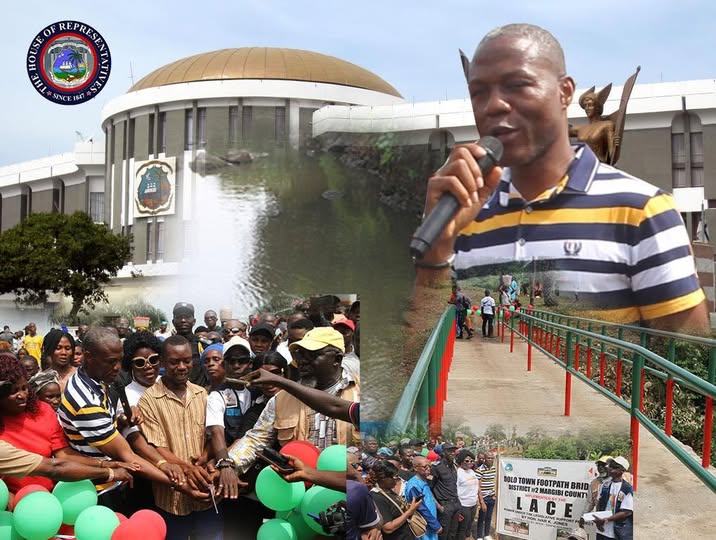
DOLO TOWN, Margibi County — The official dedication of the MBI–Dolo Town Bridge has drawn praise from residents of Lower Margibi, but it has also reopened a broader national conversation about constituency development, legislative priorities, and how infrastructure projects are executed and communicated in Liberia.
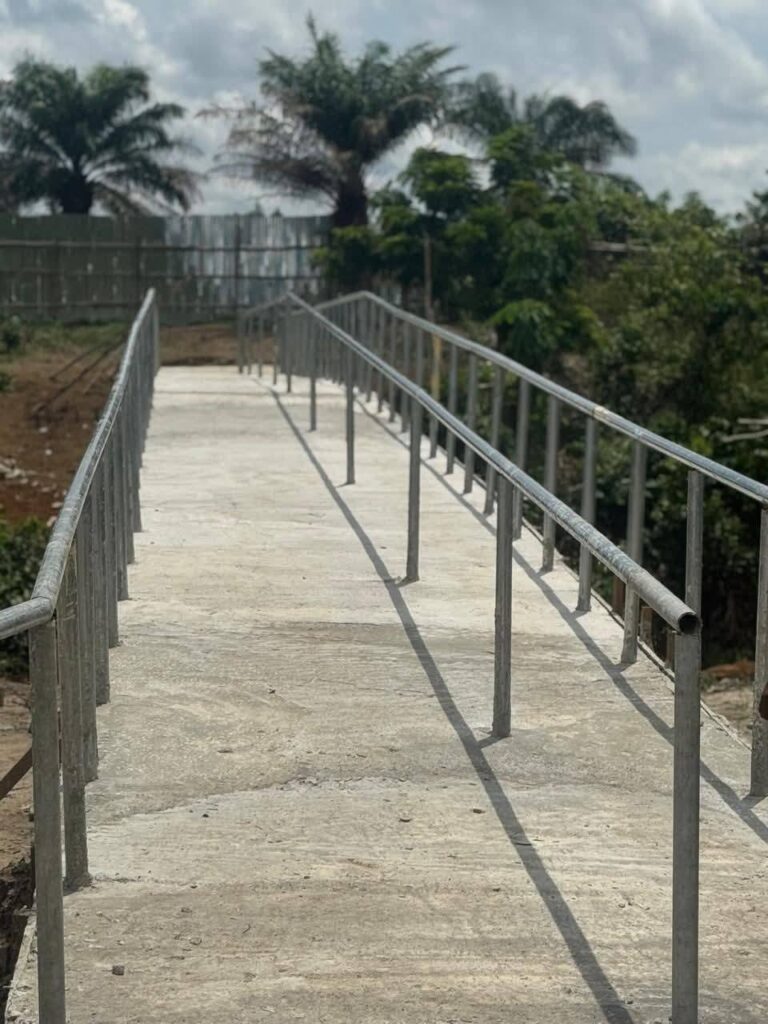
The bridge, commissioned and dedicated under the leadership of Margibi County Electoral District No. 2 Representative Ivar K. Jones, was constructed through the Liberia Agency for Community Empowerment (LACE) as part of the lawmaker’s legislative development initiative. It connects the MBI Community to Dolo Town and neighboring settlements, addressing a long-standing transportation and safety challenge that had claimed lives over the years.
For residents, the structure represents relief. For analysts, however, it offers an opportunity to examine how development projects intersect with politics, accountability, and governance at the local level.
A Project Rooted in Public Safety
For decades, residents of Dolo Town, Sam Town, and nearby communities were forced to cross a river without a permanent structure, particularly during the rainy season when flooding made passage dangerous. Community members recount incidents of injuries and deaths, including those involving schoolchildren attempting to reach classes.
The newly constructed bridge now accommodates pedestrians, motorcycles, and keh-kehs, significantly improving mobility and reducing risk. Many residents describe it as a “lifeline” that restores dignity and safety to daily life.
Yet, beyond its immediate utility, the project has attracted public attention because of how it was financed, implemented, and presented.
Cost, Funding, and Transparency
According to official disclosures, the bridge was constructed at a total cost of US$53,602.44. Of that amount, the Government of Liberia, through LACE, contributed US$37,000, while Representative Jones’ office provided US$16,602.44 as counterpart funding.
During the dedication ceremony held on January 17, 2026, Rep. Jones directly addressed misinformation circulating on social media regarding the project’s cost and scope. He emphasized that the bridge was executed strictly in line with the approved design, budget, and contractual specifications.
“This bridge belongs to the people,” Jones stated as he formally turned the structure over to the community, urging residents to safeguard and maintain it.
His remarks highlight a growing challenge facing public officials: balancing visible development delivery with public skepticism fueled by misinformation, political rivalry, and weak trust in institutions.
Infrastructure and Legislative Politics
The MBI–Dolo Town Bridge also raises wider governance questions about the role of lawmakers in infrastructure development. While constituency projects have become an established feature of Liberia’s political landscape, critics argue that such initiatives sometimes blur the line between legislative oversight and executive implementation.
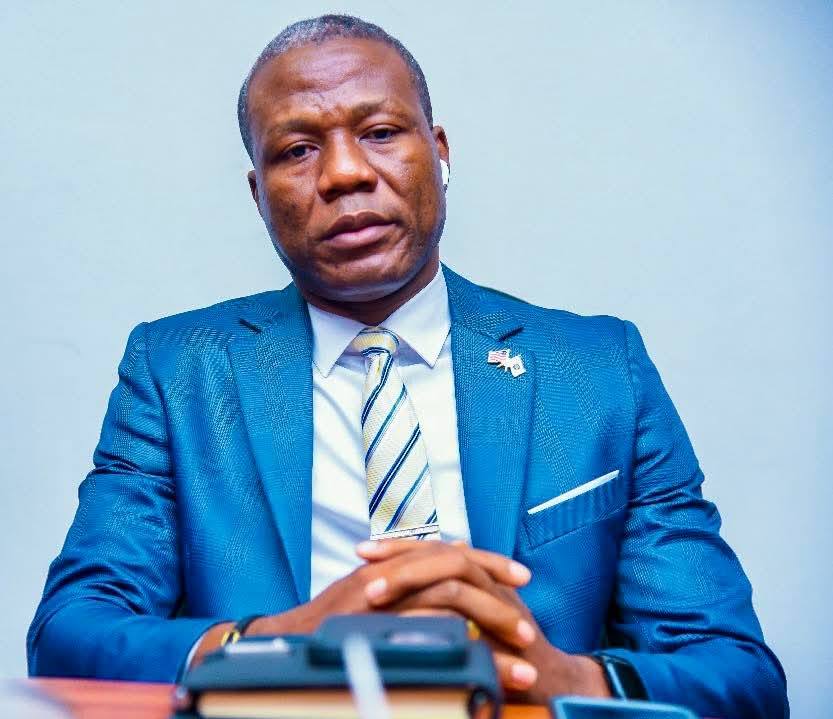
Supporters of Rep. Jones contend that the bridge demonstrates how lawmakers can respond directly to urgent community needs when national infrastructure systems move slowly. They argue that the collaboration with LACE reflects a legitimate and transparent model for grassroots development.
Others caution, however, that without stronger institutional coordination and long-term maintenance frameworks, such projects risk becoming isolated successes rather than components of a sustainable national infrastructure strategy.
Community Impact Beyond Politics
Despite the political and governance debates, community reaction to the bridge has been overwhelmingly positive. Parents, traders, students, and motorcyclists interviewed during the dedication described immediate improvements in movement, trade, and access to essential services.
Residents expect the bridge to boost local economic activity, make it easier for children to reach schools safely, improve access to health facilities, and strengthen social ties between the MBI Community and Dolo Town.

Traditional leaders and local officials attending the ceremony—including LACE Director Julius K. Sele, the mayor of Unification Town, and community elders—framed the project as a shared achievement rather than a partisan one.
A Symbol and a Test Case
Analytically, the MBI–Dolo Town Bridge stands as both a symbol of progress and a test case. It reflects what targeted, community-focused investment can achieve, while also underscoring the need for transparency, public communication, and institutional accountability in development delivery.
As Margibi County and Liberia at large continue to grapple with infrastructure deficits, the bridge serves as a reminder that development is not only about construction, but also about governance choices, political responsibility, and long-term impact.
For the people of Dolo Town and the MBI Community, the bridge already fulfills its promise. For policymakers and political observers, it poses a larger question: how can such successes be replicated sustainably, equitably, and beyond election cycles?


