


— As he lights Up Zwedru City Grand Gedeh
One year after his election to the House of Representatives, Jeremiah Garwo Sokan Sr. is proving to be a rising force in Liberia’s political landscape—demanding government transparency on stalled mining concessions and spearheading a string of development projects in Grand Gedeh District #1.
Sokan was elected in April 2024 through a by-election triggered by the death of former Representative Erol Madison Gwion. Since then, he has brought a mix of legislative oversight and visible grassroots action to a district long plagued by poor infrastructure, unreliable electricity, and limited public services.
Soon after taking office, Sokan was appointed Chairman of the House Committee on Lands, Mines, Energy, and Environment—placing him at the center of Liberia’s natural resource policy.
At the heart of his oversight efforts is the Putu Iron Ore Mining Concession, a project with massive potential for job creation and local development but which has remained dormant for years.
Sokan has used his platform to press the Liberian government for clarity on the concession’s future and insist on benefits for local communities.
“Our community deserves to see benefits from its resources,” Sokan said during a committee hearing at the Capitol. “Ensuring transparency and action on the Putu concession is a priority.”
He has vowed to continue engaging the Ministries of Mines and Energy, Finance, and Justice to ensure that the people of Grand Gedeh are not left out of decisions that impact their land and livelihood.
His committee is also overseeing key areas such as land governance, energy access, and environmental policy, placing him at the heart of sustainable development debates in the country.
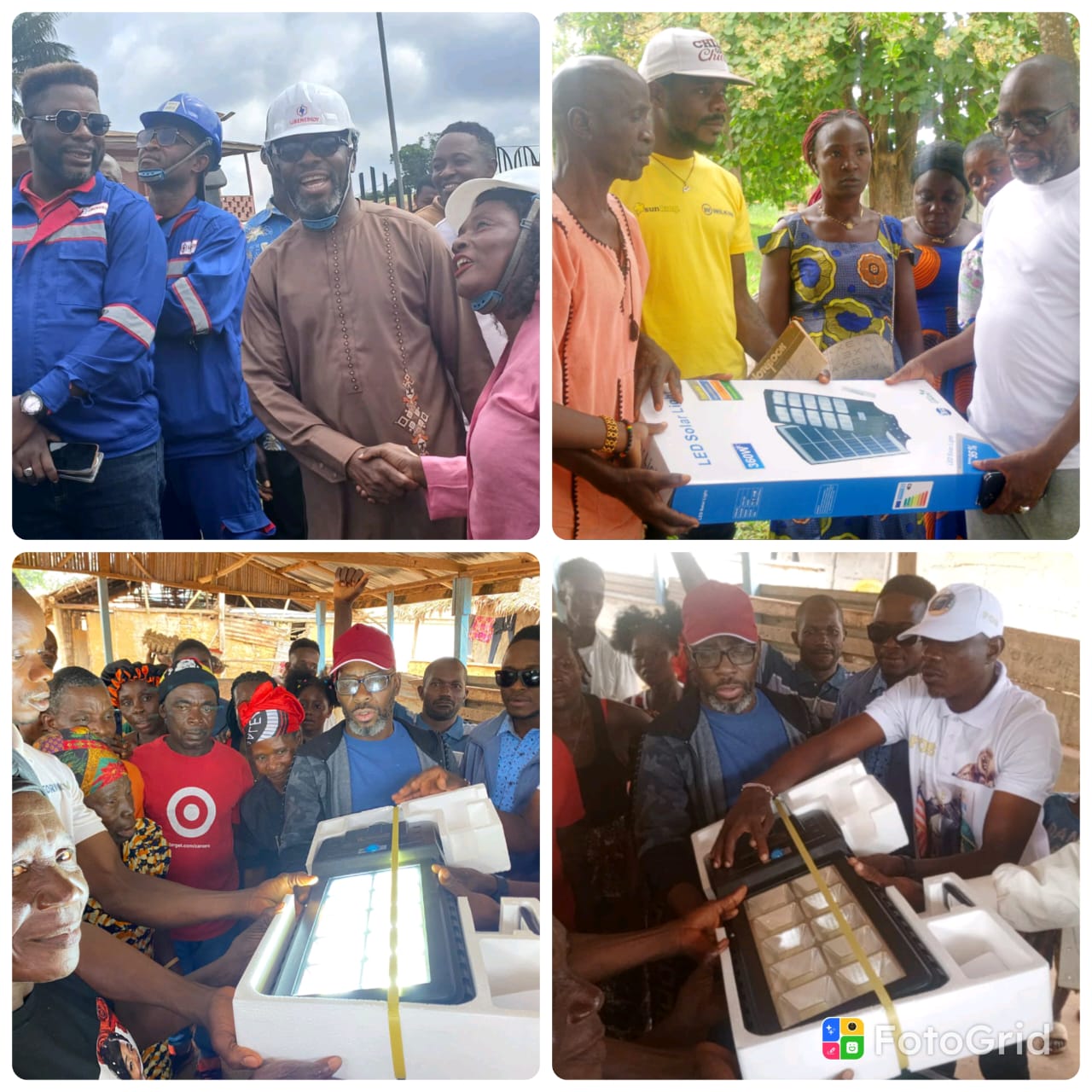
While fighting for national accountability, Sokan is also making a tangible impact at home. In July 2025, he launched an ambitious solar streetlight project in Zwedru and surrounding areas, installing more than 600 solar-powered lamps.
The lights have been placed in high-traffic zones, marketplaces, residential communities, police stations, and rural towns—enhancing safety and enabling nighttime business.
“Providing reliable lighting in our communities is essential for safety and economic activity,” Sokan said during the project’s official launch. “Our people should not live in darkness when there are affordable, sustainable solutions.”
Local residents have reported improved security, especially in previously dark areas, while police have praised the lights for supporting nighttime patrols and reducing crime.
In his first year, Sokan also prioritized road rehabilitation in Zwedru and nearby towns. Key routes connecting villages to markets and health centers have been repaired, easing movement of people, goods, and services.
Local business owners and transport operators say the improvements have reduced travel time and boosted trade, with visible effects on small-scale commerce in the district.
On July 26, 2025, during Liberia’s 178th Independence Day celebrations, Sokan inaugurated a multipurpose digital learning center in Zwedru’s FDA Community. The facility is set to be outfitted with computers and high-speed internet via Starlink.
It will give students and young professionals access to research tools and online resources—helping to bridge the digital divide in rural Liberia.
In addition, Sokan has supported free WASSCE tutorial classes for senior students and expanded scholarship opportunities for higher education.
“Education is the foundation of sustainable change,” he said. “We are investing in our youth not just with words, but with real resources and tools for the future.”
Sokan has maintained close ties with his constituents through regular town hall meetings and public updates. On July 24, 2025, he hosted a detailed legislative report event attended by community leaders, youth, and residents.
He reported on achievements and outlined future plans, while also distributing items to support local groups including disabled persons, youth associations, religious groups, security personnel, and campaign volunteers.
“Transparency is not optional. People must see and understand how their representative is working for them,” he said.
On July 18, 2025, Sokan returned to Toffoi Town in Kanneh Clan, his childhood home, where he donated solar lamps and financial support to community-led development projects.
“Supporting my home community is not just political—it is personal,” he told elders and youth during the event.
Looking ahead, Representative Sokan plans to extend electrification to all 56 towns in District #1, improve water and sanitation systems, support the nursing department at Grand Gedeh Community College, expand vocational training programs and scholarships, and advocate for policies on climate resilience and environmental protection.
He also continues to pressure national institutions to act on natural resource management, infrastructure investment, and transparent governance.
After just one year in office, Jeremiah Garwo Sokan Sr. has emerged as a bold advocate for accountability at the national level and a hands-on leader in his district.
By demanding answers on dormant concessions like Putu, installing solar infrastructure, investing in education, and engaging directly with communities, Sokan is setting a political tone built on action, access, and accountability.
Residents in Grand Gedeh District #1 are taking notice—and many say this kind of leadership has been missing for years.


