


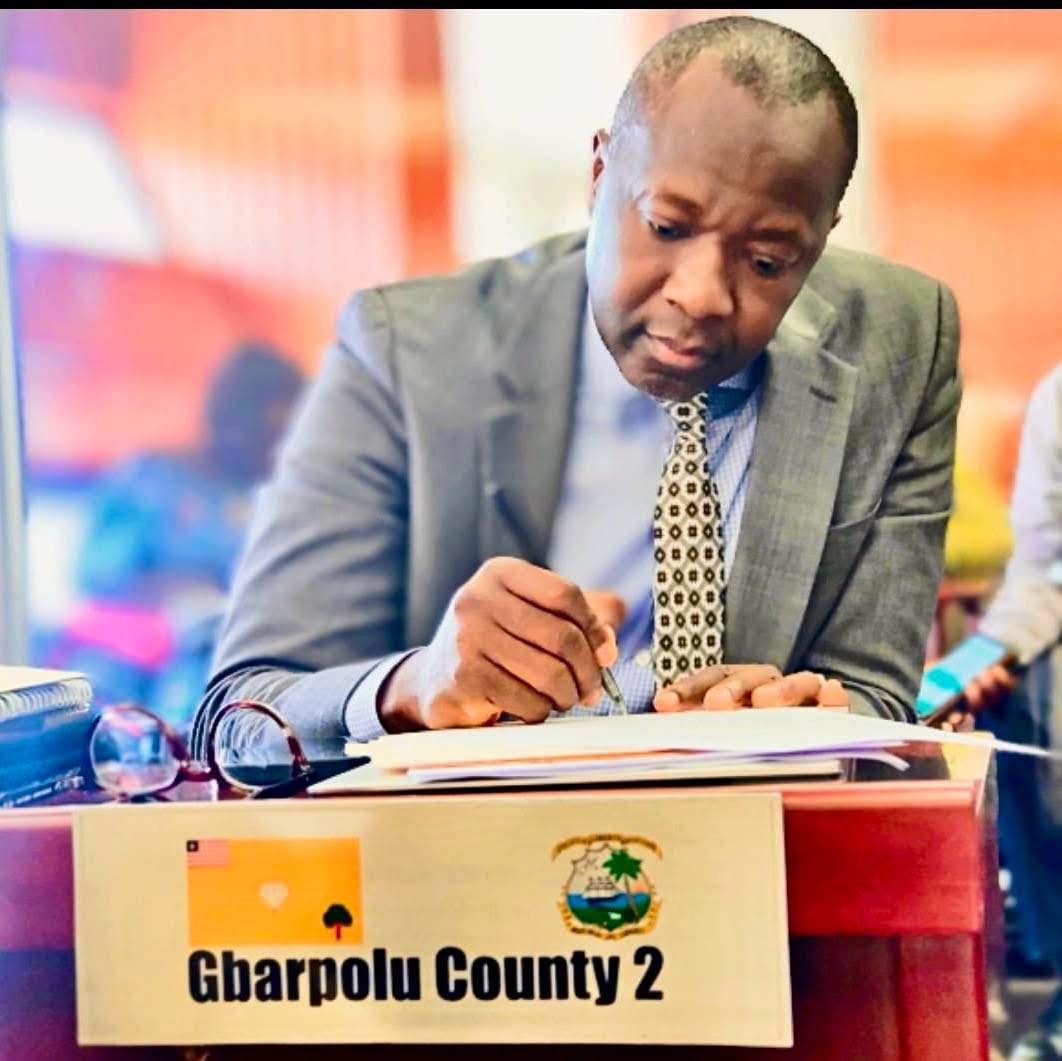
Monrovia, Liberia – Senator Amara Konneh’s public defense of the Boakai administration’s human rights record is drawing criticism after the release of the 2024 U.S. State Department Human Rights Report on Liberia. The report, published on August 12, 2025, outlines multiple allegations of rights violations, corruption, and governance shortcomings — findings that analysts say contradict the senator’s positive assessment.
Sen. Konneh has argued that the report reflects progress and that there is little cause for concern. However, critics point out that the document presents a far more troubling picture, raising questions about Liberia’s compliance with key governance standards, including those used by the Millennium Challenge Corporation (MCC) to assess eligibility for development compacts.
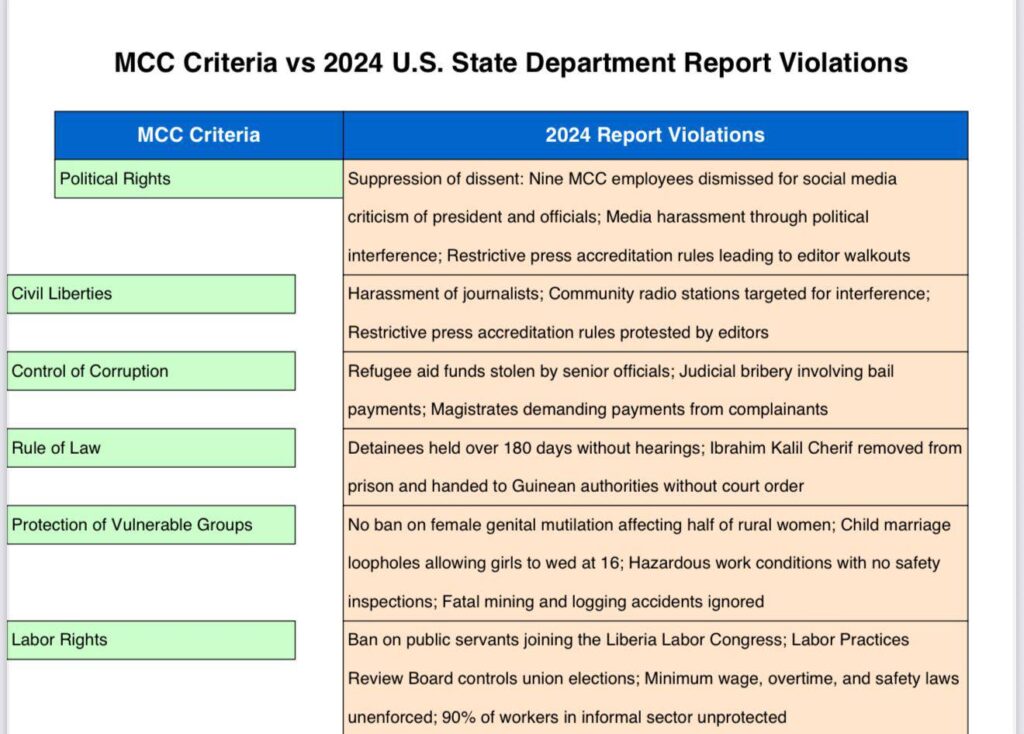
The MCC’s criteria include three “hard hurdles”: political rights, civil liberties, and control of corruption. Failure to meet any one of these benchmarks automatically disqualifies a country from consideration, regardless of other performance indicators.
Political Rights and Civil Liberties
The report cites multiple incidents seen as undermining free expression and media independence. In August 2024, nine employees of the Monrovia City Corporation were reportedly dismissed for making social media posts critical of the president and other officials. Media groups also faced political interference, with journalists and community radio stations targeted.
One high-profile flashpoint occurred in June 2024, when the Executive Mansion introduced new accreditation requirements for journalists. The rules — which included police clearance and institutional tax clearance — prompted a walkout by several editors during a meeting with Presidential Press Secretary Kula Fofana. The report says these measures were viewed by media organizations as overly restrictive.
Corruption Concerns
The State Department highlights what it describes as entrenched corruption at multiple levels of government. Among the examples cited: the dismissal of the Director of the Liberia Refugee Repatriation and Resettlement Commission and two others for falsifying documents and stealing aid funds, and reports of judges soliciting bribes in exchange for bail or case rulings.
These findings appear to conflict with the MCC’s requirement that countries demonstrate a clear commitment to controlling corruption.
Security and Due Process
The report also raises concerns about arbitrary arrests and prolonged detentions. It notes that some detainees were held for more than 180 days without court hearings. One case — the secret removal of prisoner Ibrahim Kalil Cherif from custody and his transfer to Guinean authorities without a court order — is described as a breach of due process and the rule of law.
Protection of Vulnerable Groups
On the rights of women, children, and marginalized populations, the State Department’s assessment is critical. Liberia has yet to implement a national ban on female genital mutilation (FGM), despite data indicating that half of rural women have undergone the practice. The report also points to child marriage loopholes, unsafe labor conditions in mining and logging, and a lack of effective workplace safety inspections.
Labor Rights
The report says public servants are prohibited from joining the Liberia Labor Congress, in violation of both constitutional protections and international labor standards. The Labor Practices Review Board’s role in supervising union elections was described as a form of political interference. Minimum wage and overtime laws are largely unenforced, leaving an estimated 90 percent of the workforce in the informal sector without protections.
Implications for MCC Eligibility
The MCC evaluates not just policy performance but also sustained commitments to democratic rights, anti-corruption, and protection of vulnerable groups. Critics argue that the documented violations in the 2024 report could place Liberia’s compact eligibility at serious risk, regardless of political statements to the contrary.
Dispute Over 2023 Record
Sen. Konneh has also claimed that the previous George Weah-led administration took no concrete human rights actions in 2023. Opponents counter that the 2023 U.S. report tells a different story. While critical of systemic impunity, it documented several measures taken during the CDC administration, including:
- Clemency granted to 127 inmates and increased prison medical staffing to reduce overcrowding.
- Suspension of a Liberia Drug Enforcement Agency commander following sexual assault allegations.
- Dismissal of refugee agency officials over theft.
- Conduct of peaceful and timely elections, commended by international observer missions.
- Closure of three bush schools as part of efforts to combat FGM, in partnership with UN Women.
- Cooperation with UNHCR to protect refugees and uphold the ban on forced returns.
Analysts say these examples contradict claims that the CDC administration took no action on human rights during that year.
Broader Debate
The exchange over the two reports underscores a broader political dispute over Liberia’s governance trajectory. For supporters of the Boakai administration, the 2024 report may be viewed as highlighting challenges to be addressed. For opponents, it is evidence of a worsening human rights climate.
As Liberia looks ahead to future MCC scorecards and international assessments, observers note that both the perception and the reality of rights protections and anti-corruption measures will weigh heavily on the country’s global standing — regardless of political messaging.


