


Monrovia, Liberia — As the Unity Party (UP)-led government enters the third year of its six-year constitutional mandate, concerns over economic hardship, unemployment, and access to finance continue to dominate national discourse. The persistent “bread-and-butter” challenges facing ordinary Liberians have fueled criticism of the government’s overall economic management, with opposition voices arguing that poor institutional performance and limited job creation have blunted the impact of policy interventions.
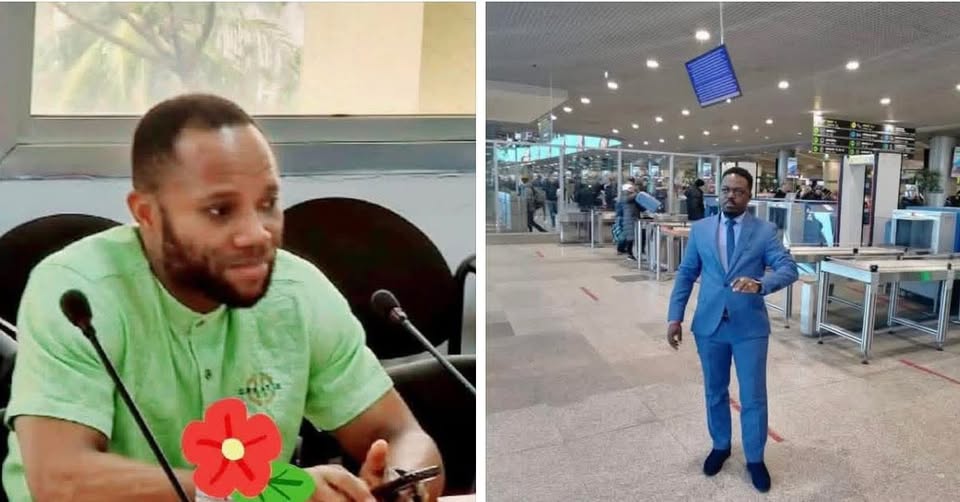
Against this backdrop of broad governance concerns, an unexpected commendation has emerged from the opposition. Jeremiah Edison Paye, National Secretary General of the Movement for Economic Empowerment (MOVEE), has publicly identified the Managing Director of the Liberia Petroleum Refining Company (LPRC), Mr. Amos B. Tweh, as his “Best Performed Unity Party Government Official of the Year 2025.”
In a written assessment, Paye acknowledged his role as an opposition leader while stressing that objective performance, not political affiliation, informed his conclusion. According to him, Mr. Tweh’s tenure at the LPRC represents a notable exception within a government he otherwise criticizes for weak delivery on economic promises.
Paye argued that Liberia’s economic challenges are exacerbated by high unemployment, limited access to finance, and the underperformance of many public officials. However, he contended that the LPRC under Mr. Tweh’s leadership has demonstrated how focused, reform-oriented management can yield tangible results, even within a difficult macroeconomic environment.
He described Mr. Tweh as a transformative administrator whose achievements surpass those of previous post-war leaders of the corporation. Based on his observation of LPRC’s operations, Paye concluded that Tweh’s leadership stands out for its results, innovation, and institutional discipline.
Among the key achievements cited are ten major policy and operational reforms implemented during Mr. Tweh’s tenure. These include LPRC’s participation in the direct importation of petroleum products—specifically Premium Motor Spirit (PMS)—on behalf of the Government of Liberia for the first time in over four decades, a move Paye described as economically prudent and strategically important for national interest.
Financial performance also featured prominently in the assessment. Paye noted that LPRC increased its dividend remittance to the national government from US$1.3 million in 2023 to US$2.5 million in 2024, with further improvements recorded in 2025. He further highlighted the construction of a modern petroleum testing laboratory aimed at ensuring that only quality fuel products enter the Liberian market.
Other accomplishments listed include adjustments to petroleum pricing structures projected to generate an additional US$17 million to support social programs and county-level equipment, as well as the construction of a 17,000-cubic-meter gasoline storage tank to mitigate potential fuel shortages. Paye also pointed to the resumption of LPRC’s internship program after many years, providing practical training opportunities for students from various universities.
In terms of labor and social protection, Paye credited the current management for the regular payment of NASSCORP contributions and withholding taxes—an area where previous administrations reportedly fell short. He also cited the stabilization and reduction of pump prices, improved fuel availability, support for the Short-Term Youth Empowerment Project, and notable improvements in employee welfare, including salary adjustments, annual bonuses, and a more professional working environment.
Beyond institutional metrics, Paye emphasized the broader socio-economic impact of LPRC’s reforms, arguing that Mr. Tweh’s leadership has contributed meaningfully to energy security and economic stability. He described the management approach as mature, intelligent, and non-partisan, noting that such leadership is critical in a politically polarized environment.
While reiterating his reservations about the overall governance record of the Unity Party administration, Paye maintained that Mr. Tweh’s performance demonstrates that competent, youthful Liberians can deliver results when given the opportunity. He underscored that building institutional capacity, ensuring energy security, and promoting non-partisan leadership are central to the progress recorded at LPRC.
Paye concluded by urging the LPRC Managing Director to remain focused and undistracted, commending him for what he termed patriotism, selflessness, and a results-driven leadership style. According to Paye, Mr. Tweh’s tenure serves as evidence that effective governance is possible even amid widespread public dissatisfaction, provided leadership is guided by vision, professionalism, and national interest rather than partisan considerations.
About the Author
Jeremiah Edison Paye is a civil and political rights activist, veteran educator, and specialist in project, program, and disaster management. He holds a Bachelor of Science degree in Economics, with emphasis on demography, from the University of Liberia. He is a candidate for a Master of Science degree in Petroleum Economics at Udmurtia State University in the Russian Federation and has been admitted to Cuttington University Graduate School to pursue a Master of Arts in International Relations. Paye currently serves as National Secretary General of the opposition Movement for Economic Empowerment (MOVEE) and as the elected National Project Officer of the Inter-Party Consultative Committee (IPCC) of the Republic of Liberia.


