


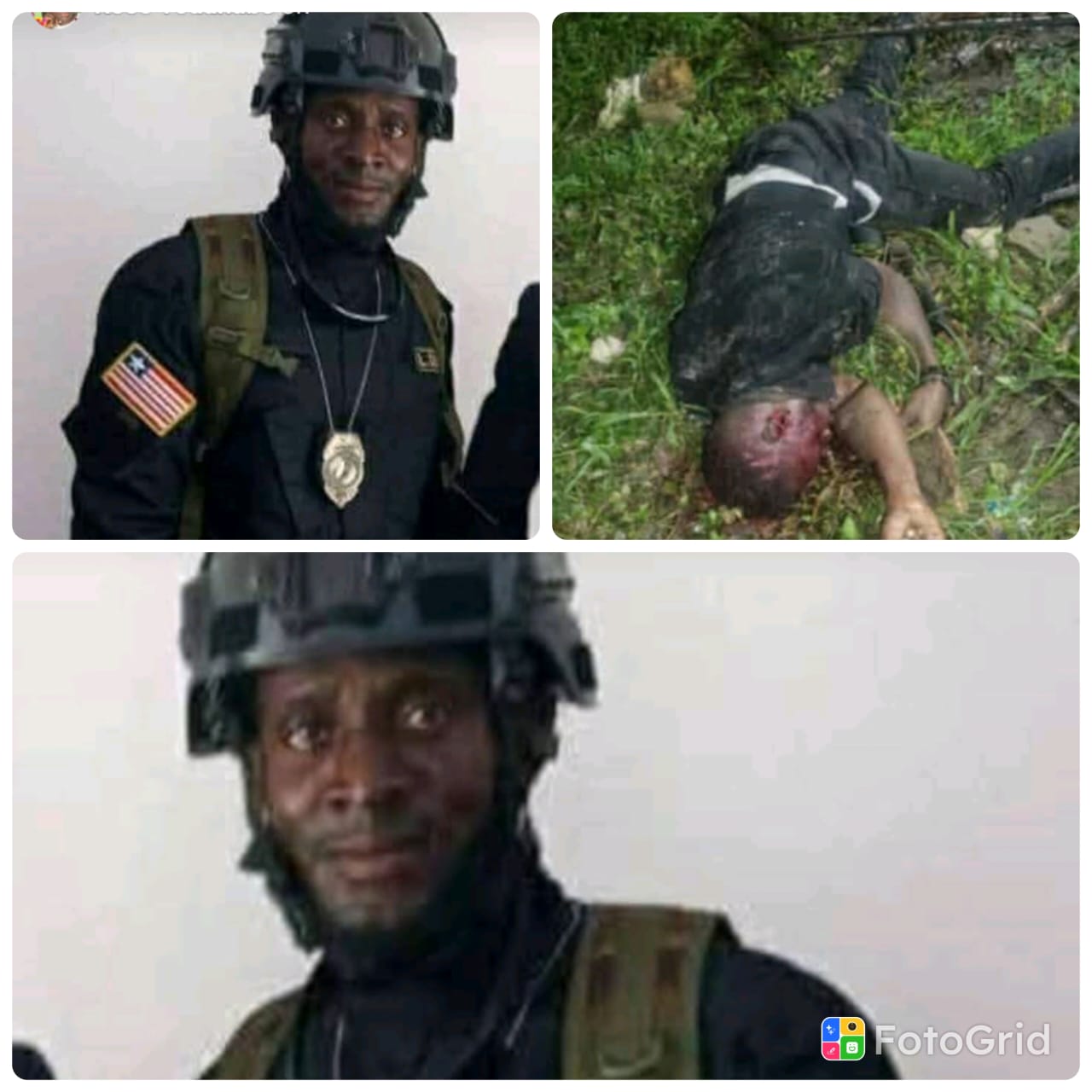
The brutal mob killing of Officer Emmanuel Payne, a uniformed agent of the Liberia Drug Enforcement Agency (LDEA), in Caldwell on July 22, 2025, has reignited national concern over the growing incidence of mob justice and public hostility toward state security forces.
According to the LDEA’s account, Officer Payne had visited a colleague from the Liberia Immigration Service (LIS) on Benson Street, Caldwell, when he spotted a man acting suspiciously and attempting to access a known drug ghetto. In an effort to uphold his duty, Officer Payne reportedly approached the suspect, only to be targeted by a mob believed to have been incited by a local drug kingpin, Franklin B. Feawoe, alias “Black Bottle.”
Despite being in full uniform and identifying himself as an officer, Payne was accused of being a “motorbike rogue”—a common term used in Liberia to label someone as a thief—before being chased, assaulted, and fatally beaten. Although he discharged two warning shots in a last attempt to deter the assailants, the crowd became increasingly violent. He was later pronounced dead at John F. Kennedy Memorial Hospital in Monrovia.
The LDEA, in a strongly worded statement, condemned the act as “heinous and cowardly” and vowed to collaborate with the Liberia National Police (LNP) to bring those responsible to justice. A manhunt is underway for Feawoe, who remains at large.
A Growing Pattern of Violence
This incident is not isolated. Liberia has seen a troubling increase in mob violence, often targeting both civilians and security personnel. According to a 2023 report by the Center for Security Studies in Liberia (CSSL), over 54 cases of mob justice were recorded across the country, leading to 23 fatalities, including 3 law enforcement officers.
In a 2024 survey conducted by the Liberia Peacebuilding Office, 68% of respondents said they witnessed or knew someone who had been affected by mob violence. The most cited reason was lack of trust in the criminal justice system and delays in police response or court proceedings.
Security personnel are increasingly being targeted in areas considered high-risk or controlled by informal groups such as “zogos”—a term referring to marginalized youth, often homeless and involved in petty crime or drug use. Their presence, often linked to drug ghettos in urban communities, has led to frequent clashes with law enforcement officers.
Public Reaction and Official Response
Following the death of Officer Payne, the LDEA launched several aggressive raids across Caldwell, dismantling and setting fire to known drug dens and arresting suspects believed to be connected to the attack.
The agency also called on the public to assist with information on Feawoe’s whereabouts but cautioned citizens not to approach him. A hotline (0777 133 333) has been activated for tips.
While some citizens support the crackdown, human rights advocates caution that retaliatory demolitions could further alienate already fragile communities and inflame tensions.
“We sympathize with the LDEA and the family of the slain officer,” said Martha Sendolo, a security analyst with CSSL. “However, extrajudicial raids and burning of property could deepen mistrust between law enforcement and the very communities they are meant to protect.”
Security Sector at Risk
This latest killing raises broader concerns about the safety of Liberia’s frontline officers, who often operate with limited resources and public backing. According to internal reports from the Liberia National Police, over the past two years, at least 12 officers have faced assaults or threats while on duty, with many incidents going unreported or unprosecuted.
President Joseph Boakai’s ARREST Agenda, which prioritizes security and justice reform, now faces a pivotal challenge: rebuilding public trust in law enforcement while protecting officers from growing hostility.
Experts suggest that part of the solution lies in community policing, improved officer training, and judicial reforms to expedite prosecution of suspects, which could reduce the perceived need for mob action.
A Call for Accountability and Reform
In the meantime, civil society groups are calling for a transparent investigation into the killing and greater protection for state actors.
“This is a dark day for the country,” said Rev. Amos Nyensuah, a member of the Liberia Council of Churches. “We cannot allow a culture of lawlessness to take root. The killers must be brought to justice swiftly and fairly.”
As Liberia mourns another victim of unchecked mob violence, the death of Officer Emmanuel Payne should serve as a national wake-up call—a moment to confront the widening gap between communities and law enforcement, and to recommit to a justice system that protects all.


