


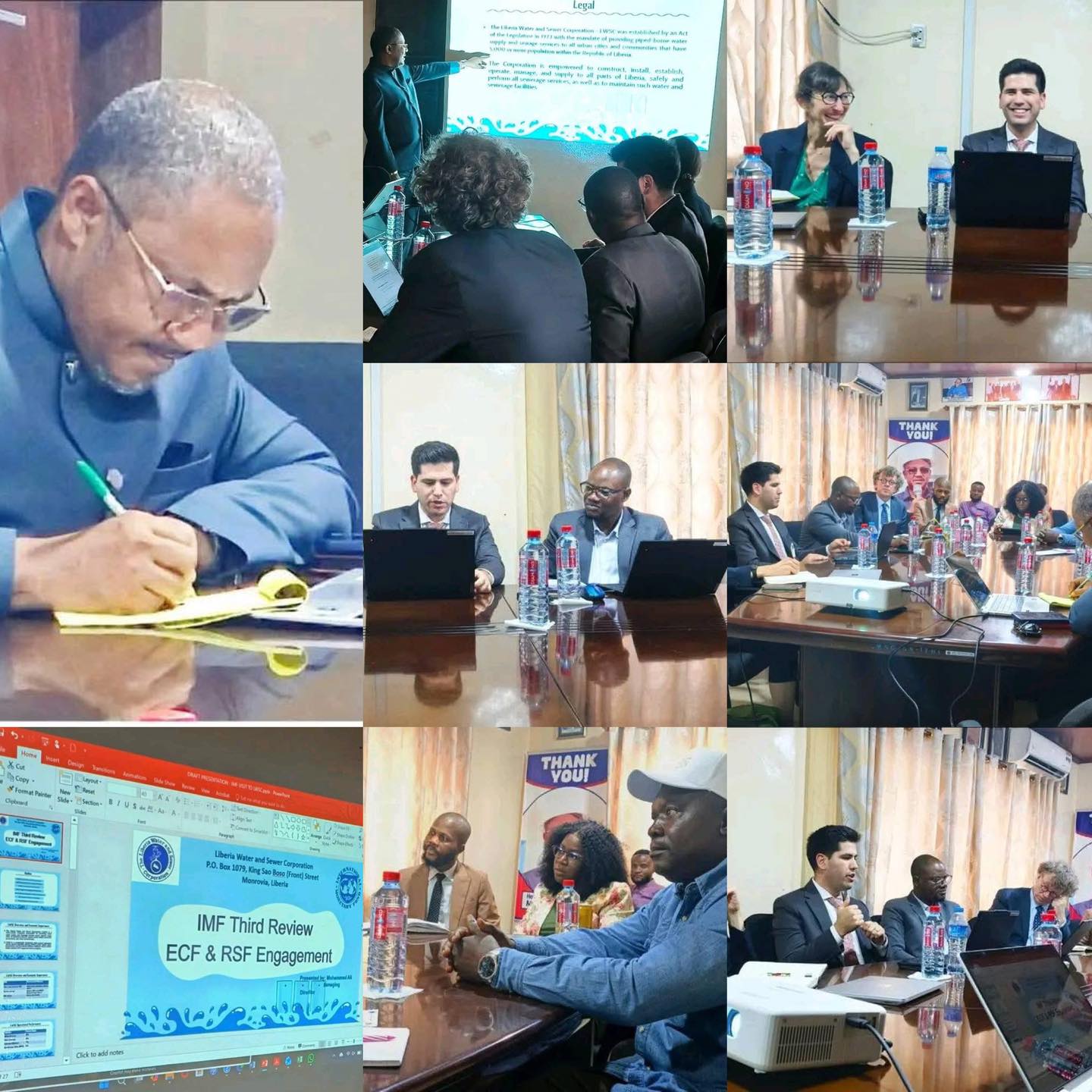
Monrovia, Jan. 15 — Liberia’s water and sewage infrastructure is under mounting threat from climate change, the Managing Director of the Liberia Water and Sewer Corporation (LWSC), Mohammed Ali, has warned. Addressing a high-level International Monetary Fund (IMF) delegation, Mr. Ali highlighted how environmental pressures are increasingly compromising service delivery, operational efficiency, and financial stability in the country’s water sector.
According to Mr. Ali, extreme rainfall, flooding, sea-level rise, and greater climate variability are already damaging critical infrastructure, including pipelines, pumping stations, and coastal sewer networks. These climate-induced shocks have led to rising water treatment costs, frequent service disruptions, and declining revenue collection, placing additional strain on LWSC’s financial resources.
“The compounded effects of climate events are driving up public health costs, forcing emergency repairs, and increasing our reliance on central government support,” Mr. Ali said, noting that rising energy costs and unstable power supply have further deepened operational deficits.
Despite these challenges, LWSC has made significant strides in strengthening its governance and operational frameworks. Reforms include enhanced board oversight, improved internal control systems, the completion of pending audits, and increased transparency in financial reporting and day-to-day operations.
Looking ahead, the LWSC Managing Director outlined priorities for climate adaptation. Key initiatives focus on developing climate-resilient water, sanitation, and hygiene (WASH) services, adopting renewable energy solutions, protecting vulnerable coastal zones, and investing in infrastructure designed to withstand future environmental shocks.
The remarks were delivered as part of ongoing discussions with the IMF under the Resilience and Sustainability Facility (RSF), a program designed to support climate-resilient investments, improve water security, and ensure the long-term financial sustainability of Liberia’s water sector.
Mr. Ali emphasized that, as climate risks continue to grow, collaboration with international partners remains essential to safeguarding essential water and sanitation services while building resilience against Liberia’s evolving environmental challenges.
This engagement underscores LWSC’s commitment to ensuring reliable, safe, and sustainable water services despite the mounting pressures of climate change.


