



Monrovia, Liberia – July 29, 2025 – Liberia’s chance to secure a new Millennium Challenge Corporation (MCC) compact has sparked a lot of public debate after activist Wantoe Teah Wantoe shared confidential documents about the country’s current status. Despite many claims that a $500 million MCC compact had already been approved, Wantoe revealed that Liberia is still under “Board Review.” This means the country is eligible to develop a compact but has not yet received final approval, signed any agreement, or gotten funding.
In a statement on Monday, Wantoe accused some political figures of spreading “lies and propaganda” to mislead the public. He stressed that eligibility is an important step but doesn’t guarantee funding.
“For context, the U.S. Embassy in Monrovia clearly stated on December 19, 2024, that eligibility does not guarantee Liberia will receive a compact program,” Wantoe said. “This is the same message sent to Sierra Leone recently, showing that MCC applies the same rules to all partner countries.”
According to MCC documents, Liberia is one of two countries—along with Albania—currently in the “Board Review” stage. Thirteen other countries, such as Senegal, Nepal, Mozambique, and Benin, were recommended to move forward with their compacts, while 17 nations, including Kenya, Malawi, and The Gambia, were recommended for termination due to issues with performance or governance.

What “Board Review” Means
The “Board Review” status means Liberia has passed initial checks but still needs to meet strict requirements before any compact is finalized. These include strong governance reforms, better transparency in public institutions, stronger anti-corruption efforts, and clear improvements in human capital development.
Wantoe pointed out there is no public record of a $500 million MCC grant for Liberia, calling the rumors “false” and politically motivated. “We welcome this progress, but honesty is key. Liberia has not been approved, and no money has been released. The process ahead will need discipline, reforms, and accountability,” he said.
Looking at Liberia’s MCC Path
Being under “Board Review” is both a chance and a warning. It shows Liberia has made enough progress to be considered eligible, but also that much work remains before funding can be approved.
MCC compacts are awarded based on strict standards that look at three main areas: ruling justly, investing in people, and encouraging economic freedom. Liberia’s past problems with governance, corruption, and weak institutions still affect its case.
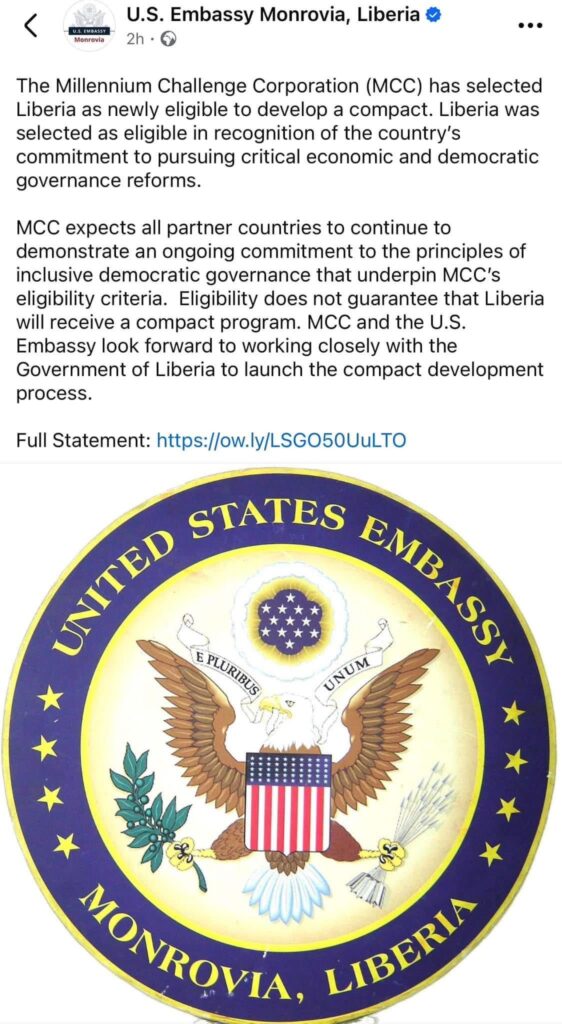
The economic stakes are high. The previous MCC compact, which ended in 2021, supported key projects like fixing the Mount Coffee Hydropower Plant. Without a new compact, Liberia could lose out on important infrastructure and human development funding that helps growth, jobs, and better services.
But to reach this goal, Liberia must show real progress. Ongoing corruption, poor financial management, and weak investment in education and healthcare remain challenges. MCC’s rules are clear: unless Liberia improves transparency, strengthens the rule of law, and builds better systems for accountability, the chance of a signed and funded compact is uncertain.
What’s Next
Wantoe’s reveal has increased calls for the government to give clearer and more honest updates to the public. Experts say transparency is essential both for public trust and for Liberia’s chances of getting the compact approved.
“Liberians deserve the truth,” Wantoe said. “We can’t build trust with propaganda. We need to focus on the tough work of reform so we don’t miss this chance.”
As the MCC Board continues to review Liberia’s progress in the coming months, everyone will be watching to see if the government can deliver on its reform promises. For now, Liberia is at a crossroads: it has earned eligibility, but the journey to securing a new MCC compact is still long and uncertain.


