


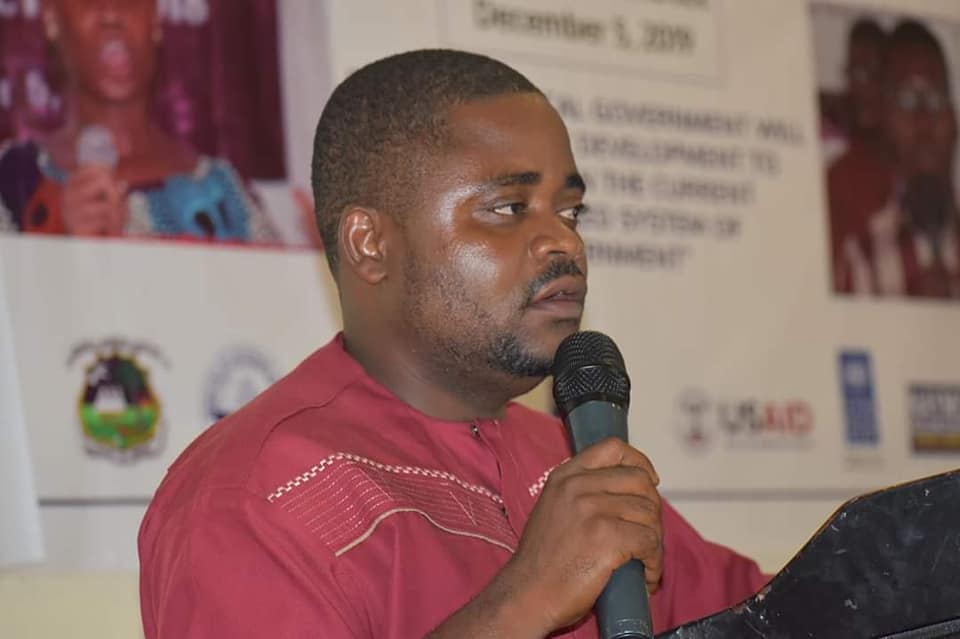
As part of efforts to strengthen grassroots governance and bolster Liberia’s anti-corruption efforts, the Ministry of Internal Affairs (MIA) and the Liberia Anti-Corruption Commission (LACC) have launched a specialized training program for local government officials in Bong, Lofa, and Nimba counties.
The initiative, supported by the United Nations Development Programme (UNDP), aims to deepen the understanding of transparency, accountability, and integrity in the public service sector.
The event was marked by a strong message of commitment from the Government of Liberia. Representing Internal Affairs Minister Hon. Francis Sakila Nyumalin, Sr., who was summoned to appear before the House of Representatives, Assistant Minister for Research and Development Planning, Hon. D. Emmanuel Wheinyue, delivered keynote remarks emphasizing the urgency of rooting out corruption at the local level.
Speaking on behalf of the Ministry, Hon. Wheinyue applauded the LACC for what he described as a “wonderful and timely initiative” that brings the anti-corruption campaign closer to the Liberian people. He highlighted that local government officials, as the first line of public service delivery, are not only vital actors in development but also central figures in the fight against corruption.
“This Social Accountability Project titled ‘Empowering citizens and communities to foster social accountability and transparency in governance and public service delivery’ will make a more meaningful impact when local government, civil society, and communities are actively involved,” he said.
Hon. Wheinyue recalled that collaboration between MIA and LACC was already producing results. He noted that one of the first major engagements of the current administration at the Ministry in 2024 was a capacity-building workshop for local officials, also held in Gompa, where LACC representatives played a key role. A presentation by LACC’s Vivian Akoto during that session significantly increased the number of local officials who declared their assets.
“That was the beginning of a strong partnership,” he stated. “Today, the presence of both senior MIA representatives and county-level officials at this event confirms the strength of that collaboration.”
Addressing local officials directly, Wheinyue underscored that they are not just public servants, but the “custodians of public trust” and the most visible face of government in their communities. Their actions and integrity, he emphasized, directly affect public confidence in governance and development.
“Anti-corruption in local government is not merely an abstract concept, but a foundational pillar upon which the very fabric of our society rests,” he declared. “Your decisions and leadership define the direction of our communities. You must be the standard-bearers of accountability.”
The Assistant Minister emphasized that the Ministry of Internal Affairs, under Minister Nyumalin’s leadership, will expect full adherence to the principles of accountability. He reminded officials that these expectations are enshrined in law.
Referencing Chapter Seven of the Local Government Act (LGA) of 2018, Wheinyue stated that all local governments are required to adopt anti-corruption systems and internal controls, including the Code of Conduct and the regulations of the LACC and the Public Procurement and Concessions Commission (PPCC).
“The LGA makes it clear,” he said, “that all standards of transparency and accountability that apply to central government officials also apply to you. If anyone thinks they are exempt from accountability, they must think again. You will be held to account for both your actions and your inactions.”
In this context, the ongoing training serves a dual purpose: it is both a knowledge-sharing platform and a reminder that local governance cannot be effective without trust and ethical leadership.
The message was further reinforced by the presence of key dignitaries, including Cllr. Alexandra Zoe, Chairperson of the LACC, her fellow commissioners, the Mayor of Gompa City Hon. Samuel Hardt, and the acting Superintendent of Nimba County, as well as civil society representatives and the media.
Assistant Minister Wheinyue concluded with a call to action: “Take this training seriously. Sit through it attentively. Return to your communities with new ideas. Let integrity and transparency not just be policy terms but guiding principles in your service.”
The training program forms part of the LACC’s broader effort to decentralize the fight against corruption. Through its partnership with MIA and the support of development partners like UNDP, the Commission aims to empower local actors to become proactive agents of accountability, ensuring that governance and service delivery meet the expectations and needs of the Liberian people.
As Liberia continues to confront challenges of mismanagement, resource leakages, and weak public trust, initiatives such as this signal a progressive shift toward a more open, participatory, and people-centered model of governance.
The Local Government Training is expected to continue throughout the week, with interactive sessions, policy briefings, and experience-sharing workshops designed to foster a new generation of local leaders committed to transparency and public service excellence.


