


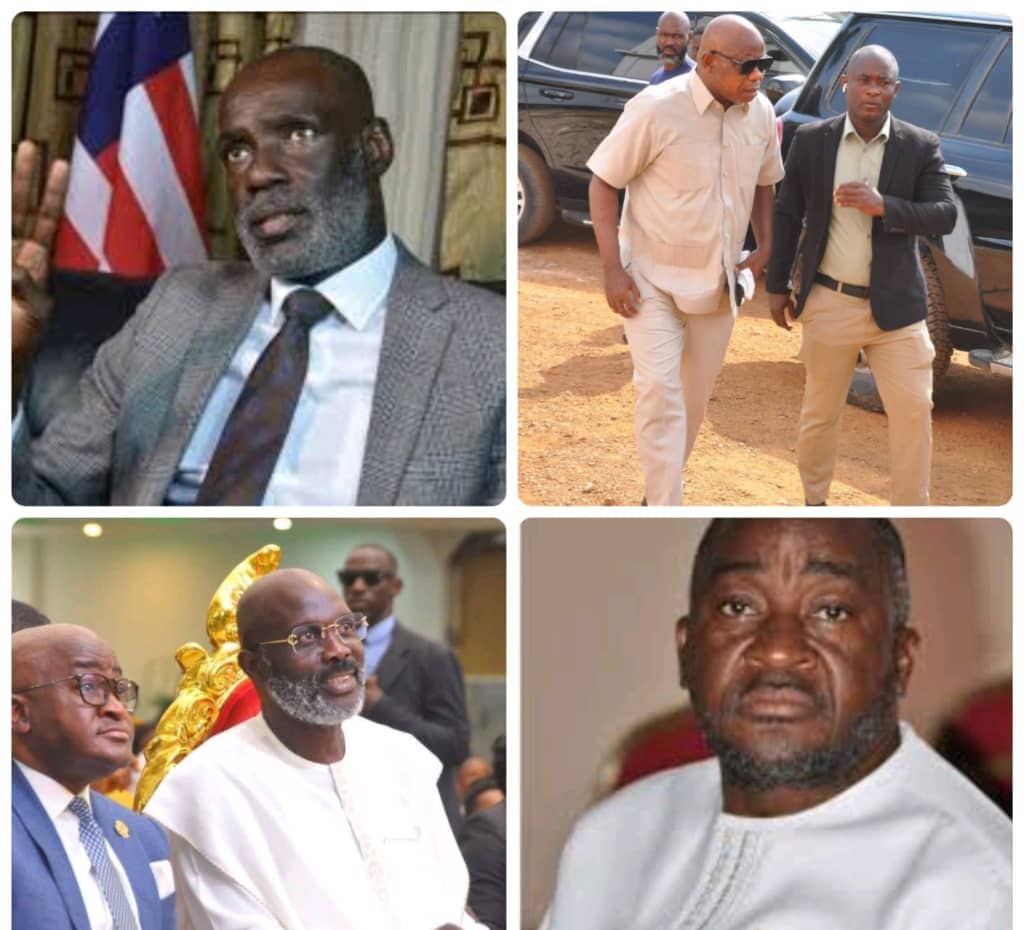
In recent months, renewed attention has focused on the individuals who now have regular access to former President George Manneh Weah. Among the names frequently mentioned by political observers and insiders is former Foreign Minister D. Maxwell Kamaya, whose proximity to the former President has become increasingly visible.
Sources familiar with Weah’s inner circle say Kamaya has maintained a consistent presence around the former President, reportedly serving in various informal capacities related to protocol, advisory support, and security coordination. While none of these roles have been publicly announced, multiple sources describe him as one of the most accessible figures within Weah’s immediate political environment.
At the same time, several long-standing allies of the former President privately report reduced access. These individuals allege that internal dynamics within Weah’s circle have shifted, though responsibility for these changes remains contested. Figures mentioned by sources include former Finance Minister Samuel D. Tweh, Eugene Nagbe, Moses Gray, and other senior CDC members.
Accounts from individuals who previously worked with Kamaya suggest that his involvement in organizations has often coincided with internal leadership changes. Examples cited include disputes during his participation in church leadership structures in Paynesville and his tenure as President of the Liberia Business Association, where disagreements reportedly emerged over influence and direction.
Similar observations are raised regarding Kamaya’s association with former Central Bank Governor Dr. Mills Jones, a period during which several early allies of Jones, including current Sinoe County Senator Clinton O. Duncan, later exited the institution.
Public events have also drawn attention. At a recent program at Faith Deliverance Ministry in Paynesville, observers noted seating arrangements that appeared to reflect shifting proximity to the former President—details that, in Liberia’s political culture, are often closely scrutinized.
Some sources further claim that Kamaya’s access to Weah is strengthened through family connections, particularly with former First Lady Clar Weah, though these assertions could not be independently verified.
As debates continue within the CDC about access, influence, and future direction, questions remain unresolved: Is Kamaya’s role simply that of a trusted aide, or does his growing presence reflect deeper changes within George Weah’s political circle?


