


— Says Transparency Is Key to Liberia’s Fight Against Corruption
The Center for Transparency and Accountability in Liberia (CENTAL) has called on President Joseph Nyuma Boakai to remove government officials who haven’t declared their assets, income, and debts as required by Liberia’s Code of Conduct.
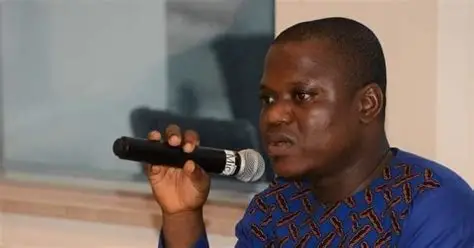
At a press conference in Monrovia on Tuesday, CENTAL’s Executive Director Anderson Maimen said that ignoring these rules by senior officials damages public trust and weakens President Boakai’s anti-corruption efforts.
“Suspensions aren’t enough,” Maimen said firmly. “President Boakai needs to take the next step and fire all executive officials who have refused to declare their assets.”
Non-Compliance Undermines Governance Reforms
In recent years, Liberia has worked hard to improve governance and rebuild trust in public institutions. But CENTAL says these achievements are threatened by high-ranking officials who continue to ignore asset declaration rules.
Maimen shared data from the Liberia Anti-Corruption Commission (LACC) showing many lawmakers and even Supreme Court members still don’t comply with Sections 15.1(c) and (d) of the Code of Conduct. These rules require officials to disclose their assets, income, and debts to prevent corruption.
While praising President Boakai, Vice President Jeremiah Koung, Speaker Fonati Koffa, President Pro Tempore Nyonblee Karnga-Lawrence, and the Liberia Revenue Authority (LRA) for following the rules, Maimen said the overall situation is troubling.
“It’s disappointing that those at the highest levels, who promised to uphold Liberia’s laws, are ignoring the principles they swore to protect,” he said.
Supreme Court Justices and Lawmakers Highlighted
The problem became clearer when Cllr. Findley D. Karngar, Chairperson of the Office of the Ombudsman, recommended disciplinary action against senior judiciary members.
Four of the five Supreme Court Justices were named, including outgoing Chief Justice Sie-A-Nyene G. Yuoh, Justice Yussif D. Kaba, Justice Jamesetta H. Wolokolie, and Justice Ceaineh D. Clinton Johnson. The recommendation called for suspensions and withholding one month’s salary and benefits.
Also, 29 lawmakers—17 representatives and 12 senators—were found to be in violation. CENTAL says this shows a worrying culture of impunity at the core of Liberia’s governance.
Call for Stronger Legislative Oversight
CENTAL urged the Legislature to show political will by enforcing the rules among its members. Maimen encouraged lawmakers who have declared their assets to push for consequences for those who haven’t.
“Integrity in governance is non-negotiable,” he said. “The Legislature must use its oversight power to hold all public officials accountable, no matter their rank.”
Maimen also challenged the LACC to go beyond just collecting asset forms. Without proper verification, the process risks becoming meaningless.
“The point of asset declaration is accountability, not just paperwork,” he said. “Verification is key to making sure the fight against corruption really works.”
Push for Transparency
CENTAL also called on the LACC to publish a full report on which officials have complied and which have not. Maimen said making this public would reduce worries about selective enforcement and show the government is serious about transparency.
“Publishing a full compliance report is needed to rebuild trust and prove no one is above the law,” he added.
What This Means for Boakai’s Anti-Corruption Efforts
Since taking office, President Boakai has promised to restore integrity in public service and set up the Office of the Ombudsman under Cllr. Karngar to enforce the asset declaration law. But how he handles this issue now could shape public trust in his leadership.
Experts say Liberia’s reputation with international partners, investors, and donors depends on its ability to enforce accountability. Without strong action, they warn, the country’s reform efforts may suffer.
“President Boakai is at a critical point,” said a governance expert. “If he acts firmly, it will show Liberia is serious about fighting corruption. If not, the old culture of impunity will continue.”
For CENTAL, the message is clear: dismissals, not just suspensions, are needed to restore public confidence and prove Liberia’s commitment to real accountability.


