


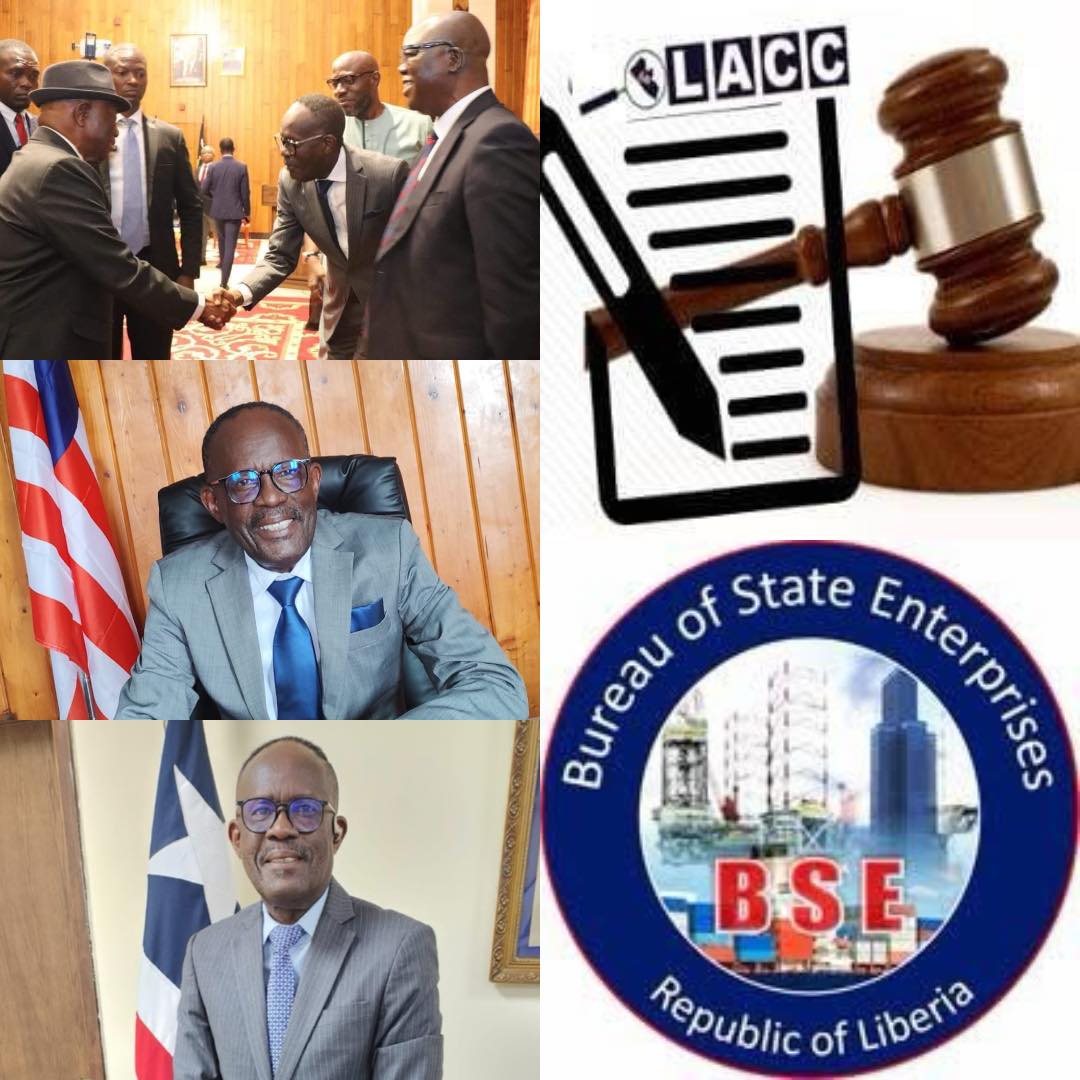
The Liberia Anti-Corruption Commission (LACC) has secured a grand jury indictment against several senior officials of the Bureau of State Enterprises (BSE), charging them with a range of serious offenses including economic sabotage, theft, misapplication of entrusted property, and criminal conspiracy.
The case, now before the courts of the Republic of Liberia, follows a determination by the grand jury that sufficient evidence exists to warrant prosecution. The LACC is leading the prosecution as part of its mandate to enforce accountability in the management of public resources.
Those indicted include Hon. Arthur Massaquoi, former Director General of the BSE; Mr. Matthew F. Kotio, Comptroller; Ms. Kathinal Mitchell; Hon. Varlee F. Sanor; Mr. Isaac C. Kporkulah; Ms. Jessephen Yah Dahn; and Mr. Mohammed V. Fofana. Prosecutors allege that the defendants collectively abused their positions by misusing public funds, executing fraudulent financial transactions, and manipulating procurement processes for personal benefit.
According to the indictment, Hon. Massaquoi and Mr. Kotio allegedly authorized disbursements exceeding US$71,000 and LRD 3.8 million to staff and contractors without proper documentation or proof that services were rendered. Investigators further claim that funds originally allocated for vendors were unlawfully redirected to staff members and other individuals, amounting to approximately US$168,961 and LRD 8.4 million.
The indictment also highlights significant procurement violations involving Benefit Trading International. LACC prosecutors allege that BSE officials improperly pre-selected the company to supply stationery and cleaning materials prior to the completion of the formal bid evaluation process, undermining transparency and competitive procurement standards. Invoices totaling thousands of U.S. dollars were reportedly processed under circumstances deemed irregular and inconsistent with established procurement regulations.
The charges outlined include economic sabotage through fraudulent acts against Liberia’s internal revenue system and the unlawful disbursement of public funds; theft and misapplication of government property through unauthorized use of state resources; and criminal conspiracy and facilitation, citing coordinated efforts to carry out and conceal illegal financial activities.
In returning the indictment, the grand jury concluded that the accused allegedly acted with criminal intent in violation of Liberian law, posing a serious threat to the integrity of public institutions and the peace and security of the state.
As the case proceeds to trial, legal analysts and the public alike are closely monitoring the outcome, viewing it as a critical test of Liberia’s anti-corruption framework and the government’s stated commitment to transparency, accountability, and the responsible management of public funds.


