


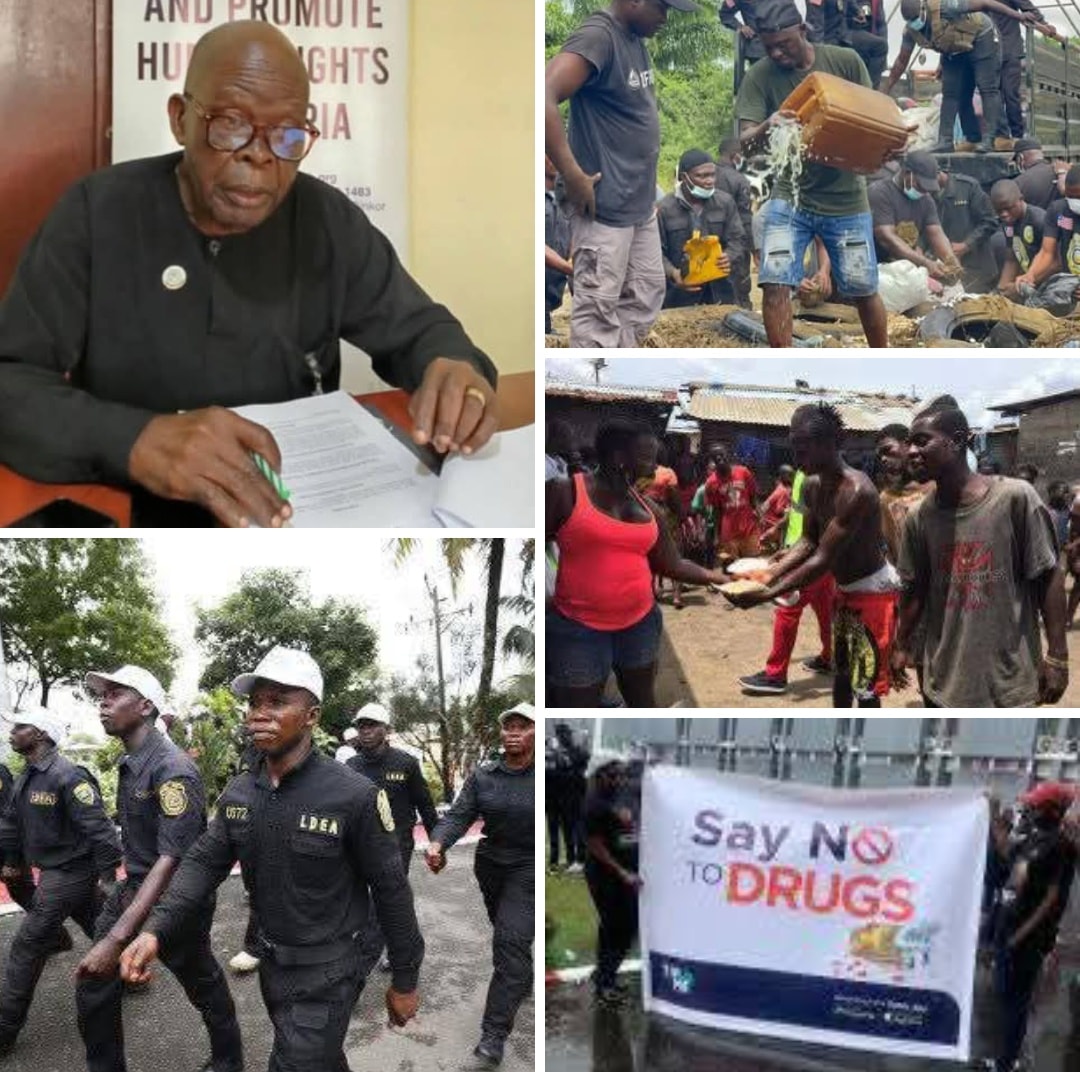
The allegations made by Deputy Director of the Liberia Drug Enforcement Agency (LDEA), Gwee Forkpa, and Dempster Brown, Chairman of the National Human Rights Commission of Liberia, point to a disturbing reality that suggests high-level complicity in the country’s ongoing drug crisis. Both men have raised serious concerns that elements within the government, including security personnel and even individuals within the very agency tasked with fighting drugs, are directly engaged in drug trafficking activities. This narrative, if substantiated, exposes not just institutional weakness but also systemic corruption that undermines every effort to address Liberia’s growing drug epidemic.
Brown’s public appeal to the president to take decisive action against corrupt officials signals both the gravity of the situation and the urgency with which it must be handled. His statement implies that Liberia’s anti-drug fight is not just hindered by limited resources or porous borders, but by an entrenched culture of impunity that shields those in power. If government officials and members of law enforcement are indeed part of the drug trade, then prosecutions will inevitably be weak, evidence may be tampered with, and offenders will often escape justice. Such interference compromises the entire justice system and leaves ordinary citizens vulnerable to the devastating effects of illicit drugs, particularly the rise of substances like kush and heroin that are ravaging communities across the country.
The implications extend far beyond law enforcement failures. Allegations of government-linked drug trafficking erode public confidence in state institutions, making it difficult for communities to trust the very authorities tasked with their protection. This breakdown of trust creates fertile ground for organized crime networks to expand, further entrenching the drug economy within Liberia’s social and political fabric. It also raises questions about international credibility, as donor partners and neighboring states may hesitate to fully collaborate with a government perceived to be compromised from within.
To confront these challenges, Liberia requires not only rhetorical commitments but concrete reforms and accountability measures. Independent investigations must be launched to determine the scale of government involvement in drug trafficking, with findings made public to ensure transparency. Stronger oversight mechanisms, including civilian watchdog bodies, could help monitor the actions of security agencies. Additionally, there must be a deliberate effort to remove and prosecute individuals found complicit, regardless of their political or institutional rank.
The drug crisis in Liberia is already a national emergency, with youth addiction, rising crime rates, and community instability threatening long-term development. If the allegations from Forkpa and Brown are ignored, the situation risks spiraling further out of control. Only decisive, transparent, and uncompromising leadership can begin to restore public trust and signal that Liberia is serious about dismantling the criminal networks—both within and outside of government—that profit from the nation’s suffering.


