


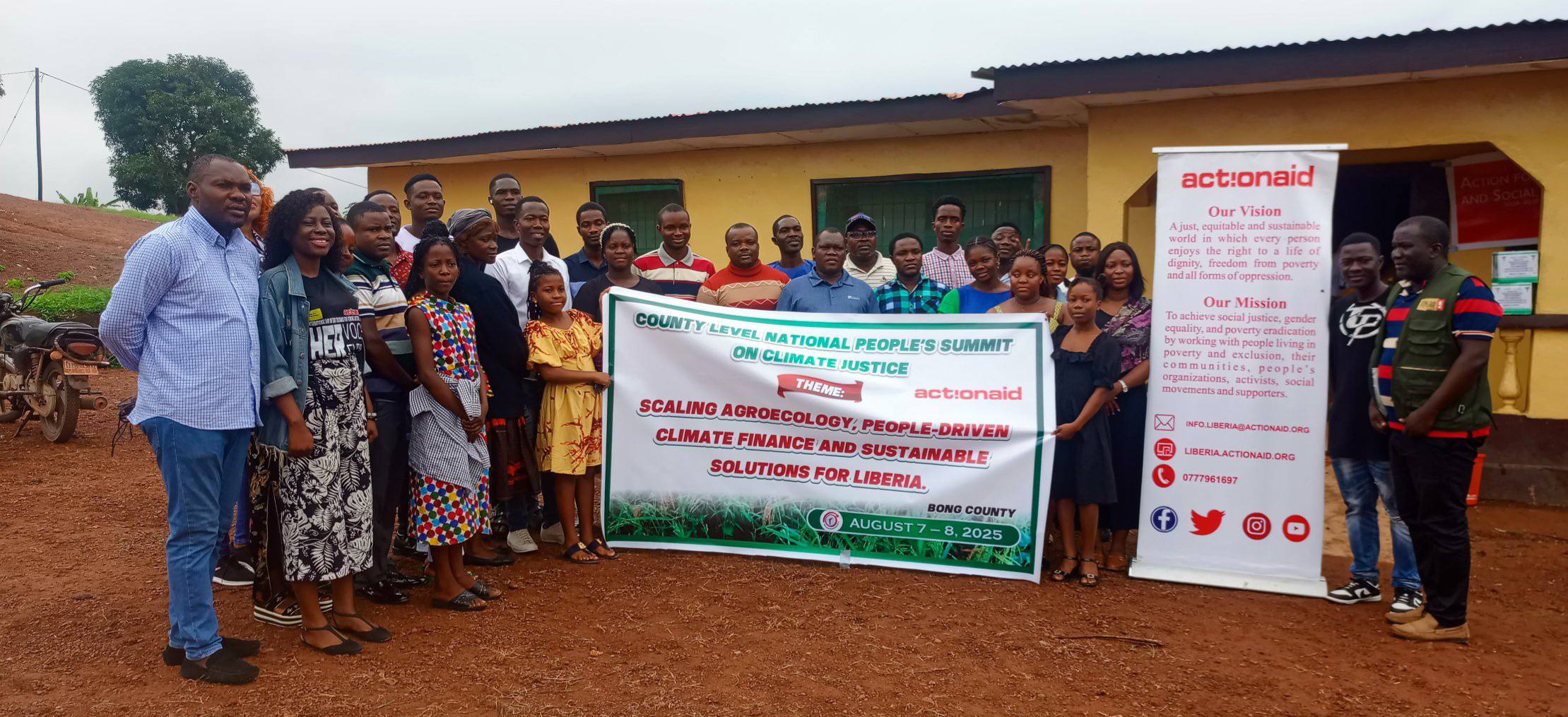
ActionAid Liberia recently hosted a two-day Climate Justice Summit in Gbarnga, Bong County, bringing together students, farmers, civil society members, and government officials to discuss community-driven climate solutions.
The event took place at the Ministry of Youth and Sports office, focusing on the theme “Scaling Agroecology, People-Driven Climate Finance, and Sustainable Solutions for Liberia.” Attendees explored how climate change affects agriculture, energy access, and vulnerable rural communities.
Norwu Harris, ActionAid Liberia’s Climate Justice Program Coordinator, highlighted the need to prioritize community voices, especially women and youth, in shaping the country’s climate policies. Drawing from lessons learned in a similar summit in Montserrado County, Harris emphasized that Liberia’s shift from fossil fuels must include fair and accessible renewable energy options.
“Climate justice isn’t just about policy—it’s about the people most affected but often unheard: farmers, students, women, and youth,” Harris said.
Representatives from the Farmers Union of Liberia and the Environmental Protection Agency joined open discussions about the dangers of chemical fertilizers, changing weather patterns, and the urgent need for sustainable farming methods.
Participants urged the government to support farmers in adopting climate-resilient practices, like solar-powered technologies, to boost food security and clean energy access.
The summit also stressed the importance of agroecology and community-led climate finance as key tools for changing Liberia’s environmental and economic future.
In closing, attendees called for a national climate justice strategy that focuses on sustainability, renewable energy, and active community involvement in policymaking.
The message was clear: achieving climate justice in Liberia depends on inclusive solutions, cooperation across sectors, and a strong commitment to listening to those on the frontlines of the climate crisis.


