


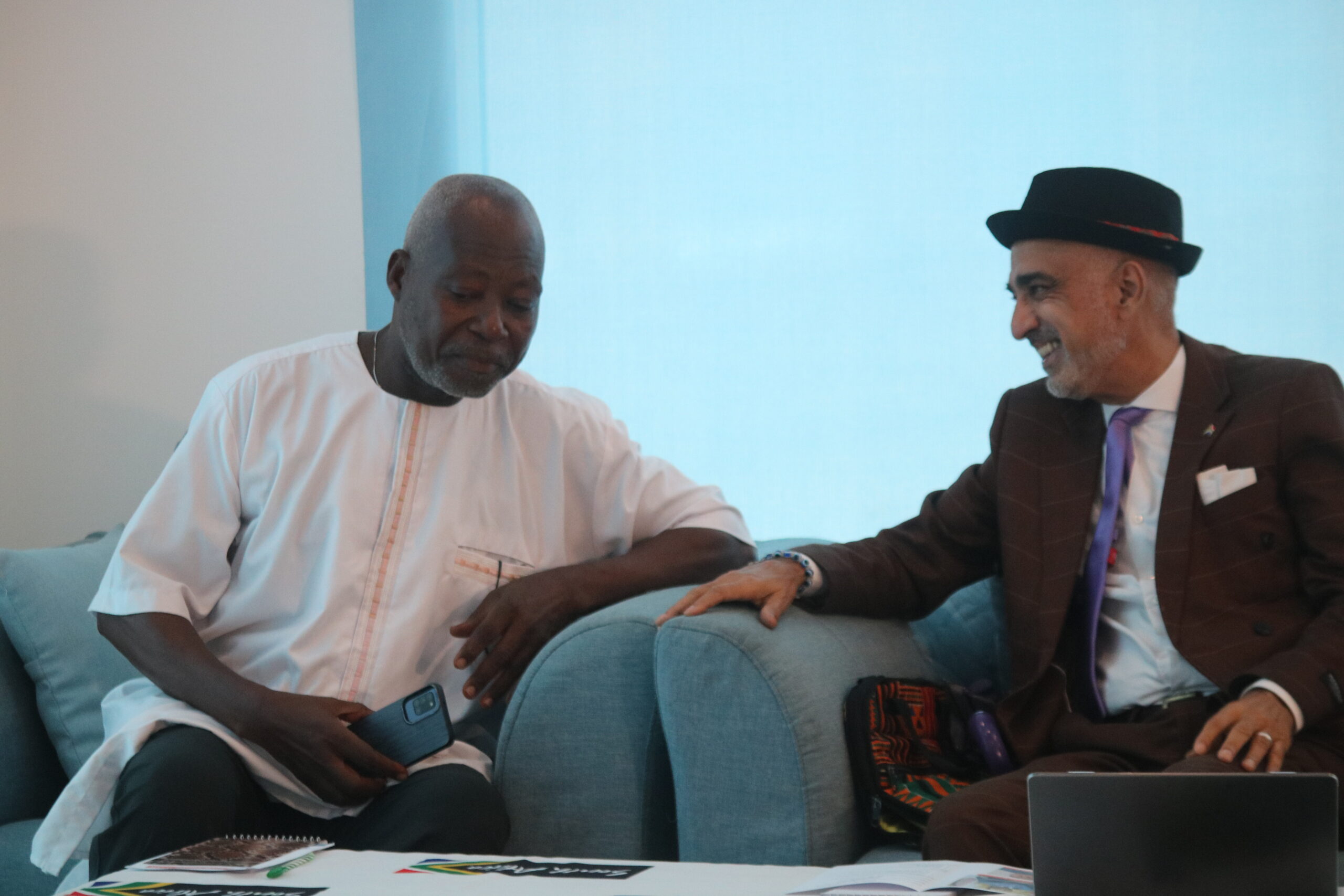
In a bold and stirring statement delivered at a high-level policy dialogue held at the Ocean Club Residence in Monrovia, Alaric K. Tokpa, Acting Chairman of Liberia’s Governance Commission, called for unequivocal national and international support for the establishment of a War and Economic Crimes Court (WECC) in Liberia. Framing the initiative not just as a legal imperative but also as a moral and historical obligation, Tokpa declared that the court represents Liberia’s commitment to justice, national healing, and democratic integrity.
The event, organized in collaboration with the Ducor Institute for Social and Economic Research, brought together a wide array of stakeholders including members of the diplomatic corps, Liberian government officials, civil society leaders, youth and women’s organizations, and traditional and religious leaders. Tokpa’s remarks set the tone for what was framed as a decisive moment in Liberia’s post-conflict journey.
The Weight of History and the Burden of Silence
Tokpa underscored that Liberia, though politically stable since the end of its civil wars, still carries the unaddressed trauma of two brutal conflicts. “The war and economic crimes court is a national demand that must be satisfied,” he said. “The taking away of human lives, the degradation of fellow human beings, and the destruction of public and private property cannot go unanswered.”
He noted that despite gains in democratic governance, Liberia remains haunted by a legacy of impunity and violence. “The rising wave of crimes, the continuous violation of human rights, and the threat to security in post-war Liberia are largely legacies of the war culture,” Tokpa warned.
Accountability as a Path to National Renewal
According to Tokpa, establishing the WECC is not just about delivering justice for victims of Liberia’s civil wars—it is about shaping a future grounded in accountability and rule of law. “To ignore the crimes of the past is to erode the very foundation of the state,” he said. “We must show present and future generations that there are consequences for violating human rights and international humanitarian law.”
He also drew attention to the deep roots of the conflict—greed for power and wealth—and suggested that the court would serve a deterrent purpose by delegitimizing violence as a means of achieving political or economic ends. “The court will help ensure that future generations reject the horror and humiliation of war and seek peaceful, legal paths to power,” Tokpa stated.
Rebutting Political Resistance
Tokpa did not shy away from addressing opposition to the court’s establishment. He criticized what he termed “selfish partisan discourses promoted by spoilers,” which, he warned, threaten to derail the process of national healing. He emphasized that Liberia must not allow political expediency or revisionist agendas to replace truth, justice, and reconciliation.
“The understanding we reach here today,” he said, “must build upon the significant gains our country has made through democratic governance since the end of the civil war.”
International Solidarity and Local Leadership
Recognizing the role of international partners in Liberia’s peace process, Tokpa thanked the United Nations, the African Union, ECOWAS, the European Union, the U.S. Government, Sweden, and other European nations for their enduring support. But he also issued a call for continued solidarity, warning that Liberia cannot fully participate in the international system with “broken hearts and a weak and divided society.”
He affirmed that the WECC must be accompanied by the creation of a non-bailable Anti-Corruption Court to tackle Liberia’s systemic governance failures. Together, these institutions would represent a renewed social contract between the Liberian state and its citizens.
Voices of Justice and Experience
The dialogue featured some of Liberia’s most respected legal minds, including former Chief Justice Cllr. Frances Johnson Morris-Allison, human rights scholar Cllr. Tiawan Gongloe, and Dr. Jallah Barbu, Executive Director of the Office of the War and Economic Crimes Court. Dr. Aaron Weah of the Ducor Institute facilitated the discussion, focusing on both international best practices and Liberian solutions to transitional justice.
A National and Moral Imperative
In closing, Tokpa returned to the fundamental ethical question underpinning Liberia’s search for justice: “In what system of moral philosophy, under what principle of law in the civilized human community, should people who share common origin and space destroy one another and go unquestioned? No! This should not be the case.”
The message from the Governance Commission was unmistakable: Liberia must no longer delay. Establishing the War and Economic Crimes Court is essential for ending impunity, preserving peace, and restoring the moral fabric of the nation. The time for action is now.
Dr. Aaron Weah, Director of the Ducor Institute, began by situating Liberia within the post-conflict framework. Twenty-two years after the signing of the 2003 Accra Comprehensive Peace Agreement and sixteen years after the release of the Truth and Reconciliation Commission (TRC) report, Liberia has achieved relative political stability. With four peaceful democratic elections and regular transitions of power, many observers argue that Liberia is consolidating its democratic culture.
However, Dr. Weah warned against complacency. Citing post-conflict theory, he reminded the audience that societies are most vulnerable to relapse within the first decade of peace. Liberia may have passed that threshold, but the country remains mired in what he described as a state of “negative peace” — the mere absence of violence, not the presence of justice or reconciliation.
“In this state of negative peace,” Dr. Weah noted, “we are seeing a pattern of elite consensus, one that is selective in implementing reform.” Over the past 16 years, Liberia has witnessed a troubling amnesia, where efforts to implement the TRC’s recommendations have stalled, and the political elite have largely avoided discussions about accountability for wartime atrocities.


