


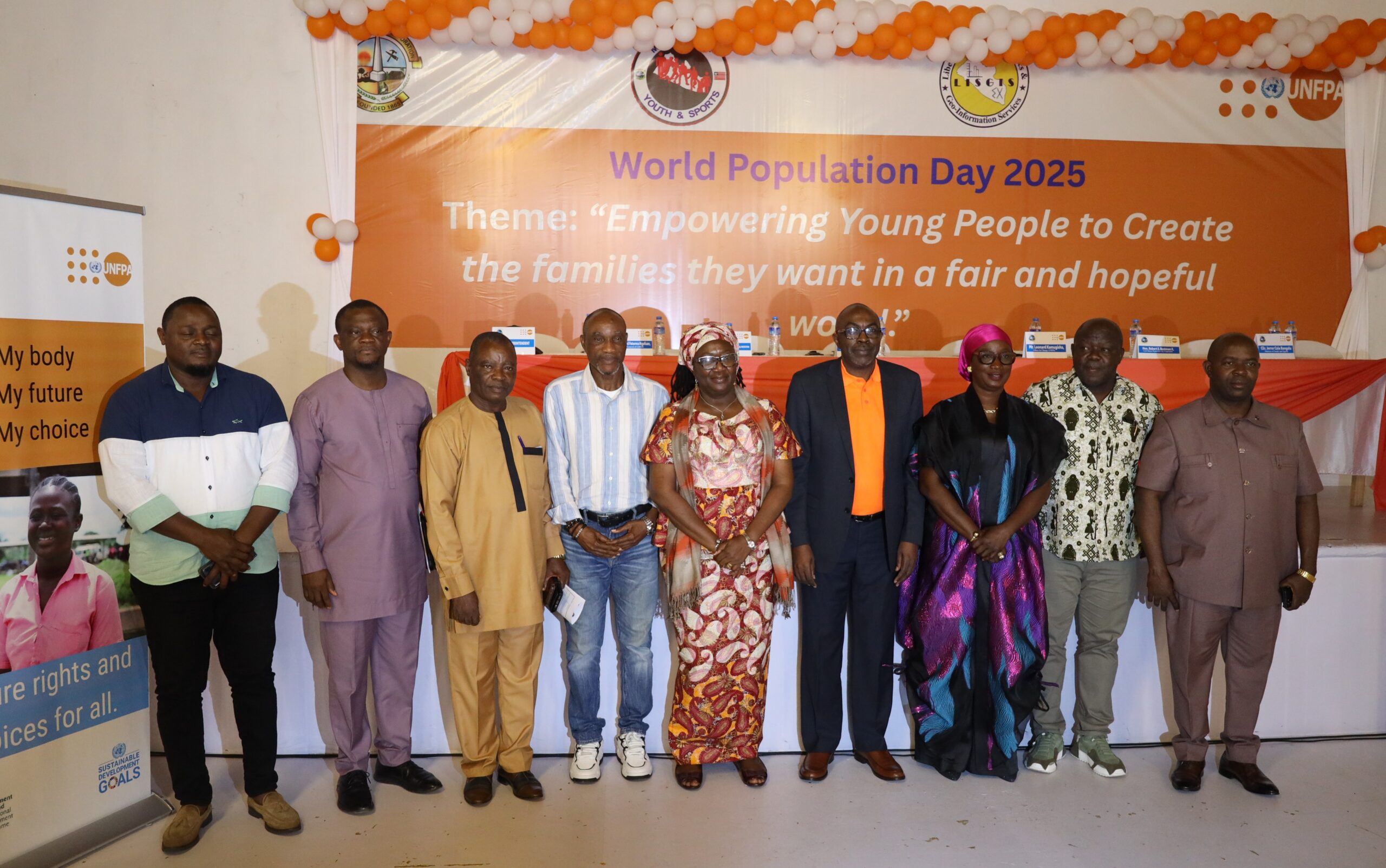
The United Nations Population Fund (UNFPA) has called on governments and global leaders to shift their focus from population numbers to human rights, especially for young people navigating a world of economic pressure, climate anxieties, and gender inequality.
Speaking on the occasion of World Population Day 2025, UNFPA Executive Director Dr. Natalia Kanem highlighted the urgent need to remove systemic barriers that prevent young people from realizing their reproductive choices. “The real fertility crisis is not declining birth rates,” Dr. Kanem asserted, “but the lack of reproductive agency.”
According to UNFPA’s recent State of World Population report, one in five people under 50 expect to have fewer children than they ideally want. Among those over 50, nearly a third said they had fewer children than desired, citing factors like financial instability, health risks, and societal pressures.
“Misguided assumptions that young people are too career-focused or selfish distort public policy,” Dr. Kanem warned. “Restricting contraception or failing to support parental leave won’t raise fertility—it will only erode young people’s freedom.”
The UN agency is advocating for evidence-based, youth-centered solutions: access to sexual and reproductive health services, comprehensive sexuality education, affordable childcare, secure employment, and inclusive family policies that allow both parents to participate in caregiving.
Echoing this call, Christine N. Umutoni, UN Resident Coordinator in Liberia, emphasized that empowering young people is central to national development. “Liberia’s youth envision lives filled with love, stability, and dignity,” she said. “But that vision is clouded by economic hardship, gender inequality, and lack of access to basic services.”
Ms. Umutoni stressed that family planning must be grounded in human rights. “Empowerment begins with education and is sustained through access to healthcare and equal opportunity. No young woman should lose her future to unintended pregnancy or forced marriage,” she said.
Both leaders underlined the importance of involving youth in policymaking, uplifting their voices, and investing in their potential.
“As one activist told us,” Dr. Kanem recalled, “‘Young people are not just thinking about their future children—they are thinking about the world those children will inherit.’”
On this World Population Day, UNFPA urges all nations to replace fear with fairness, and barriers with choices—so that every young person can thrive, and create the family they truly want.
Meanwhile Grand Cape Mounty County Senator Varpilah also reflected on Liberia’s population challenges and the opportunities inherent in its demographic composition, particularly the overwhelming youth majority.
She urged policymakers to shift the focus from fear-based narratives surrounding overpopulation toward rights-based strategies that prioritize agency, equality, and human capital development.
From Global Trends to Local Realities
Globally, the population has reached 8.2 billion in 2025 — a figure that may stir anxiety and alarmist responses. But according to Senator Varpilah, this reaction is misplaced. “It is not just about numbers. People are not the problem; they are the solution,” she emphasized. Rather than fixating on population size, she urged that attention be turned to the human beings behind the statistics — their needs, rights, and aspirations.
Senator Varpilah highlighted the demographic diversity now shaping population dynamics worldwide. While some nations grapple with aging populations and low fertility rates, others, like Liberia, boast large and growing youth populations. According to Liberia’s 2022 National Census, youth aged 0–35 years comprise nearly 75% of the national population. Children under 18 account for over 41%, and females slightly outnumber males overall.
“This youthful population presents a unique opportunity for development,” she noted. “But realizing that potential depends on making meaningful investments in education, reproductive health, youth employment, and policy reform.”
Confronting Myths and Misguided Policies
Senator Varpilah warned that reactionary responses to demographic shifts — such as limiting reproductive rights or stigmatizing young people’s life choices — are both dangerous and counterproductive. These missteps, she said, not only erode basic human rights but also deepen social and economic inequality.
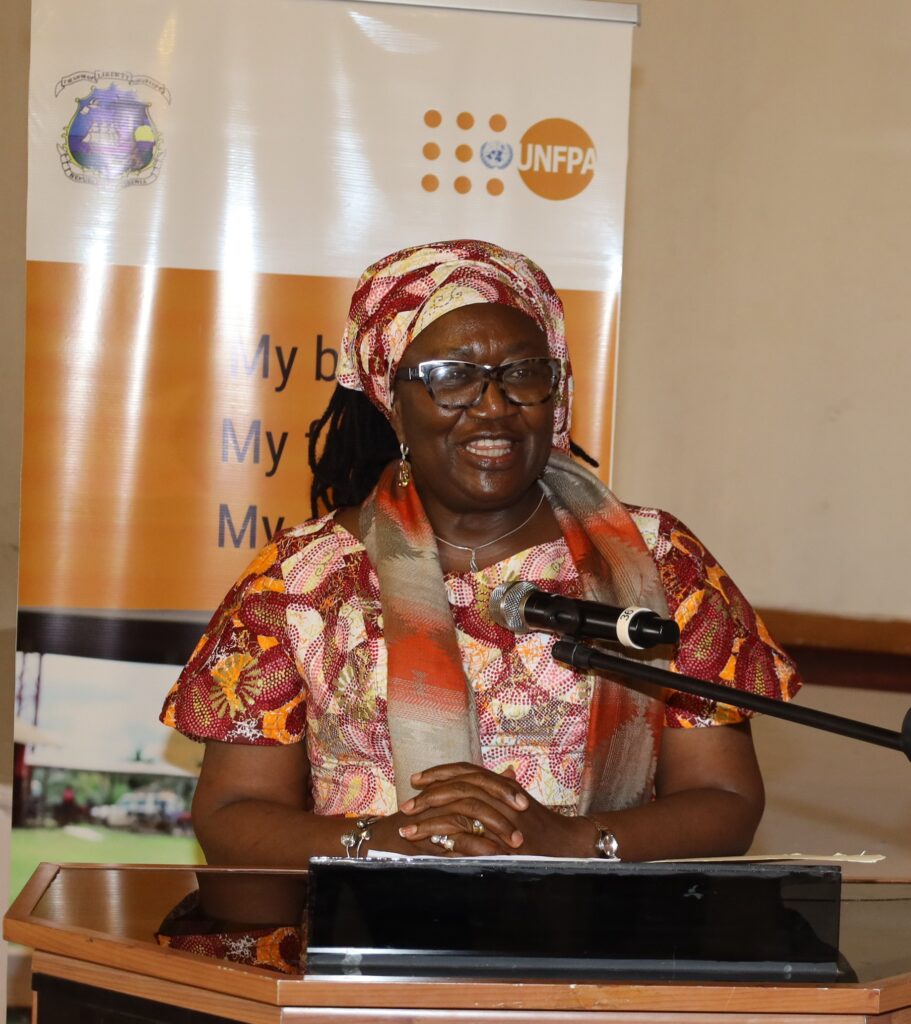
The Senator echoed the global concern, as raised by UNFPA Executive Director Dr. Natalia Kanem, about the widespread misconception that declining fertility rates stem solely from personal choices or selfish values. In reality, the causes often lie in systemic barriers: lack of reproductive healthcare, financial insecurity, limited access to education, and climate-related anxiety.
“Blaming youth for fertility trends ignores the real obstacles they face,” Senator Varpilah stated. “Policies must be responsive to these realities—not rooted in outdated assumptions.”
Building Policy on Rights, Not Numbers
Senator Varpilah outlined how Liberia must respond: with evidence-based, people-centered, and youth-oriented policies that enable informed decision-making. She emphasized the central role of the Legislative Committee on Population and Development (LCPD), which she chairs, in facilitating this shift.
The LCPD, she noted, is working in close coordination with the Executive and Judiciary to integrate population dynamics into national development planning. It is committed to driving legislation that improves the legal, social, and economic status of children, youth, and women — from comprehensive sexuality education to accessible maternal care and youth-friendly employment programs.
“A youthful population will require policies that make parenthood affordable, secure decent housing, expand tertiary and vocational education, and provide comprehensive reproductive health services,” she said. “These are not luxuries — they are necessities for sustainable development.”
A Hopeful Message for the Future
Senator Varpilah’s remarks were echoed by UN Resident Coordinator Madam Christine N. Umutoni, who emphasized that population issues must be addressed through empowerment, not restriction. “Young people across Liberia dream of lives marked by love, dignity, stability, and opportunity,” she said. “Empowerment begins with education and is grounded in equality.”
Madam Umutoni called for stronger investments in youth-friendly services, economic opportunity, and inclusive policy-making. “No young person should be denied contraception or maternal care. No young woman should have her future dictated by unintended pregnancy or forced marriage,” she asserted.
Both leaders agreed that supporting the agency of young people is not merely a human rights imperative but a development strategy. Empowered youth can help build a resilient Liberia where every citizen contributes to a just, peaceful, and prosperous society.
A Population That Is an Asset — Not a Burden
In closing, Senator Varpilah called for unity in reimagining Liberia’s population as a powerful resource. “Let us reject fear and embrace possibility. Numbers matter, yes — but the quality of healthcare, income, education, and dignity matter more,” she stated.
She commended the UNFPA, the broader UN System, and Liberian civil society for promoting population as an asset rather than a liability. She emphasized that inclusive, rights-based solutions are the only way to navigate today’s demographic transitions.
“Liberia’s future is not written in numbers,” Varpilah concluded. “It will be shaped by the boldness of our policies, the integrity of our leadership, and the strength of our commitment to young people.”
As World Population Day 2025 is commemorated, the message is clear: for Liberia to thrive, its youth must not only survive but be given every tool to lead.


