


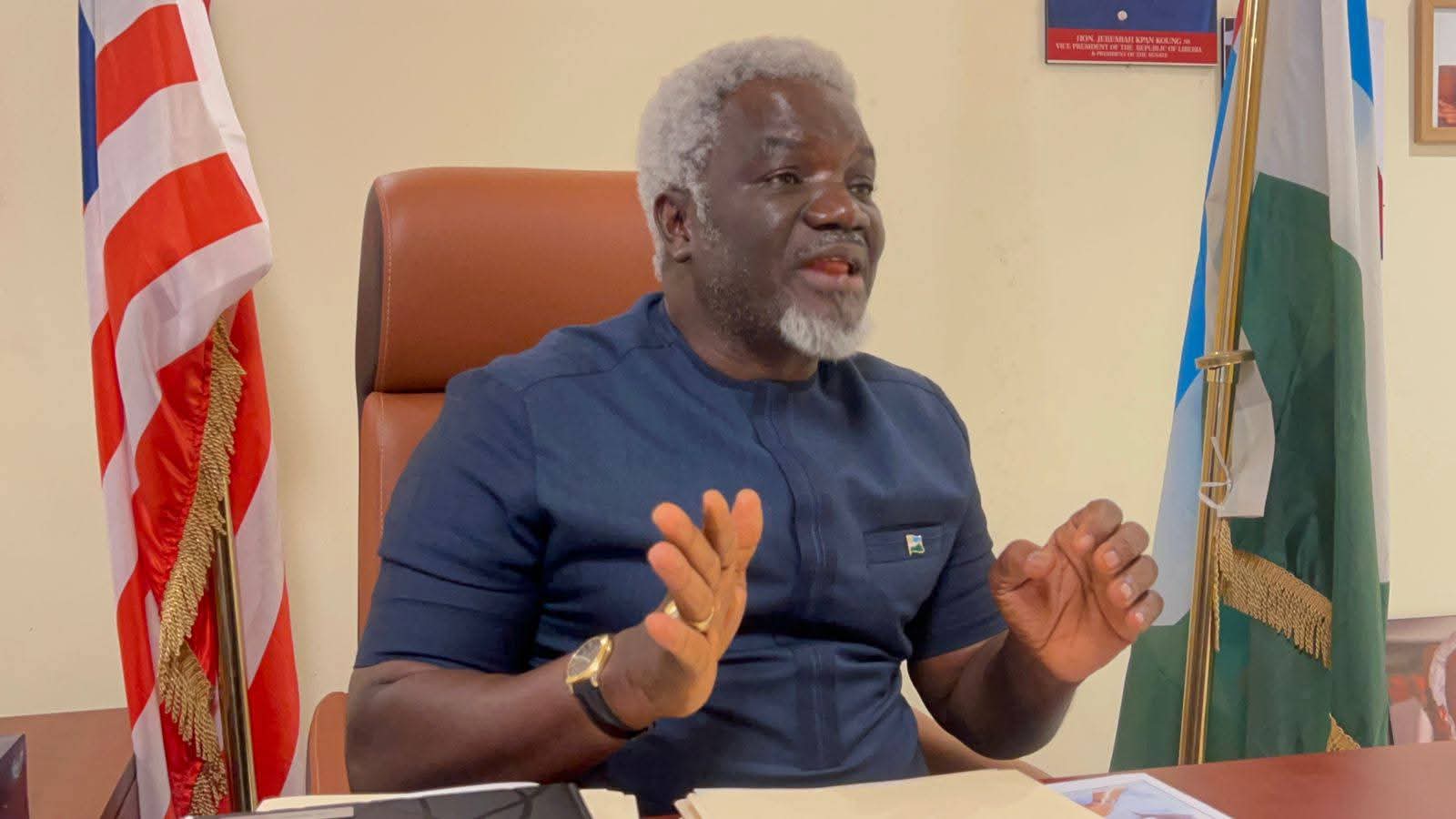
An Analytical Review of the Campaign Against Senator Zoe Emmanuel Pennue
By DK News Analysis Team
In Liberia’s turbulent political theater, popularity is often a paradox — both a crown of honor and a target of attack. For Grand Gedeh County’s long-serving Senator Zoe Emmanuel Pennue, this paradox has been lived, felt, and weaponized.
As one of the most resilient and electorally consistent politicians in the country’s recent history, Pennue has been subjected to years of orchestrated misinformation campaigns —carefully crafted to look like truth, but devoid of facts and logic.
Senator Pennue’s unmatched political trajectory — from three terms in the House of Representatives to his current post in the Senator — is no accident. It is the outcome of a 20-year political base, the Zoe Pennue Movement for Development (ZPMD), rooted in grassroots loyalty, development delivery, and an uncanny ability to navigate the currents of Liberian politics.
Yet, this success has come at a cost. Political jealousy, compounded by repeated electoral defeats suffered by his opponents, has birthed an arsenal of falsehoods — none more persistent than two specific allegations:
- The disappearance of Mr. Alfred Dunner, a staff of the National Elections Commission (NEC), and
- The death of Representative Erol Madison Gwion.
These events, tragic and complex in their own right, have been manipulated into smear campaigns designed to taint Senator Pennue’s image. But a closer, fact-based look reveals how these allegations collapse under scrutiny.
1. The Disappearance of Alfred Dunner: Family Tragedy Turned Political Weapon
In May 2021, the mysterious disappearance of Alfred Dunner in the Nioa Clan shocked the county. But from the outset, the story was far from straightforward.
Dunner, who had been battling a prolonged illness, voluntarily sought traditional treatment in Jazon village — a place he had faith in due to a prior successful visit with his sister. Accompanied by his younger brother, Jeremiah Nyzee Dunner, and his nephew, Christopher Cummy, Alfred never returned.
Eyewitness accounts — including the herbalist who hosted them — revealed troubling contradictions. Jeremiah reportedly had a heated dispute with Alfred over a laptop. Shortly after, he returned from the bush claiming Alfred had run into the forest. Christopher, meanwhile, claimed he was asleep during the incident but fled to Ivory Coast the very next day — behavior that raises questions.
Even Alfred’s wife, Vivian, acknowledged that Alfred had instructed her not to inform his brother Rev. Bill Dunner about his condition — yet she did. These inconsistencies point toward a family tragedy, not a political conspiracy.
Nonetheless, the incident was hijacked for political purposes. A group of rivals falsely accused a list of high-profile individuals, including Senator Pennue, of orchestrating Alfred’s disappearance. The core of the accusation was absurd: that these leaders conspired in Putu Jarwodee to “kidnap” Alfred — despite zero evidence, no legal indictments, and conflicting timelines.
Critically, it was not even Alfred Dunner who oversaw the controversial 2021 by-election. That responsibility belonged to Mrs. Annie Suah Dennis and Mr. Alfred Togba. Alfred Dunner had only served during the 2020 senatorial race — in which he himself declared Senator Pennue the winner.
This raises the fundamental question: why would Pennue target someone who certified his own victory, and especially during an election cycle in which he wasn’t even a candidate?
The answer is politically uncomfortable for his detractors: there was no motive. Only political desperation.
2. The Death of Representative Gwion: Grief Exploited for Political Gain
In a similarly cynical maneuver, the tragic death of Representative Erol Madison Gwion became another rallying point for anti-Pennue propaganda. With no evidence, and again no motive, Senator Pennue was callously blamed.
At the time, Senator Pennue was not a contestant for any Representative seat. He had no political stake in Rep. Gwion’s district and maintained a posture of national cooperation — working even with the Unity Party-led government for the greater good of Grand Gedeh.
Still, false narratives were pushed, rumors were weaponized, and tensions were fanned. The culmination of this toxicity was violence — with the burning of Senator Pennue’s properties in what can only be described as an attempted political cleansing.
Yet, the people spoke. In March 2025, the senator made a dramatic return to Konobo District — the very district from which Alfred Dunner hailed — and was welcomed not with hostility, but with open arms. That moment of reconciliation punctured the myths constructed over years of political deceit.
Traditional Mysteries vs. Political Exploitation
Mysterious disappearances and unexplained deaths are not new in Grand Gedeh or Liberia’s southeast. Families still grieve the loss of missing elders in Gbazon, a child in Zleh town, and even Superintendent Kai Farley’s own brother.
Historically, these events were attributed to spiritual forces, traditional beliefs, or misfortune — not political actors.
But in Senator Pennue’s case, the narrative changed. Why? Because he was winning. Because he represented a new model of political survival and stability in a region that has often been a battleground for shifting loyalties.
Conclusion: The People Still Choose Pennue
Despite the propaganda, despite the smear campaigns, and despite violence — Senator Zoe Emmanuel Pennue remains politically unshaken. His strength lies not in rhetoric, but in the unwavering support of his constituents from Zwedru to Konobo.
His accusers have failed on every front: They had the chance to go to court. They didn’t. They had the chance to win votes. They couldn’t. They had the chance to tell the truth. They wouldn’t. The case against Senator Pennue is not a matter of justice — it is a case study in political envy.
As the senator himself has declared, “Fallacies dressed in truth form are still fallacies — no matter how fancy the dress.”
With Part 3 on the horizon, one thing is clear: in the politics of Grand Gedeh, facts still matter — and the people know the difference.


