


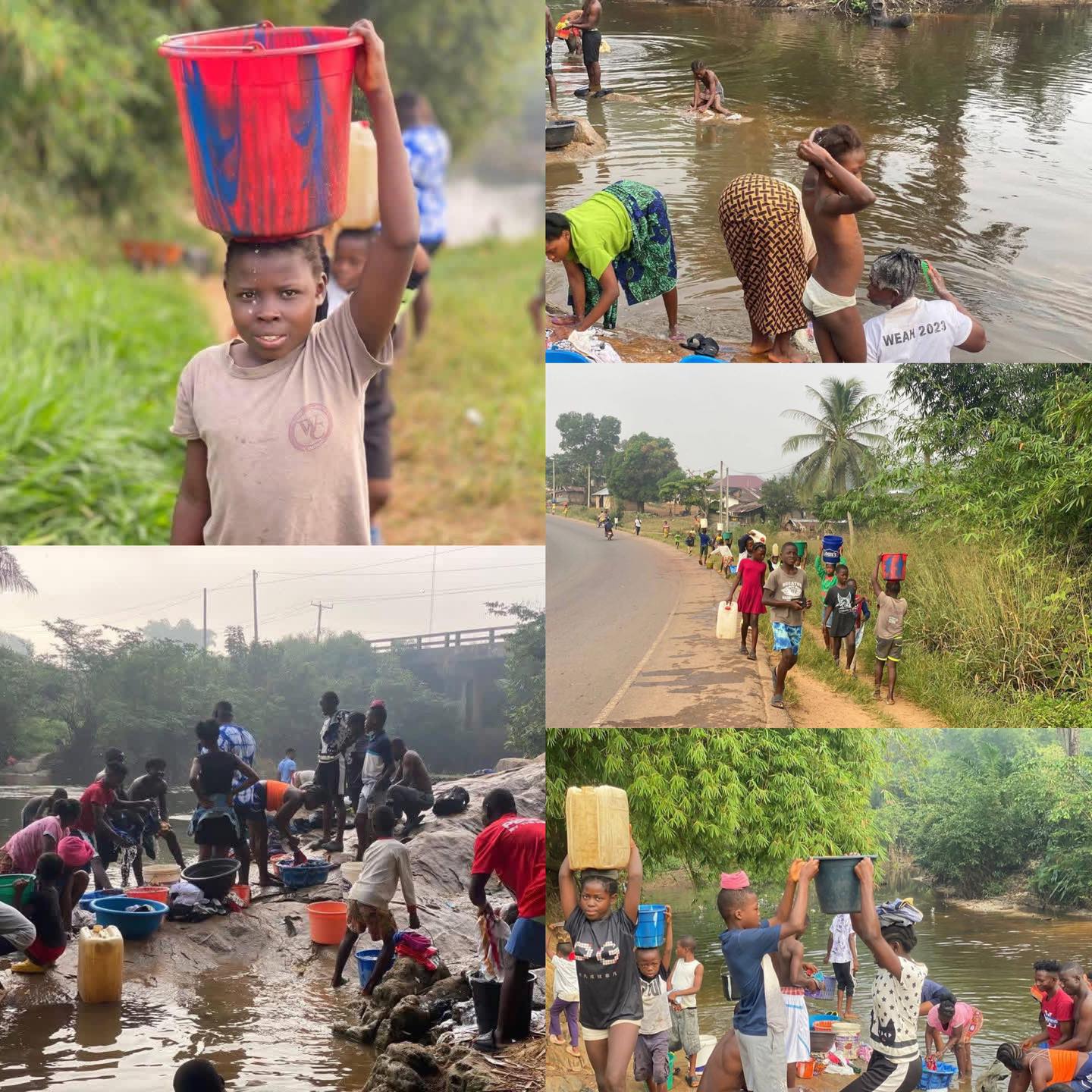
In Morris’s Farm, a quiet community in Todee District, Rural Montserrado County, daily life revolves around a struggle many Liberians take for granted: access to safe drinking water. For years, residents here have depended almost entirely on the Du River for drinking, cooking, bathing, and other household needs—a reality that continues to expose families to serious health and sanitation risks.
The river, residents say, is shared by humans, livestock, and neighboring settlements, making it unsafe for consumption. Children are often seen fetching water in containers, while elderly residents rely on the same untreated source, despite growing fears of waterborne diseases. Community members recount repeated appeals to authorities, but no durable water system has been constructed to ease their suffering.
“We know the water is not safe, but we have no other option,” one resident explained. “If you don’t go to the river, your family will have nothing to drink.”
The lack of clean water has fueled frustration and resentment within the community, particularly as residents compare their daily hardship with reports of high salaries and benefits enjoyed by some government officials in Monrovia. Locals question national priorities, arguing that while millions of U.S. dollars are reportedly spent monthly on public officials, basic services such as clean water remain unavailable in rural communities.
“This is not about comfort or luxury,” another resident said. “We are simply asking for clean water—something every Liberian deserves.”
Public health experts warn that continued reliance on untreated river water significantly increases the risk of cholera, typhoid, diarrhea, and other preventable diseases. Such outbreaks place additional strain on already limited healthcare services and deepen the cycle of poverty in rural areas.
Civil society organizations and development advocates are now urging the government and international partners to prioritize water, sanitation, and hygiene projects in underserved communities like Morris’s Farm. They argue that investing in rural water infrastructure would not only improve health outcomes but also restore dignity and public confidence in governance.
As Liberia pushes forward with development and economic reforms, residents of Rural Montserrado insist that progress must be measured by real improvements in people’s lives. For them, true development begins with something simple yet life-saving: access to safe, clean drinking water.


