


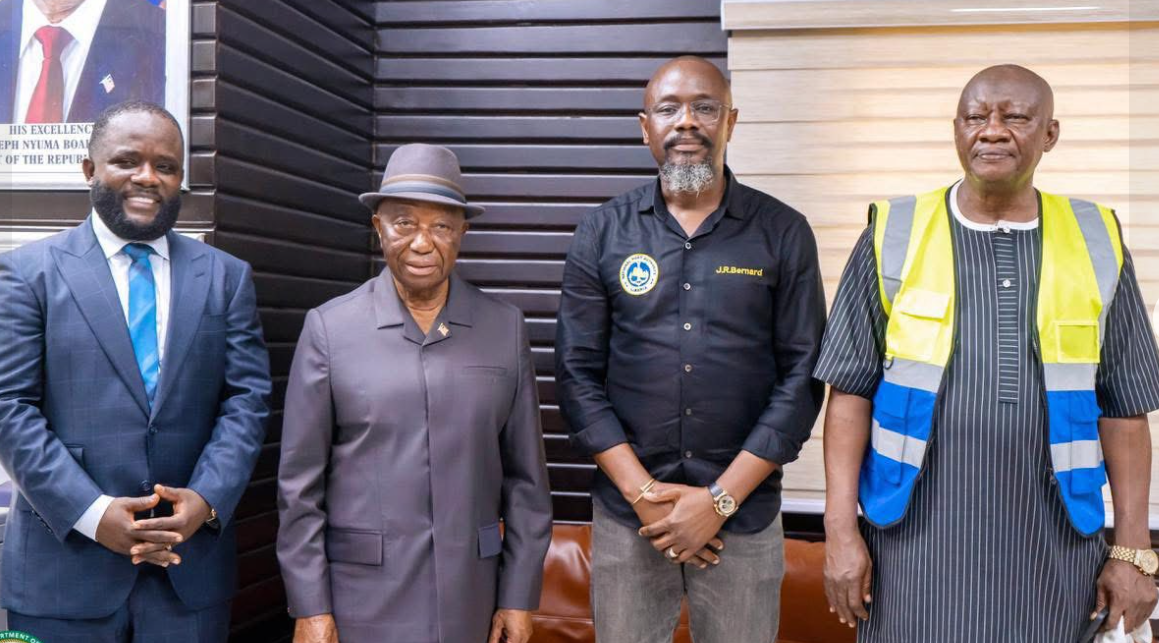
President Joseph Nyuma Boakai’s recent visit to the Freeport of Monrovia on January 15, 2026, is being presented by the government as a demonstration of the ARREST Agenda in action—an agenda centered on accountability, economic revitalization, and improved public service delivery. While the visit, which included inspections of the Presidential Warehouse and the National Port Authority (NPA) offices, underscores the President’s hands-on leadership, it also exposes a broader challenge: translating rhetoric into measurable impact.
The Freeport of Monrovia is undeniably critical to Liberia’s economic lifeblood. It serves as the primary gateway for imports and exports, a major source of customs revenue, and a linchpin for the nation’s supply chain. President Boakai’s focus on operational efficiency, governance reforms, and service improvements at the port is therefore strategically sound. Transparent governance and customer-oriented service are indeed essential for economic growth and competitiveness.
Yet, the optics of such visits risk obscuring underlying realities. Past administrations, including those with similar “inspection tours,” have often used these exercises to signal commitment while systemic challenges—inefficient operations, poor infrastructure, revenue leakages, and bureaucratic bottlenecks—persist. The ARREST Agenda emphasizes accountability, but questions remain: How are reforms being institutionalized? How are performance metrics tracked and enforced? And critically, are ordinary Liberians and businesses experiencing tangible benefits from these initiatives, or is this primarily a showcase for political optics?
Moreover, while President Boakai’s engagement with senior NPA officials signals executive oversight, there is a need for broader scrutiny. True accountability requires independent monitoring, transparent reporting, and corrective action when results fall short. Without these mechanisms, visits—even by the President—cannot substitute for sustained policy execution.
Liberia’s economic transformation depends not merely on high-level inspections or proclamations but on practical outcomes: reduced delays at the port, lower costs for importers and exporters, improved revenue collection, and a reliable supply chain. The Freeport can be a catalyst for growth, but only if political will is matched by operational competence, investment in infrastructure, and institutional accountability.
President Boakai’s visit sends a strong symbolic message: the ARREST Agenda remains central to the administration’s development vision. However, symbolism must evolve into measurable results. Liberians deserve more than promises—they deserve visible progress, tangible improvements in trade efficiency, and accountability that is not limited to photo opportunities and ceremonial inspections.
Ultimately, the Freeport visit should not be an end in itself. It must serve as a benchmark for what the ARREST Agenda can and must deliver: consistent, transparent, and effective management of Liberia’s most critical economic institutions. The nation—and its businesses—will be watching closely to see whether the agenda translates into real, sustainable progress.
D-KANTY NEWS NETWORK – Editorial:


