


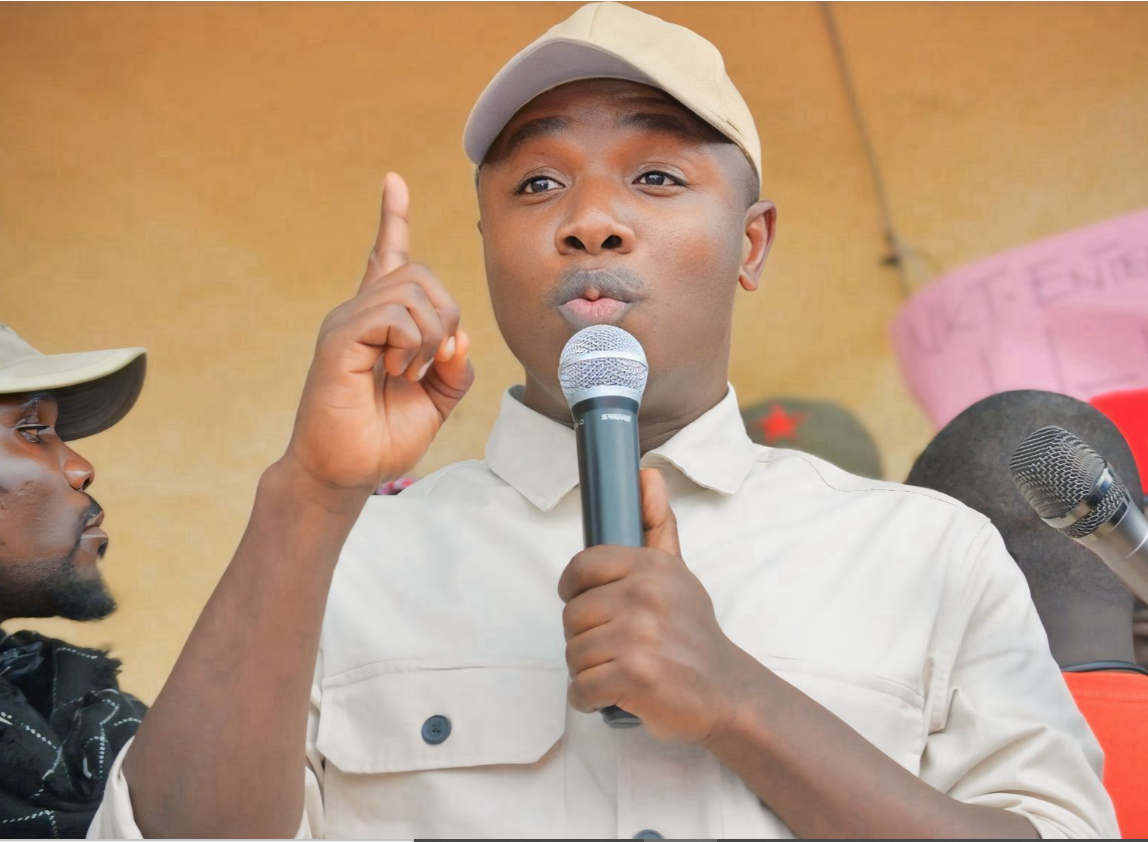
The Secretary General of the Congress for Democratic Change (CDC), Jefferson T. Koijee, has reacted strongly to the newly announced United States visa restrictions affecting Liberia and 74 other countries, describing the development as the outcome of sustained political attacks, misinformation, and international lobbying against him and the former ruling establishment.
In a lengthy public statement, Koijee portrayed himself as a victim of what he termed “malicious and vicious lies and propaganda,” alleging that political opponents linked to the current Boakai–Koung administration spent significant resources lobbying internationally to have him sanctioned. According to Koijee, those efforts were aimed at destroying his reputation both at home and abroad.
Koijee said the campaign against him was built on false narratives deliberately repeated to weaken his credibility and spirit. However, he maintained that the strategy failed, arguing that truth, patience, and purpose ultimately prevailed over misinformation.
“They believed the rumors would break me and that the noise would replace truth,” Koijee stated, adding that instead of engaging publicly with accusations, he chose to focus on personal growth, discipline, and tangible results. He described his approach as prioritizing “progress over gossip” and “results over revenge.”
The CDC Secretary General further linked the current visa restrictions to what he described as a broader political agenda, asserting that while earlier efforts targeted individuals, the outcome has now placed the burden on the entire country. He claimed that the same political machinery that once sought personal sanctions against him has now contributed to Liberia facing international consequences.
“Yesterday it was individuals who were sanctioned; today, the entire nation bears the weight,” Koijee said, suggesting that the visa restrictions reflect a failure of political leadership rather than personal wrongdoing on his part.
Despite the controversy, Koijee maintained that his resolve remains unshaken. He emphasized that his continued resilience stems from a clear sense of purpose, which he said cannot be undermined by pressure, propaganda, or political opposition.
He also framed his experience as a broader lesson, noting that resistance had strengthened rather than diminished him. According to Koijee, repeated attempts to discredit him only revealed, in his words, a fundamental underestimation of his character and determination.
The United States has not publicly linked the new visa restrictions to any specific individual statements made by Koijee. Meanwhile, the policy has sparked national debate in Liberia, with many citizens calling for clarity from the government and stronger diplomatic engagement to mitigate its impact.
As discussions continue, Koijee’s remarks add a politically charged dimension to the unfolding debate, highlighting growing tensions between the former ruling CDC and the current administration over responsibility, governance, and Liberia’s international standing.


