


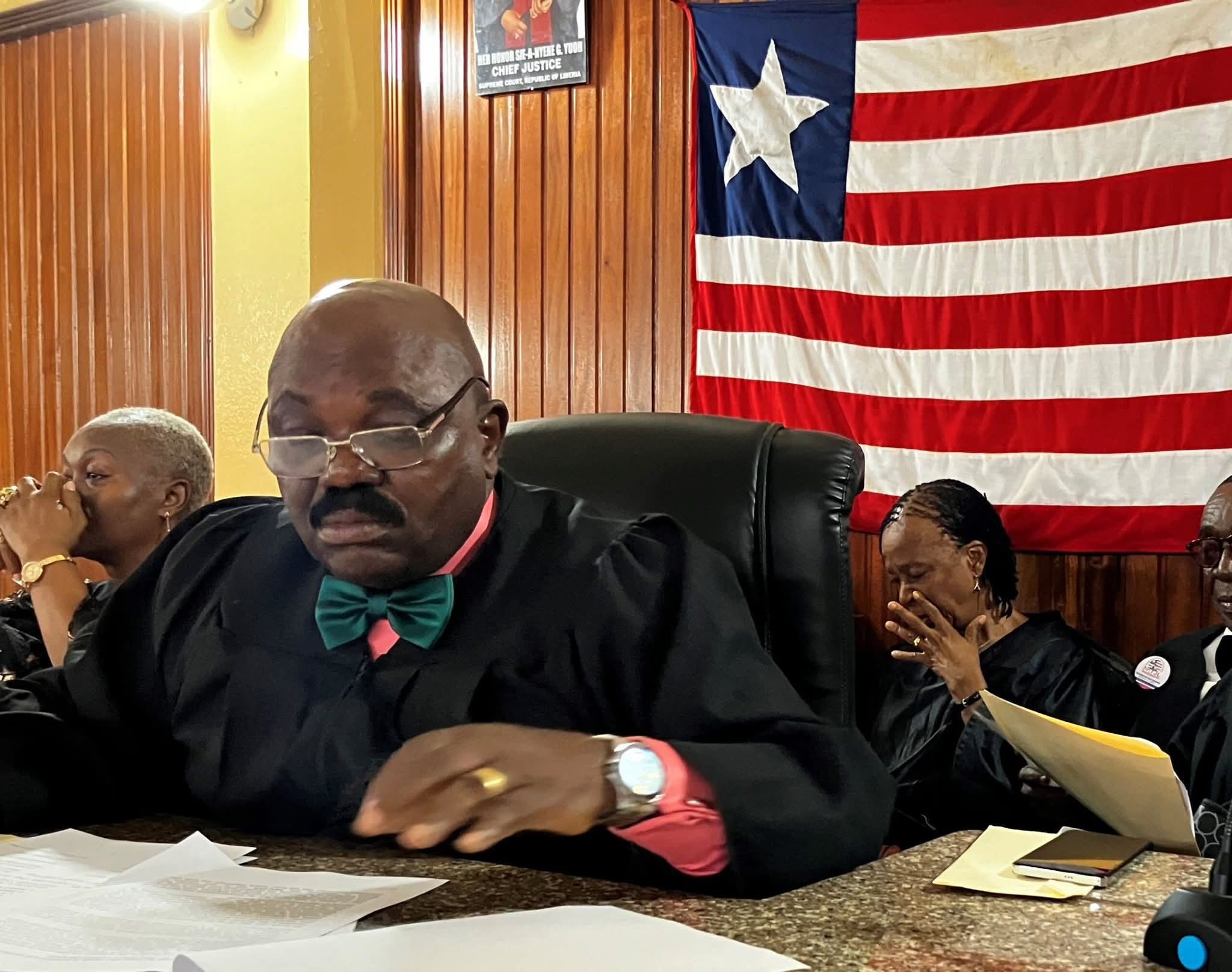
MONROVIA, September 4, 2025 – The long-awaited Capitol arson trial took an unexpected twist on Thursday when Criminal Court “A” Judge Roosevelt Z. Willie denied a defense motion seeking to broadcast the proceedings live, a decision that has deepened national debate over transparency in Liberia’s justice system.
The case, which centers on the 2024 blaze that gutted sections of the Capitol Building, has already gripped public attention, not only for the seriousness of the charges but also because one of the defendants is Grand Kru District #2 Representative and former House Speaker J. Fonati Koffa. With political stakes high and the public eager for answers, the defense argued that opening the courtroom to live television coverage would help foster accountability.
Defense Pushes for Transparency
Leading the motion, veteran defense lawyer Cllr. Arthur Tamba Johnson described the request as essential for safeguarding public trust in Liberia’s judicial institutions. He argued that live coverage would dispel rumors, challenge political narratives, and allow citizens to judge for themselves the fairness of the proceedings.
“This case transcends the defendants,” Cllr. Johnson asserted. “It speaks to the credibility of our courts and the confidence of Liberians in the rule of law. Justice must not only be done but must be seen to be done.”
The defense cited a precedent set by the Supreme Court in the In Re petition, where live broadcasting was allowed in matters deemed of high public interest. Johnson further noted that in an era of rampant misinformation, denying public access could deepen suspicion and erode confidence in the outcome of the trial.
Prosecution Warns of Courtroom Disruption
The prosecution, however, urged caution. Lead prosecutor Cllr. Richard Scott opposed the request, describing it as premature and politically motivated. He contended that allowing cameras inside the courtroom would invite spectacle, compromise the dignity of the judicial process, and potentially intimidate witnesses.
“Justice is not theater,” Cllr. Scott said firmly. “Televised trials risk turning the courtroom into a stage, where lawyers play to the cameras rather than pursue truth. Our laws are clear—criminal proceedings must not be broadcast.”
Scott also highlighted existing court rules that explicitly prohibit electronic recordings and live transmissions during criminal trials, arguing that the defense motion clashed with established judicial procedures.
Judge Rules Against Cameras
In his ruling, Judge Willie sided with the prosecution, concluding that televising the trial could undermine its integrity. He emphasized that while transparency is vital, it must be balanced with the need to preserve order, fairness, and the solemnity of proceedings.
“The pursuit of justice requires discipline and focus,” Judge Willie stated. “This court will not allow measures that risk distraction or transform these proceedings into a spectacle.”
Public Reaction Divided
The decision has ignited mixed reactions across Liberia. Some legal scholars and civil society leaders welcomed the ruling, arguing that trials must be conducted within the boundaries of law and procedure, free from public pressure or media sensationalism.
Yet others criticized the denial as a setback for judicial openness in a country where courts are frequently accused of secrecy and corruption. Media organizations and transparency advocates called the ruling a “missed opportunity” to demonstrate accountability in one of the most politically sensitive trials in recent years.
“This is not just about one case,” said a civil society activist reacting to the ruling. “It’s about whether our courts are prepared to meet modern standards of openness. In the absence of cameras, rumors will fill the gap.”
Looking Ahead
With the trial now moving forward behind closed doors, attention shifts to how the proceedings will unfold and whether the absence of live coverage will fuel further controversy. Analysts predict that the debate over courtroom transparency will continue well beyond the trial, raising broader questions about whether Liberia’s judicial system is adapting to the public’s demand for accountability.
As the Capitol arson trial proceeds, the courtroom may remain sealed off from television cameras, but the spotlight on Liberia’s justice system is brighter than ever.


