


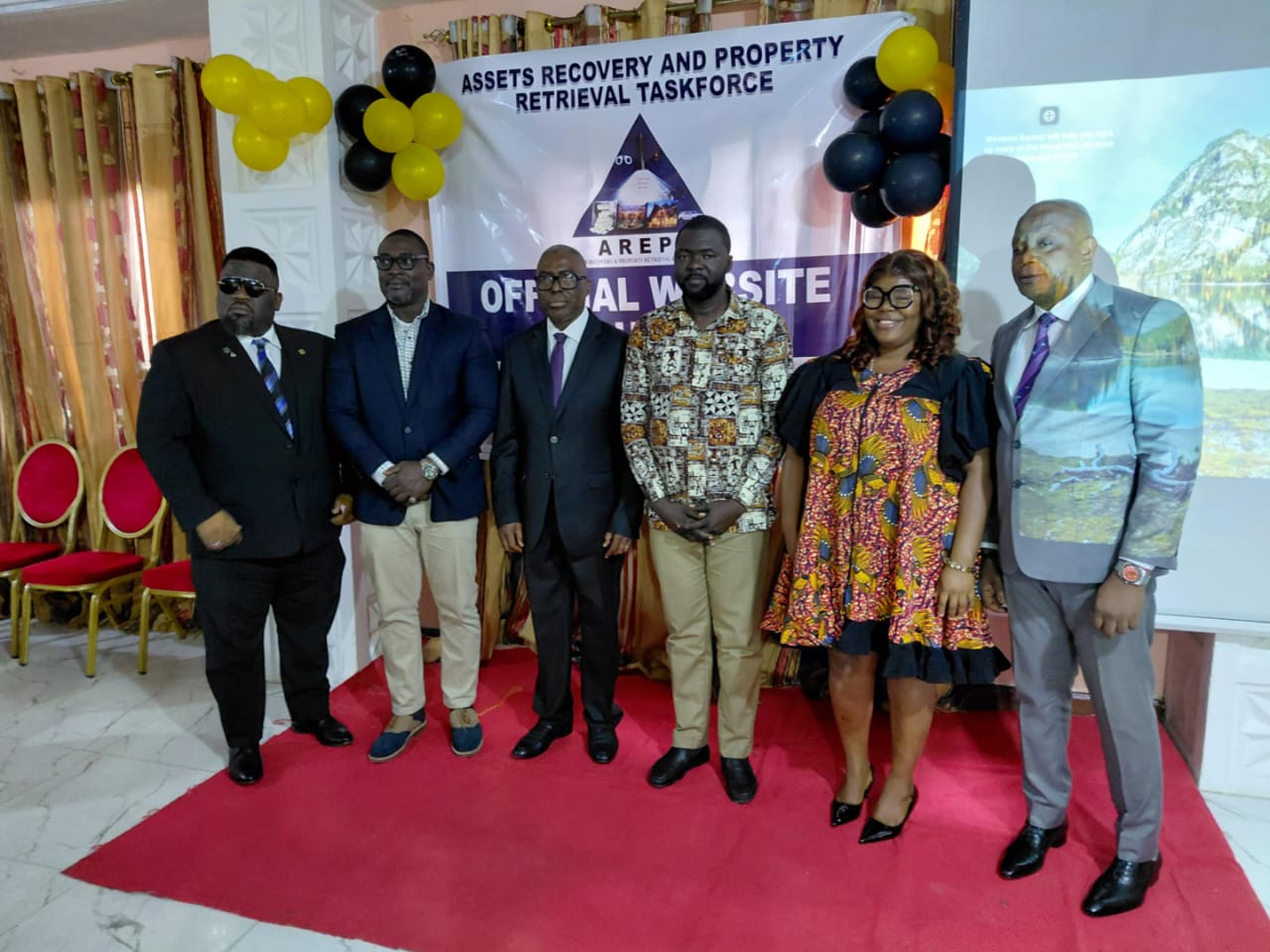
August 11, 2025-On a quiet Monday morning in King Gray, Paynesville, the Golden Key Hotel conference hall was filled with a buzz of anticipation. Government officials, anti-corruption advocates, and members of the press had gathered for an important moment that Cllr. Edwin Kla Martin, Chairman of the Assets Recovery and Property Retrieval Task Force (AREPT), called “a crucial step toward transparency.”
It was August 11, 2025, and the agenda was clear: launch AREPT’s official website and send a strong message to the National Legislature—Liberia’s fight against corruption needs stronger legal support.
At the podium, Martin spoke with determination and urgency. “The launch of our website isn’t just a symbolic act,” he said. “It’s a key step toward transparency and accountability, making sure the public knows what we are doing.”
He explained that the website would serve as a digital window into AREPT’s work, letting citizens follow cases, understand investigations, and hold officials accountable. But Martin quickly shifted from celebration to challenge.
He called on lawmakers to pass laws that would turn AREPT from a group created by executive order into an independent institution with its own investigative powers. “We want to be a beacon of hope for recovering stolen public assets and bringing back illicit wealth,” he said. “But we can only do this with the full support of the Legislature.”
AREPT was created in March 2024 by Executive Order No. 126 and renewed in March 2025 by President Joseph Boakai under Executive Order No. 145. Its mission is broad: to find, trace, seize, and recover stolen or diverted public assets inside Liberia and abroad. Working under the Minister of State for Special Services, AREPT can also start investigations, civil cases, and criminal prosecutions with the Ministry of Justice and other agencies.
The Task Force works closely with several agencies, including the Liberia Anti-Corruption Commission (LACC), Liberia Revenue Authority (LRA), Financial Intelligence Agency (FIA), General Services Agency (GSA), and Internal Audit Agency (IAA). Beyond Liberia’s borders, AREPT partners with international groups to track and recover assets hidden overseas.
But Martin was honest about the challenges. Relying on other agencies often slows things down. “We need a mandate that lets us investigate independently and act decisively,” he said. Without clear legal power to identify, freeze, and seize assets, many big corruption cases risk stalling before justice is served.
Since its start, AREPT has launched several major investigations into alleged grand corruption. Martin stressed the Task Force’s commitment to due process and unbiased enforcement of anti-corruption laws. Still, he warned that without stronger legal backing, the agency’s ability to act firmly is limited.
The event went beyond speeches. The website launch showed a clear promise to engage the public—a place where citizens can follow AREPT’s work, get updates, and better understand the fight against corruption.
Lawrence Fahnbulleh, Acting Assistant Minister for Media Services at the Ministry of Information, Cultural Affairs and Tourism (MICAT), officially launched the site. Speaking for Information Minister Jerolinmek Piah, Fahnbulleh praised Martin’s leadership and vision. “This initiative is a vital part of AREPT’s plan to boost transparency and public awareness,” he said, promising MICAT’s full support to keep Liberians informed.
As the event ended, Martin’s words stayed with the audience—a mix of hope and challenge. “The fight against corruption is a fight for the soul of our nation,” he said. “Today, we’ve taken another step forward, but the journey ahead requires courage, cooperation, and above all, the political will to give AREPT the tools it needs to protect the people’s resources.”
With a new digital platform ready and a direct appeal to lawmakers, AREPT’s next chapter depends not just on technology or teamwork, but on whether the Legislature answers Martin’s call for a stronger, more independent anti-corruption framework.


