


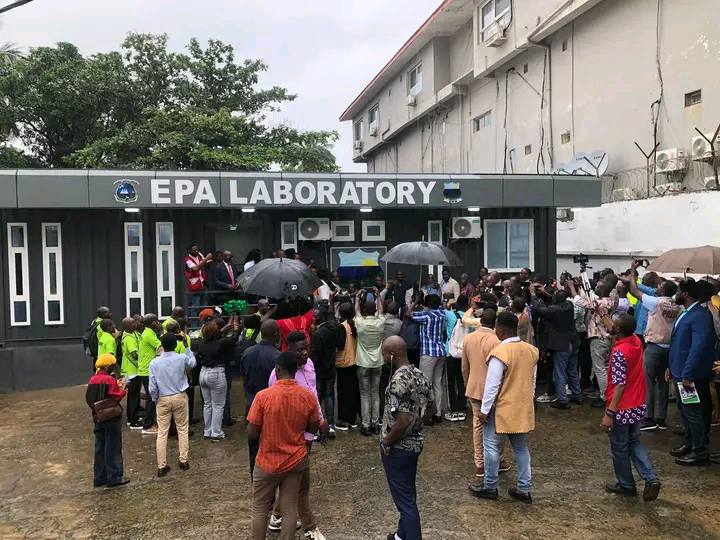
Tubmanburg, Bomi County – August 7, 2025 — Beneath the quiet canopies of Bomi’s forests, a new chapter in Liberia’s environmental journey is unfolding. Over the course of two days, August 6–7, the Environmental Protection Agency (EPA) of Liberia and the Forestry Training Institute (FTI) came together in Tubmanburg to plant the seeds of a transformative partnership—one that promises to shape the minds and hands of the country’s future conservation leaders.
This collaboration, driven by the EPA’s Department of Multilateral Environmental Agreements (MEAs), is not just an administrative accord—it’s a call to action. It aims to equip students and emerging professionals with the tools, knowledge, and motivation to tackle climate change, protect biodiversity, and manage forests sustainably.
At the helm of the EPA delegation was Arthur R. M. Becker, Director of the MEAs Department. Alongside him were John Forkpa Kannah, in-country facilitator for Liberia’s Nationally Determined Contributions (NDCs), and Teddy P. Taylor, the national focal point for the Freshwater Challenge. Together, they brought messages of urgency, hope, and collaboration.
Becker, standing before a gathering of FTI faculty, staff, and students, shared a message from EPA Executive Director Dr. Emmanuel K. Urey Yarkpawolo. He stressed the importance of working hand-in-hand with institutions like FTI to implement international environmental agreements on home soil and fulfill the sustainability pillar of the government’s ARREST Agenda for Inclusive Development (AAID).
“The challenges we face are enormous, but so is our potential,” Becker told the audience. “Institutional partnerships like this one are critical. Through them, we empower future environmental professionals to defend and develop Liberia’s natural resources responsibly.”
This outreach is more than symbolic. It lays the groundwork for synchronizing academic training with national goals, including Liberia’s commitments under the Paris Agreement (NDCs), its National Biodiversity Strategy and Action Plan (NBSAP), and its National Adaptation Plans (NAP).
Welcoming the EPA team, FTI Executive Director Joel Gamys expressed enthusiasm and gratitude. “We are proud to stand beside the EPA in confronting environmental threats. This partnership highlights our mutual dedication to fostering a conservation culture and strengthening sustainable resource use.”
Throughout the event, students and staff participated in dynamic workshops, presentations, and open discussions. Senior figures like Deputy Executive Directors Mrs. Jacqueline G. Dolo and Ms. Agape Toe actively joined the dialogue, underscoring FTI’s institutional commitment.
For the students—many of whom aspire to become foresters, environmental scientists, and community conservationists—the interaction was both educational and inspirational. Conversations ranged from the science of climate change to practical strategies for forest preservation and watershed protection. A key highlight was the unveiling of a roadmap to integrate climate change and biodiversity modules into FTI’s academic curriculum.
This partnership comes at a critical time. Liberia, like many nations, is facing the intensifying impacts of deforestation, habitat loss, and climate instability. These environmental crises are not distant threats—they are already affecting rural livelihoods, food security, and public health. That’s why both the EPA and FTI agree: action must begin with education.
Looking ahead, the two institutions are committed to expanding the collaboration. Plans are in motion to introduce technical training programs, community-based fieldwork, and joint environmental awareness campaigns. These efforts are designed not only to deepen knowledge but to drive behavior change and local resilience across vulnerable communities.
Ultimately, the partnership reflects the EPA’s broader vision—to decentralize environmental governance and nurture a new generation of green champions equipped to lead Liberia toward a sustainable and climate-resilient future.
As the two-day program concluded, the atmosphere in Tubmanburg was one of optimism and renewed purpose. With institutions like the EPA and FTI working in unison, Liberia is taking confident steps toward turning its environmental challenges into opportunities for growth, innovation, and lasting stewardship.


