


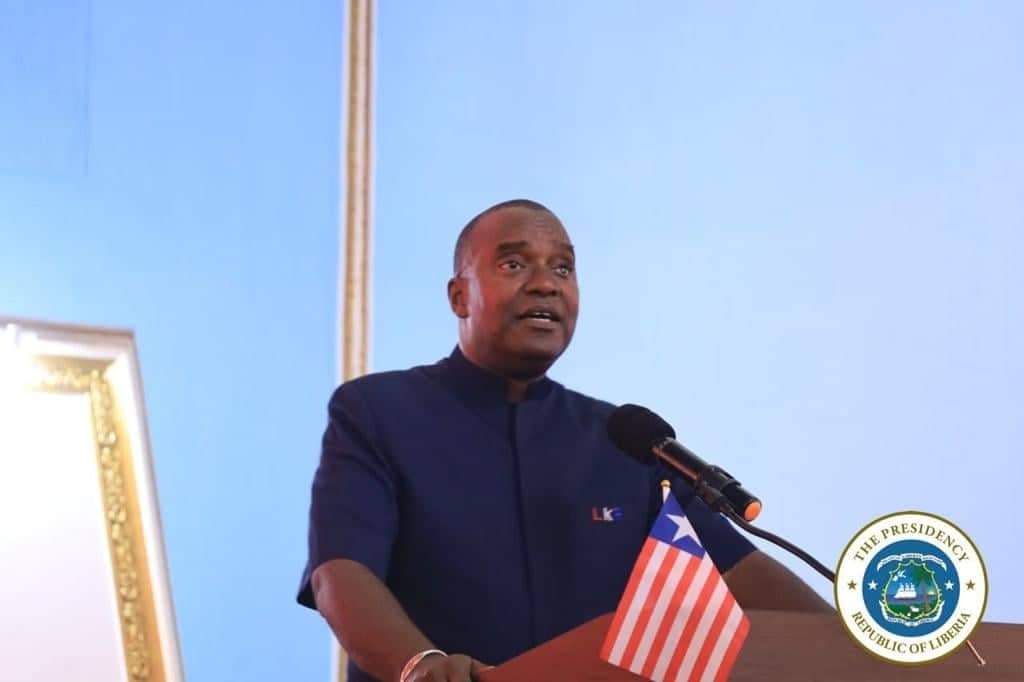
A recent comment by former U.S. President Donald Trump about Liberian President Joseph Boakai’s English-speaking ability has sparked a debate among Liberian political analysts, reigniting questions about diplomatic respect, international perception, and the broader implications of Liberia’s foreign relations.
During a recent interaction between the two leaders—part of President Boakai’s official visit to the United States—Trump reportedly complimented Boakai on his “good English.” While seemingly benign on the surface, the remark has drawn mixed reactions from Liberian commentators, particularly former Information Minister Rev. Dr. Lawrence Bropleh and policy analyst George Wisner, who voiced their views on a popular local radio talk show in Monrovia.
Bropleh: A Subtle Diplomatic Insult
Rev. Dr. Lawrence Bropleh, who once served as Liberia’s Minister of Information, viewed the comment not as a compliment, but as a diplomatic slight. According to Bropleh, praising the English proficiency of an African head of state—especially from a country like Liberia, whose official language is English—is not only patronizing but also ignorant of historical and cultural realities.
“It is diplomatically insulting,” Bropleh asserted. “For President of the United States to commend the English of a sitting President of Liberia, a nation founded by freed American slaves and whose official language has always been English, reflects a shallow understanding of Liberia’s identity and history.”
Bropleh argued that such comments reinforce a perception of African leaders as exceptions when they meet Western standards, rather than equals on the global stage. He cautioned against ignoring the subtle power dynamics behind such diplomatic language, especially when it comes from influential global actors like Trump.
Wisner: Focus on Strategic Gains
In contrast, George Wisner, a respected policy analyst and former Executive Director of the National Investment Commission (NIC), dismissed Bropleh’s concerns as misplaced. While he acknowledged that the comment may have been unnecessary, Wisner emphasized the need for Liberia to focus on the broader diplomatic and economic benefits of President Boakai’s U.S. trip rather than zeroing in on one statement.
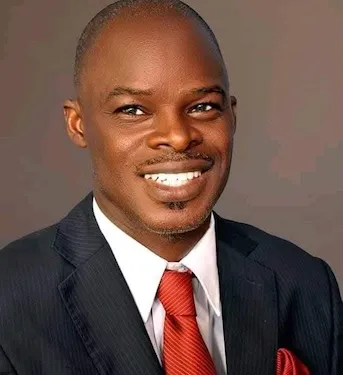
“We should not get distracted by what might be interpreted as an offhand remark,” Wisner argued. “Instead, we must assess the trip based on what it means for U.S.-Liberia relations, investment opportunities, and Liberia’s visibility on the global stage.”
Wisner added that expecting immediate returns from such state visits is unrealistic, noting that diplomacy often yields results over time. He stressed that President Boakai’s engagement with American policymakers and business leaders could open doors to future partnerships and assistance, regardless of rhetorical missteps by individuals like Trump.
A Deeper Diplomatic Dilemma?
The split in views between Bropleh and Wisner underscores a larger issue confronting Liberia: how to balance national pride with the practicalities of international diplomacy. Liberia has historically enjoyed a special relationship with the United States, rooted in its unique founding. However, this relationship has also been marked by paternalism and uneven power dynamics.
Trump’s comment—while perhaps casual or even well-intended—touches on a legacy of Western condescension toward African leaders. For critics like Bropleh, it is a reminder that such perceptions persist even among senior statesmen. For pragmatists like Wisner, the focus should be on navigating those perceptions without allowing them to derail more consequential discussions.
Political Optics and National Identity
The exchange has also reignited debate around Liberia’s global image and the expectations of its leaders on the world stage. As Boakai works to restore diplomatic momentum after years of strained or underwhelming foreign relations, every gesture, comment, and handshake is being closely scrutinized by both the Liberian public and international observers.
While some citizens echoed Bropleh’s sentiments on social media, accusing Trump of condescension, others aligned with Wisner’s argument, urging Liberians to look at the “bigger picture” and avoid unnecessary outrage.
Ultimately, this diplomatic episode reveals the complexity of international engagements for small nations like Liberia—where symbolism and substance must be carefully balanced. It also reflects the growing awareness among Liberians of how they are perceived abroad, and the importance of both projecting strength and maintaining humility in foreign affairs.
Conclusion
Whether President Trump’s comment was an innocent compliment or a veiled slight, its fallout highlights the delicate art of diplomacy in a world where tone, history, and perception matter as much as policy. As Liberia continues to reassert itself globally, its leaders and commentators alike will need to navigate such moments with both critical insight and strategic foresight.
In the end, the debate between Bropleh and Wisner is not merely about words—it is about how Liberia defines itself in the global arena and what kind of respect it demands, both rhetorically and materially, from its longstanding allies.


