


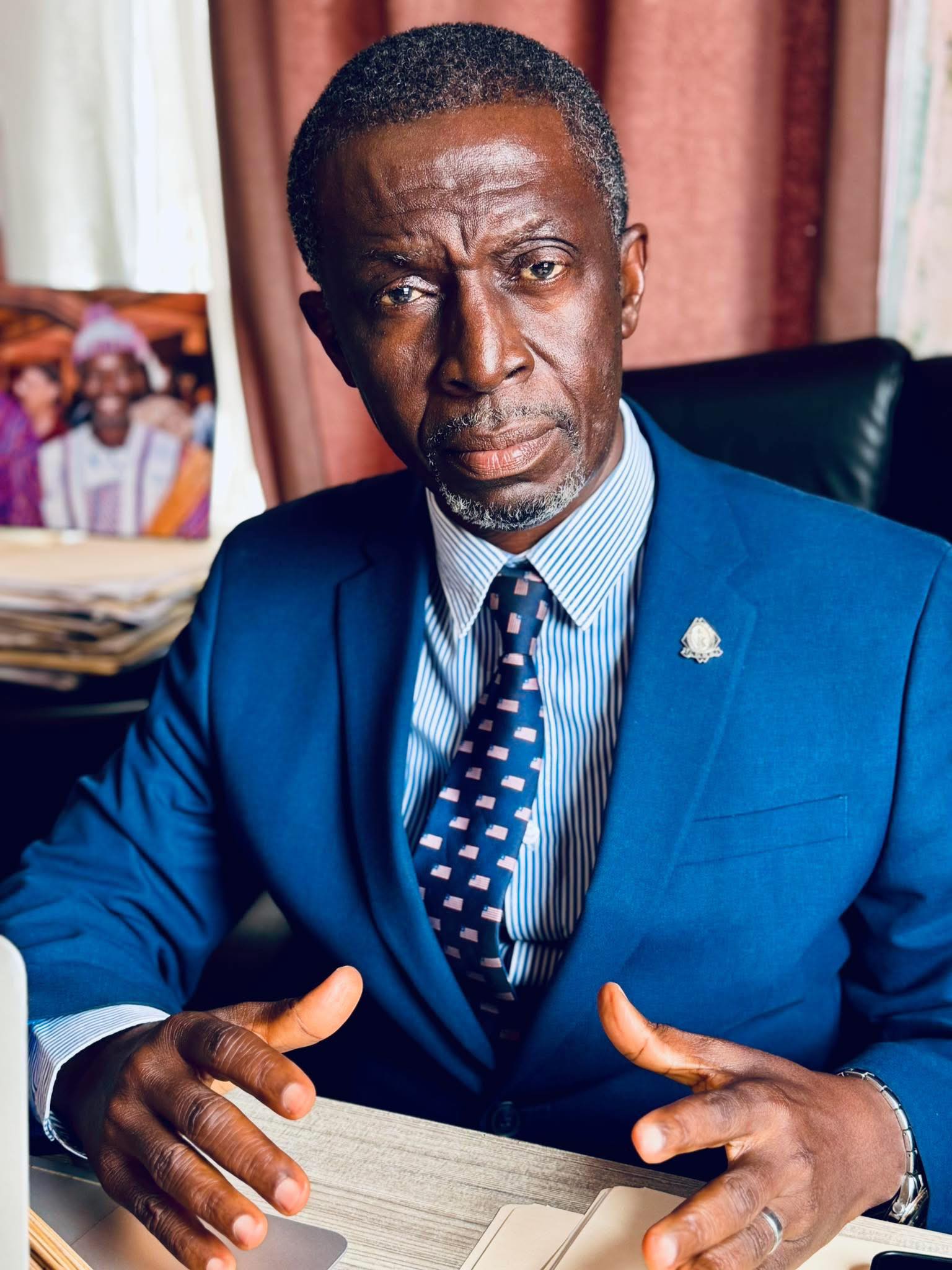
Monrovia-Liberia: February 14,2026-In the wake of the Supreme Court of Liberia’s recent ruling on vulgar public remarks targeting members of the judiciary, Cllr. Tiawan Saye Gongloe has entered the national debate with a pointed legal defence of the Court’s authority.
Writing less than 24 hours after the decision, Gongloe—one of the drafters of Liberia’s landmark free speech legislation, formally known as the Kamara A. Kamara Press Freedom Act—clarified that his longstanding advocacy for constitutional liberties does not extend to speech that undermines judicial integrity.
A Legal Line Drawn
Gongloe grounded his position in Section 17.3 of the Liberian Penal Code, which addresses criminal malevolence and conduct that threatens public order or obstructs the administration of justice. According to him, while Liberia has made significant progress in strengthening protections for free expression, those protections operate within constitutional and statutory boundaries.
He emphasized that freedom of speech, though robustly protected, is not absolute. It does not shield individuals who issue threats, circulate degrading attacks, or make unlawful accusations capable of weakening public confidence in the judiciary.
Defending Institutional Integrity
At the core of Gongloe’s statement is a broader constitutional principle: respect for the judiciary is fundamental to democratic governance. Courts, he argued, serve as guardians of the Constitution and arbiters of disputes between citizens and the state. Any attempt to delegitimize them through reckless or malicious speech risks destabilizing the rule of law itself.
In a constitutional democracy, Gongloe noted, no citizen—regardless of status, platform, or popularity—is above the law. Judicial authority must remain insulated from intimidation and unfounded allegations if institutional stability is to be preserved.
Free Speech and Responsibility
Gongloe’s intervention adds nuance to an increasingly polarized public conversation. As a known proponent of media freedom reforms, his defense of the Court signals that constitutional liberties and judicial accountability are not mutually exclusive concepts. Instead, they coexist within a framework governed by statutory limits and civic responsibility.
The broader implication of his argument is clear: protecting free expression requires equally firm protection of institutions that safeguard democratic order. Where speech crosses into criminal malevolence or deliberate obstruction of justice, legal consequences may follow.
A Constitutional Test
The recent controversy has reignited public discourse on the boundaries of speech in Liberia’s digital age. Gongloe’s statement underscores that while democratic systems thrive on open criticism, they also depend on respect for legal institutions.
As Liberia navigates the tension between liberty and accountability, the debate may ultimately define how the Republic balances expressive freedoms with the imperative to preserve judicial dignity and constitutional stability.


