


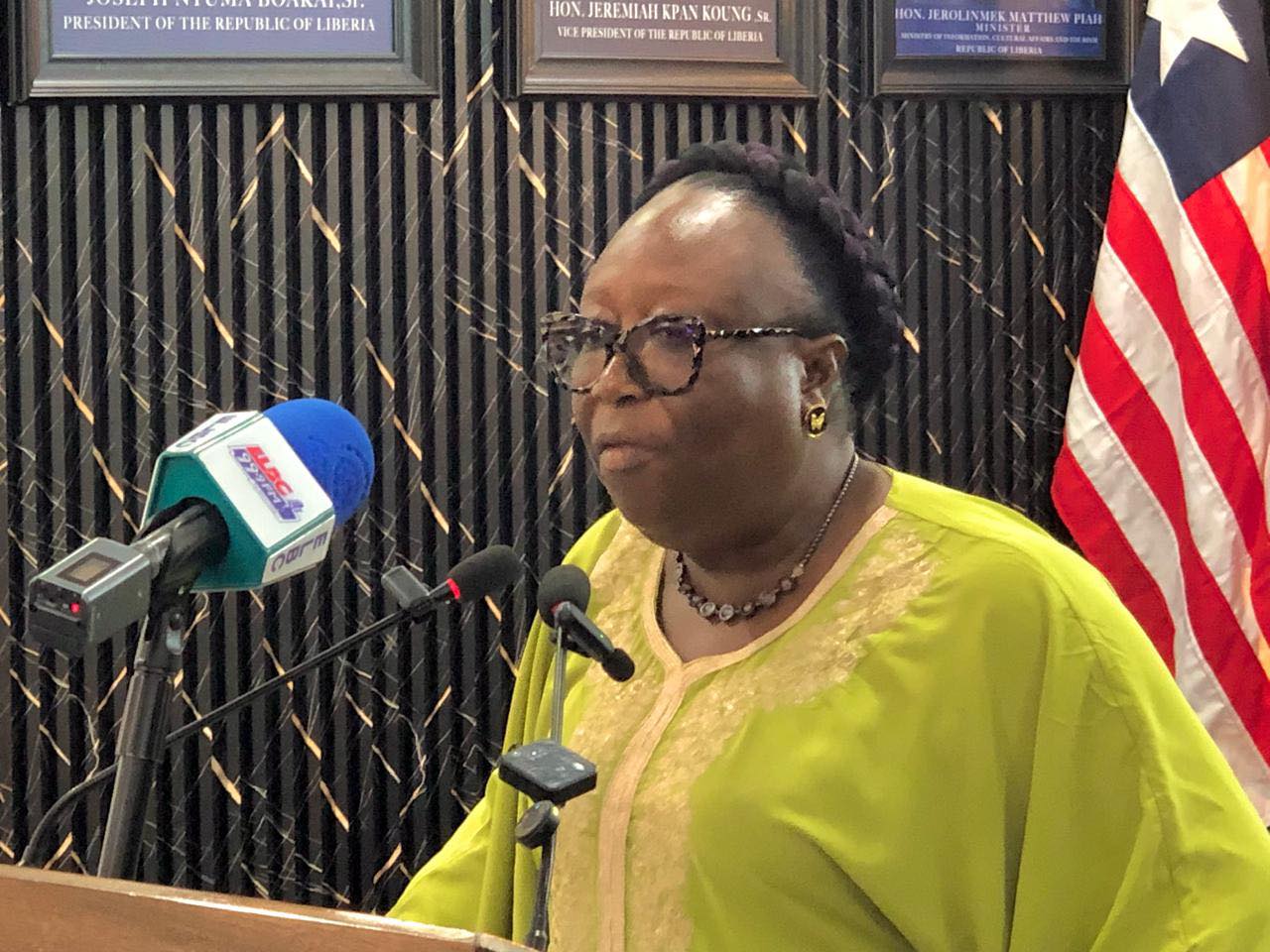
MONROVIA – Liberia’s higher education sector is entering what may be its most consequential reform era in decades, as Cecelia Cassell, Director General of the National Commission on Higher Education (NCHE), signals a shift from expansion to enforcement.
Speaking after her first ninety days in office at the Ministry of Information, Dr. Cassell made it clear that her mandate is not ceremonial. It is corrective.
She inherited a sector crowded with ambition but strained by oversight: 80 accredited institutions currently operating across the country and 53 additional applicants awaiting approval—more than 130 entities competing within Liberia’s tertiary education space. For years, critics have questioned whether growth outpaced regulation. Dr. Cassell appears determined to reverse that trajectory.
Quality Before Quantity
Rather than accelerating new approvals, the Commission has chosen to pause expansion and focus on the credibility of institutions already licensed. The message to pending applicants is straightforward: compliance comes before expansion.
Although some institutions have completed financial requirements for accreditation assessments, Dr. Cassell insists that strengthening existing universities must take precedence. The Commission, she argues, cannot authorize new campuses while uncertainty lingers over whether current ones meet international benchmarks.
Her position reflects a strategic recalibration—prioritizing academic integrity over institutional proliferation.
A New Accountability Framework
Central to the reform is a redesigned evaluation model aimed at addressing longstanding complaints about transparency and fairness in accreditation decisions.
Under the new framework, universities will first conduct structured self-assessments using standardized instruments developed by the Commission. This internal review will require institutions to document faculty credentials, infrastructure capacity, governance structures, and academic resources.
The second phase introduces direct verification: NCHE inspectors will conduct on-site evaluations to confirm that institutional claims align with operational reality.
The burden of proof, Dr. Cassell emphasized, begins with the institutions.
Failure to meet required standards will carry consequences. Sanctions may range from temporary suspension of programs to full revocation of operating licenses. The Commission, she noted, will not hesitate to enforce compliance if deficiencies persist.
Institutional Reset—Symbolism and Substance
Reform has extended beyond policy. The NCHE has relocated its headquarters to a prominent orange facility in Congo Town along Back Road, near the police station—an intentional repositioning meant to reinforce visibility and accessibility.
For Dr. Cassell, the relocation signals a new administrative culture: responsive, coordinated, and performance-driven. She describes her leadership approach as collaborative but firm—engaging university presidents while holding them accountable.
As part of her immediate action plan, she intends to conduct acquaintance visits to all 80 accredited institutions. These engagements are designed to provide firsthand assessment of campus environments and establish direct communication channels with institutional leadership.
Raising the Global Standard
At the core of the reform agenda is a broader ambition: ensuring that degrees issued within the Liberia carry regional and international credibility.
Accessibility, accountability, and modernization of assessment tools form the three pillars of her strategy. If successfully implemented, the overhaul could redefine how Liberia’s higher education system is perceived—both domestically and abroad.
The question now is whether institutions are prepared to meet the heightened expectations of a regulator no longer willing to compromise on standards.


