


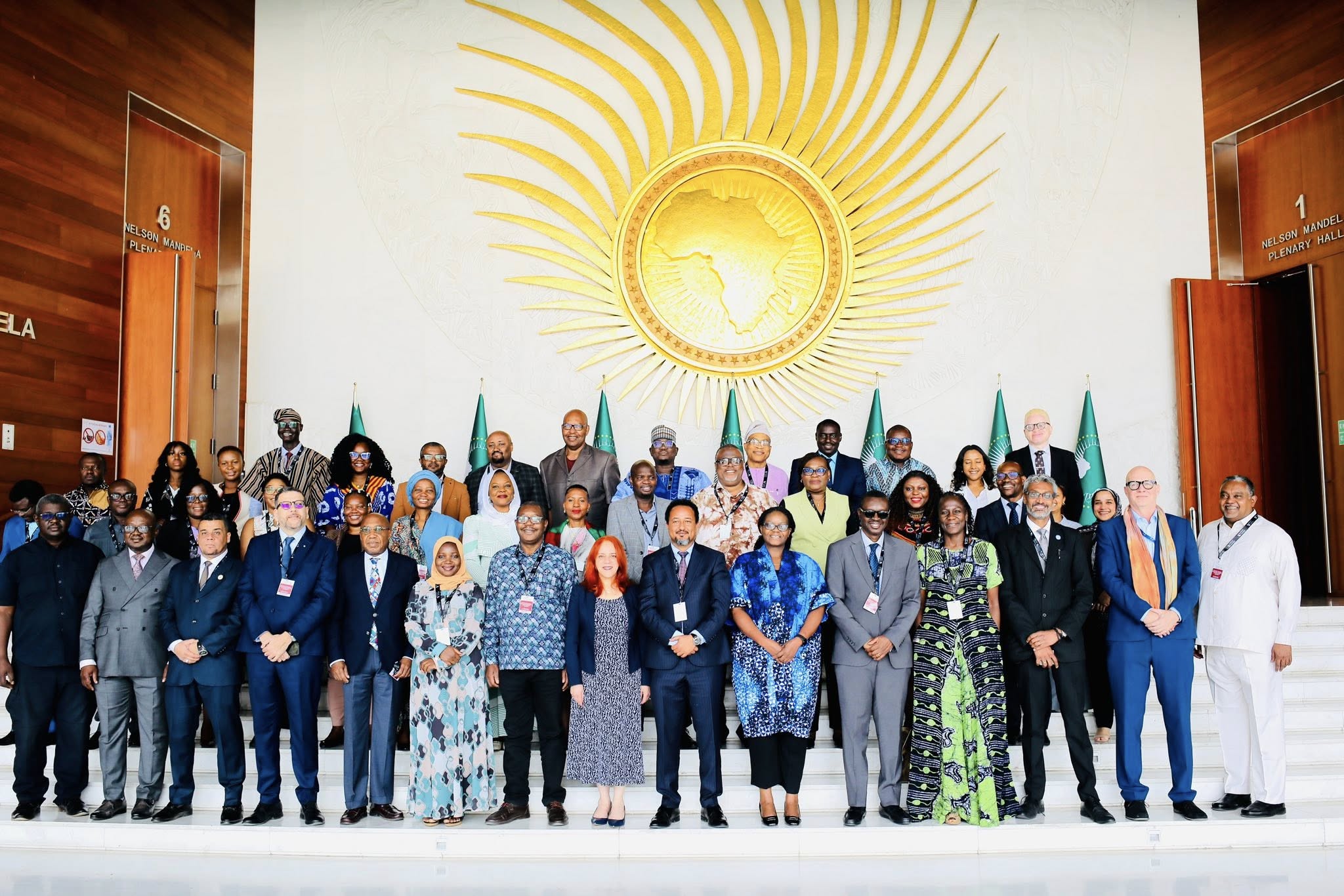
Addis Ababa, Ethiopia — Liberia’s youth-driven peace and development efforts have drawn high-level recognition at the African Union Commission during the first Statutory Technical Meetings of the AGA–APSA Platform.
Amid deliberations on governance, peace, and security across the continent, delegates acknowledged the successful implementation of the first African Union Post-Conflict Reconstruction and Development (AU-PCRD)–supported school renovation project in Africa. The initiative, carried out in Liberia, has become a reference point in ongoing discussions on linking development interventions to sustainable peacebuilding outcomes.
The recognition also extends to the organization of the inaugural Regional Youth Strategy Forum on the Right to Development, hosted in Liberia in December 2025. The forum convened young leaders and policymakers to examine how the Right to Development can serve as a structural pillar for long-term stability in post-conflict societies.
According to participants at the AU meetings, the Liberian experience demonstrates that youth-led interventions, when institutionally supported by continental bodies such as the African Union Commission’s Department of Political Affairs, Peace and Security (PAPS), can generate measurable peace dividends. The renovation project, implemented through Messengers of Peace–Liberia Inc., was cited as a practical example of translating policy frameworks into visible community impact.
Stakeholders from various Regional Economic Communities (RECs) reportedly referenced the initiative as a model of integrated peacebuilding—one that aligns AU governance mechanisms under the African Governance Architecture (AGA) and African Peace and Security Architecture (APSA).
The acknowledgment at the continental level underscores a broader policy shift within the African Union: development is no longer viewed as a secondary outcome of peace but as an operational foundation for preventing relapse into conflict.
Organizers and partners expressed appreciation to the African Union Commission, particularly PAPS, for its confidence and collaboration in advancing the intervention. They reaffirmed their commitment to strengthening youth participation in the continental peace agenda and expanding development-centered approaches to conflict recovery.
As discussions continue in Addis Ababa, Liberia’s case stands as evidence that strategic youth engagement, backed by institutional frameworks, can move beyond rhetoric and deliver tangible outcomes on the ground.


