


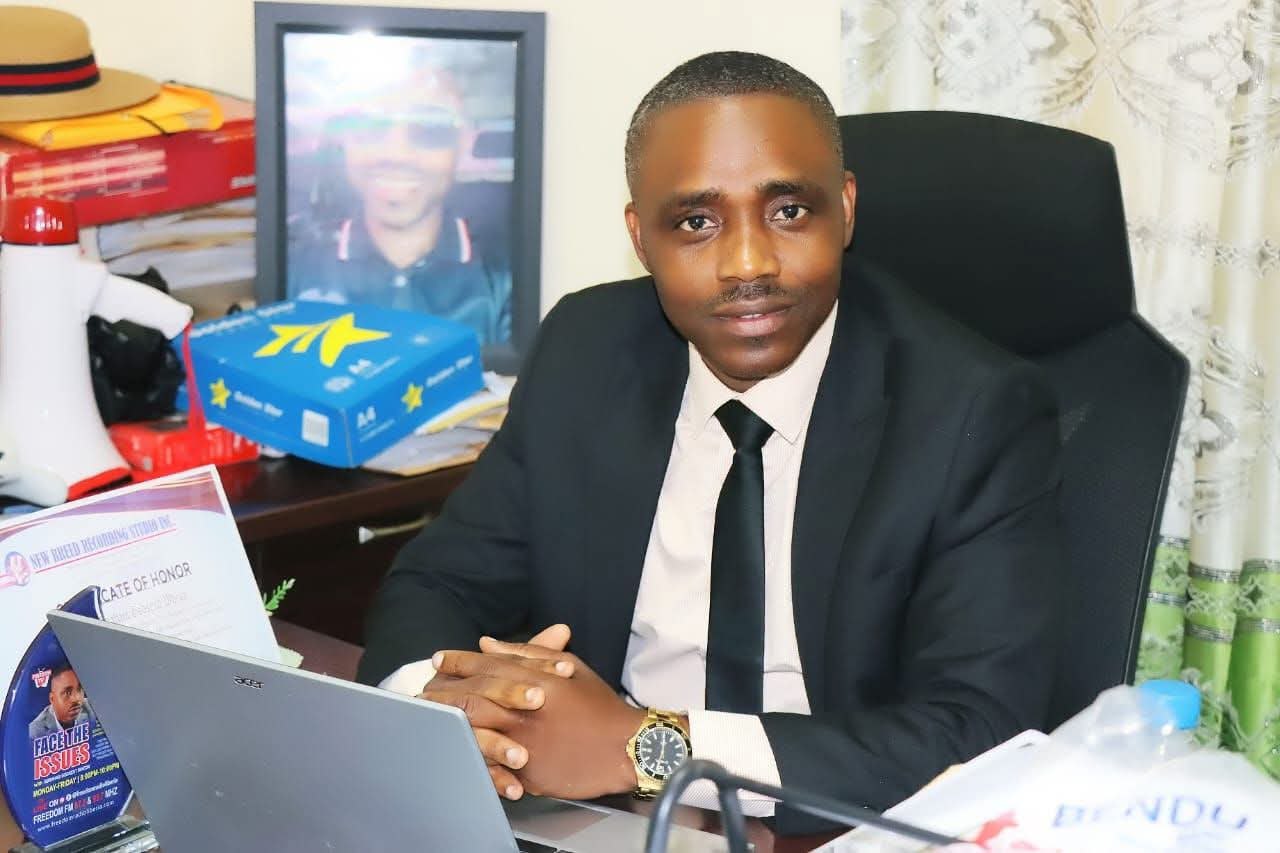
As tensions escalate between Prophet Key and the Supreme Court of Liberia, media personality Abraham Godsent Wheon is directing public attention toward what he calls a deafening institutional silence.
At issue is not merely the confrontation itself, but the conspicuous absence of a formal response from the Liberia National Bar Association (LNBA)—the umbrella body of lawyers sworn to defend the rule of law. For Wheon, the moment transcends personalities. It strikes at the institutional integrity of Liberia’s Judiciary.
A Crisis Beyond Personalities
The dispute between Prophet Key and the Supreme Court has evolved into a national conversation about judicial authority, constitutional respect, and the limits of public commentary. Lawyers, politicians, civil society actors, and ordinary citizens have weighed in. Social media platforms have amplified every development.
Yet, according to Wheon, the body most professionally obligated to safeguard judicial credibility has remained publicly restrained.
When allegations and inflammatory rhetoric target the Chief Justice and members of the Court, Wheon argues, the Bar carries both a moral and institutional duty to respond—not to shield individuals from scrutiny, but to defend the constitutional order itself. “Silence in moments like this is never neutral,” he suggested. “It shapes public perception.”
The Institutional Mandate of the Bar
The Supreme Court stands as the final interpreter of Liberia’s Constitution. Its authority underpins the separation of powers and sustains democratic governance. When confidence in the Court erodes, the ripple effects extend across every branch of government.
Wheon contends that the Bar’s role is not optional in such moments. As the professional body of officers of the court, it serves as both watchdog and defender of judicial independence. When public statements risk diminishing confidence in the Judiciary, institutional clarity becomes essential.
Critics argue that even before the Court formally summoned Prophet Key, the Bar could have issued a statement condemning personal attacks and sweeping allegations against the judicial system.
A Stark Contrast With the Past
The present quiet stands in contrast to previous periods of assertive engagement.
During the presidency of George Weah, the LNBA publicly addressed threats against members of the Bench. Under the leadership of Cllr. Tiawan Gongloe, the Bar condemned inflammatory remarks directed at then Chief Justice Francis Korkpor. It also took vocal positions during the impeachment proceedings involving Justice Kabineh Ja’neh.
That history of responsiveness has intensified scrutiny of the Bar’s current posture. Observers question whether the difference reflects strategic caution—or inconsistency.
Escalating Rhetoric and Public Trust
The situation grew more charged following the Court’s sentencing of Prophet Key. Public discourse expanded beyond the original dispute, with some officials reportedly making broad allegations against the Judiciary.
Among the most notable claims were remarks attributed to Mo Ali, Managing Director of the Liberia Water and Sewer Corporation, who allegedly accused segments of the judicial system of corruption during a live podcast discussion.
Allegations of systemic bribery—if left publicly unanswered—risk corroding trust in judicial processes. In constitutional democracies, perception often carries as much weight as procedure. Wheon warns that institutional credibility, once weakened, is difficult to restore.
Politics and Professional Independence
Another dimension fueling speculation involves recent political appointments. Several members of the Bar have assumed roles within the Executive branch, including appointments as judges, county attorneys, and agency directors.
While public service appointments are neither unusual nor improper, critics argue that professional independence must remain intact regardless of political affiliation. The legal profession, they note, is permanent; political tenure is not.
For Wheon and others who share his concern, the Bar’s credibility depends on demonstrating that its defense of judicial integrity transcends partisan alignments.
Selective Engagement?
Observers also recall the Speakership dispute within the House of Representatives, when constitutional questions reached the Supreme Court. During that episode, the Bar did not hesitate to express critical views about aspects of the Court’s handling of the matter.
The contrast between that vocal engagement and the present silence has fueled public debate about consistency. Is the Bar selectively assertive? Or is it exercising strategic restraint in a volatile environment?
A Defining Moment for Institutional Leadership
Wheon’s position is clear: this is a moment that demands institutional leadership.
When public discourse challenges the authority of the nation’s highest court—particularly by individuals outside the legal profession—the Bar’s voice can either reinforce constitutional order or leave a vacuum filled by speculation.
“The public is watching,” Wheon emphasized.
At stake is more than a dispute between a religious figure and the Judiciary. The deeper question is whether Liberia’s legal institutions will speak collectively when their foundational principles are tested.
In moments of constitutional strain, silence is itself a statement. Whether the Liberia National Bar Association chooses to maintain it—or to clarify its stance—may shape public confidence in the rule of law for years to come.


