


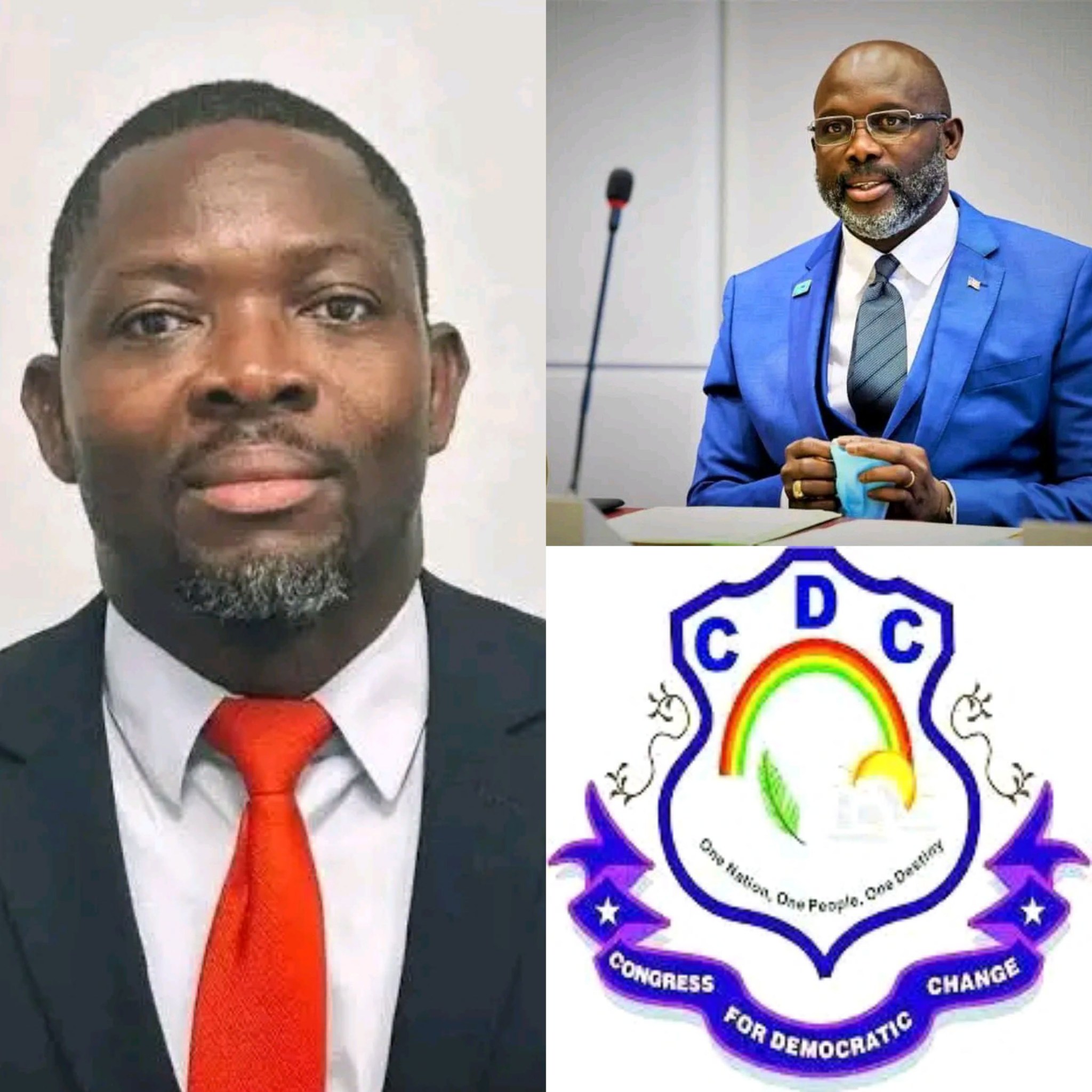
Liberia’s main opposition party, the Congress for Democratic Change, is facing what some observers describe as its most defining moment since its founding. Political commentator and activist Vandalark Patricks has delivered a pointed critique of the party’s current direction, arguing that without urgent internal reform, the CDC could drift into long-term political marginalization.
In a strongly worded statement titled “An Open Rebuke is Better Than a Secret Praise,” Patricks frames his intervention not as hostility, but as necessary correction. His thesis is blunt: the CDC stands at a political crossroads, and indecision could prove fatal.
A Party at a Defining Moment
According to Patricks, the CDC that once energized Liberia’s political landscape has lost cohesion and clarity. He contends that the party’s revolutionary spirit—so evident in its formative years—has been replaced by what he describes as internal confusion, weakened discipline, and an absence of coherent strategy.
“The CDC of 2005 was a raw, sophisticated force with a pure revolutionary soul,” Patricks stated. “Today’s CDC has neither strategy nor discipline.”
The warning comes at a delicate time. Following the 2023 general elections, the CDC transitioned from ruling party to opposition, a shift that demands structural recalibration. Patricks argues that instead of reorganizing with urgency, the party appears fragmented and directionless.
Commendation for Weah’s Democratic Gesture
Despite his criticism of the party’s current trajectory, Patricks reserved praise for former President George Weah. He described Weah’s concession after the 2023 election as an act of “unprecedented resilience” and “rare African bravery.”
In Patricks’ view, Weah’s decision to peacefully accept the electoral outcome strengthened Liberia’s democratic credentials and prevented potential instability. The concession, he argued, demonstrated constitutional maturity at a critical juncture.
Yet, he stressed that the political structure left behind now requires serious internal repair.
Leadership Gaps and Grassroots Frustration
One of Patricks’ most forceful critiques centers on what he characterizes as absent leadership. He questioned the visibility and accessibility of senior party officials, including the National Secretary General and the leadership of the CDC Youth League.
He expressed concern that some officials appear disengaged from on-the-ground realities while grassroots supporters confront economic and political uncertainty.
“A serious political party does not operate from the comfort of foreign air conditioning while its foot soldiers endure hardship at home,” Patricks remarked.
He contrasted the current moment with the CDC’s 2017 campaign season, when senior figures maintained visible national engagement and close contact with supporters across Liberia.
Organizational Strain and Public Perception
Patricks also pointed to what he considers signs of administrative instability within the party. Referencing the controversy surrounding Representative Samson Wiah’s reported expulsion and questions about membership registration, he suggested that internal record-keeping and governance processes may require urgent review.
“You cannot fix a house if you do not know who lives in it,” he stated, underscoring concerns about internal structure and accountability.
Reflecting on the CDC’s 2017 electoral victory, Patricks argued that the party’s promise of transformative change ultimately collided with public disappointment. While acknowledging the complexity of governance, he suggested that perceived mismanagement and missed opportunities weakened public confidence.
A Blueprint for Renewal
Rather than simply criticize, Patricks outlined what he believes is a pathway forward. His proposed reforms include:
- Immediate restructuring of party leadership to restore credibility.
- Recruitment of disciplined and strategically minded figures based within Liberia.
- Reconciliation efforts aimed at re-engaging supporters who felt marginalized.
- Strategic coalition-building, recognizing that contemporary Liberian politics favors alliances over isolation.
He emphasized that opposition politics requires organization, ideological clarity, and disciplined messaging—especially in a post-incumbency environment.
The Stakes Ahead
Patricks’ intervention has reignited debate about the future of opposition politics in Liberia. The CDC remains a significant political force with an established national base. However, its ability to transition effectively from governing party to structured opposition may determine whether it rebounds or gradually recedes.
His warning is direct: without structural reform, grassroots mobilization, and coherent leadership, the party risks entering a prolonged period of political decline.
At its core, the message is less about condemnation and more about recalibration. Political movements, Patricks suggests, must evolve or risk obsolescence.
Whether the CDC interprets this rebuke as an attack or as constructive counsel may shape its next chapter in Liberia’s unfolding democratic story.


