


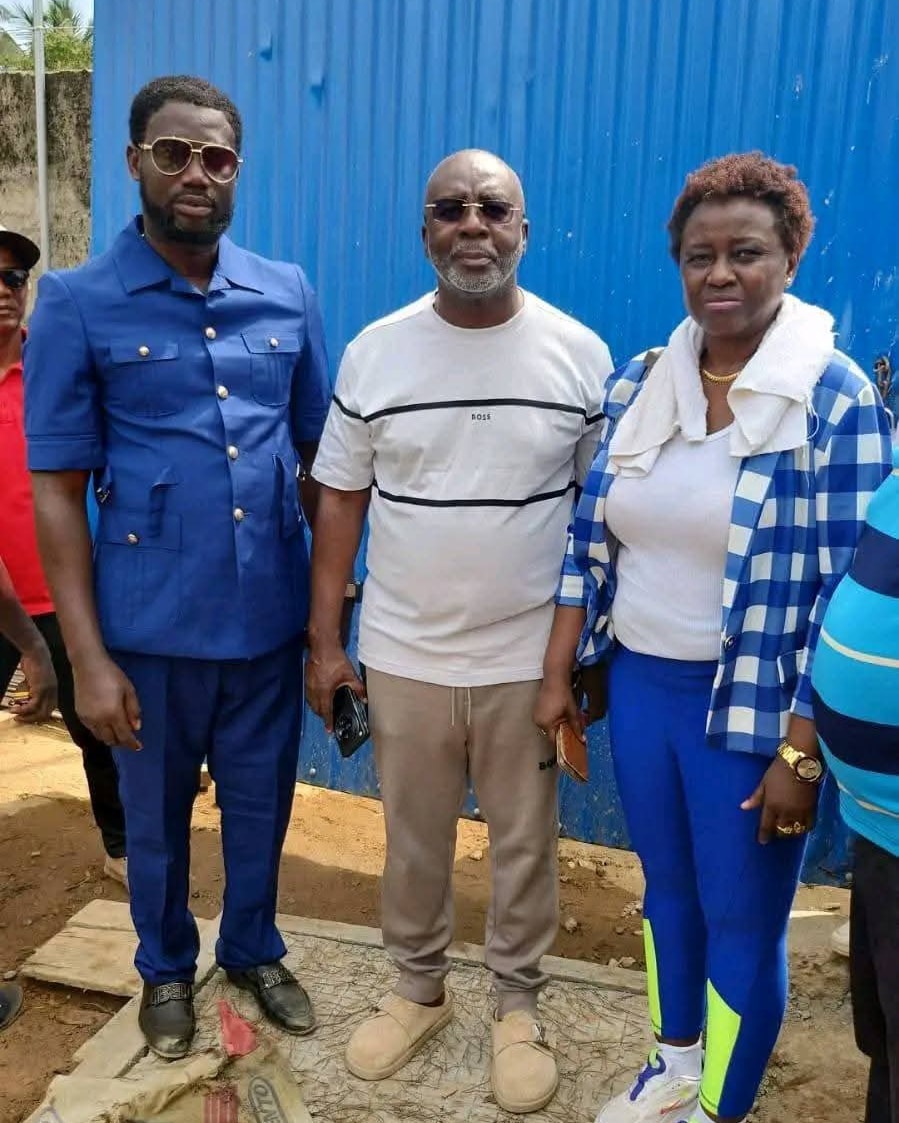
Construction of a new national headquarters for the Congress for Democratic Change (CDC) is emerging not just as an infrastructure project, but as a strategic symbol of party consolidation and long-term political recalibration.
Supporters have intensified visible backing for the initiative, framing the building effort as a tangible reaffirmation of institutional strength following recent electoral transitions.
Material Support, Political Signal
Among the most notable contributions came from Kokulo Borvor, widely known as “Big Sam,” a pastor and former Montserrado County District #2 candidate under the CDC banner. Borvor donated 50 bags of cement to the Party Construction Committee to advance the structural phase of the project.
Beyond construction materials, he also provided 15 bags of rice and L$50,000 to support on-site personnel, including security officers, construction workers, maintenance staff, and members of the party’s prayer team. The assistance, described as “soup-kind,” underscores an effort to sustain morale and operational continuity during the building process.
Institutional Rebuilding as Political Strategy
The donation ceremony was marked by prayers and strong declarations of unity, reinforcing the narrative that the headquarters project represents more than bricks and mortar. Supporters characterized it as an investment in the party’s institutional durability.
Expressions of appreciation were extended to the CDC’s political leader, former President George Weah, the National Executive Committee, and House Speaker J. Fonati Koffa, alongside grassroots partisans credited with maintaining party cohesion.
Looking Toward 2029
Borvor projected confidence in the CDC’s political trajectory, asserting that the party is positioning itself for a stronger return ahead of the 2029 elections. He emphasized organizational resilience, noting that while individuals may shift roles or affiliations, the party structure remains intact.
Analytically, the headquarters project serves dual purposes: reinforcing internal solidarity and signaling to the broader political environment that the CDC is investing in permanence rather than retreat. In post-election phases, physical infrastructure often functions as a psychological anchor—projecting continuity, readiness, and strategic patience.
As construction progresses, the initiative reflects a broader pattern in Liberian politics: institutional visibility as a precursor to electoral repositioning.


