


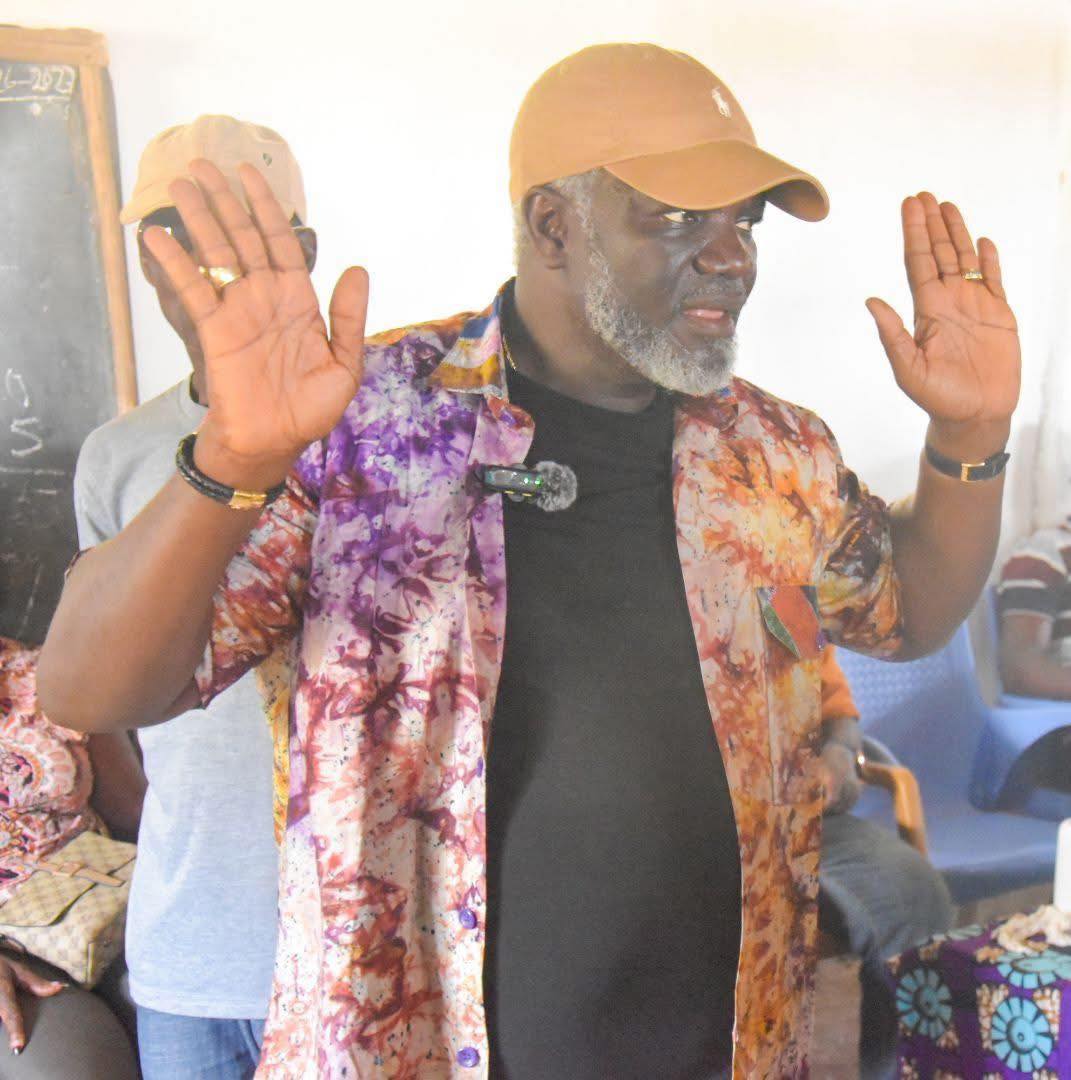
Zwedru, Grand Gedeh-February 12, 2026-A significant political realignment may be unfolding in Grand Gedeh County, as Senator Zoe Emmanuel Pennue publicly severed ties with former President George M. Weah, declaring that the former leader “has nothing to offer” the county.
Speaking over the weekend in Grand Gedeh, Pennue criticized what he described as unmet expectations during Weah’s six-year presidency, arguing that the county did not experience the transformative development many residents had anticipated.
From Political Ally to Independent Voice
Pennue’s announcement goes beyond criticism; it signals institutional disengagement. The senator declared that he is no longer aligned with Weah’s political camp and will now operate as an independent candidate.
According to Pennue, the decision reflects a strategic pivot toward what he termed “practical leadership” grounded in measurable development outcomes rather than partisan loyalty. He emphasized that his future political support will be directed toward individuals committed to delivering tangible improvements in infrastructure, services, and economic opportunity.
A Strategic Calculation
Grand Gedeh has long been perceived as politically favorable territory for Weah. Pennue’s departure, therefore, carries symbolic and strategic weight. Political analysts suggest that such a move may recalibrate the local political equation ahead of upcoming electoral cycles.
By framing his shift around development performance rather than ideological disagreement, Pennue appears to be tapping into broader public concerns about accountability and delivery. In counties where socioeconomic indicators remain stagnant, development rhetoric increasingly competes with legacy loyalty.
Development as Political Currency
Pennue’s critique centers on a fundamental governance question: Did Grand Gedeh receive proportional investment and sustained progress during Weah’s tenure? While assessments vary, the senator’s remarks highlight growing scrutiny of political leadership based on outcomes rather than affiliation.
His repositioning suggests that development has become the primary political currency in the county. Voters, observers note, are increasingly evaluating leaders through the lens of infrastructure expansion, job creation, and public service delivery.
Implications for Upcoming Elections
The declaration, broadcast on Top FM, introduces uncertainty into what was once considered a stable political alignment. If Pennue successfully consolidates independent support, the move could fragment traditional voting blocs and reshape campaign strategies in the county.
More broadly, the episode reflects a shifting political culture in Liberia—where loyalty to national figures is being tested against local development realities.
As debate intensifies, Grand Gedeh may become a microcosm of a national recalibration: performance over personality, accountability over affiliation.


