


Monrovia, Liberia; February 25, 2026:With nearly three-quarters of Liberians under 34, the country’s youth are no longer a side issue in politics—they are the central demographic that will define Liberia’s democratic future. Against this backdrop, young leaders from rival parties have begun testing a new idea: that cooperation across party lines may be the only way to tackle problems that ignore political colors.
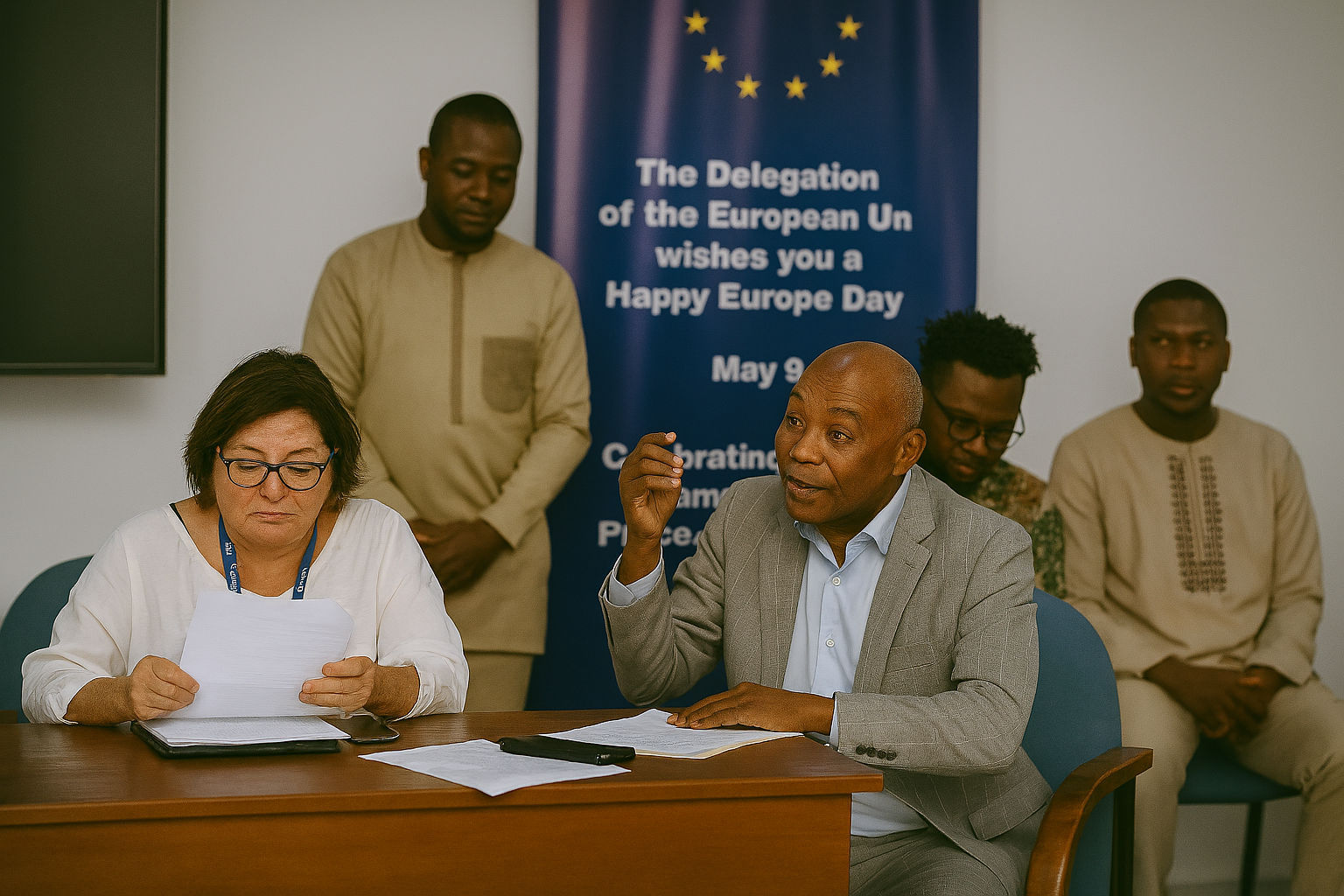
In Monrovia, 22 youth leaders from more than 10 political parties represented in the Legislature gathered for a one-day Inter-Party Youth Wing Dialogue. Rather than trading partisan jabs, they spent the day confronting shared challenges: unemployment, lack of practical education and TVET opportunities, and rising teenage pregnancy. The meeting, organized by the Netherlands Institute for Multiparty Democracy (NIMD) in partnership with the Federation of Liberian Youth (FLY), was part of the Liberia Electoral Support Project (LESP), managed by UNDP with support from the EU, Irish Aid, and the Embassy of Sweden.
At the heart of the discussions was a hard truth: young people make up around 74 percent of Liberia’s population, yet they remain largely absent from the rooms where decisions are made. NIMD Country Director Cllr. Oscar Bloh challenged participants to stop seeing themselves merely as mobilizers for rallies and votes and start acting as core democratic actors. Liberia, he argued, needs young leaders who not only campaign but also shape policy and demand inclusive governance. He called it an “irony” that such a large youth population is so underrepresented—and sometimes even comfortable with that reality—insisting that this “is not acceptable.”
Bloh warned that if structural barriers facing young people are not addressed, political disengagement will deepen. He reminded the room that when a young person seeks a job, falls ill, or needs skills training, no one asks which party they support; they are treated simply as youth. That shared experience, he suggested, should be the basis for solidarity and joint action, not division.
International partners echoed the call for maturity and cooperation. Representing the European Union, Marie-Paule Neuville praised the diversity, energy, and political spread of the participants. She urged them to think beyond party labels and to recognize their common generational interest. Referring to the Global Youth Participation Index, she noted that youth underrepresentation is a global trend, but Liberia’s demographic reality presents a rare opportunity: if young Liberians choose to work collectively, they can significantly reshape the political landscape. If nations in Europe can cooperate across borders, she argued, young leaders in Liberia can certainly cooperate across parties—sharing not only problems, but also solutions.
The National Elections Commission and UNDP added a structural lens to the conversation. Prince N. Dunbar, Political Affairs Director at the NEC, pointed out that when political meetings are called, it is usually only senior executives and party leaders who appear, not the youth he saw in the room. He challenged young leaders to insist on a place within formal structures such as the Inter-Party Consultative Committee (IPCC) and to push for regular, institutionalized engagement. Dunbar also raised a longstanding issue in Liberia’s political culture: the absence of a clear national definition of “youth,” noting humorously that some people have “served for 45 or 50 years as youth,” an arrangement that crowds out genuine young voices.
Speaking for UNDP, Roosevelt Zayzay, LESP Programme Officer, stressed that the conduct and cooperation of young political actors today will influence public trust in the 2029 elections. He described young people not just as participants in Liberia’s democracy, but as architects of its future, warning that the choices they make now—whether to divide or collaborate—will shape the credibility of the electoral process.
Throughout the dialogue, youth leaders themselves pushed the conversation beyond theory. One participant argued that Liberia cannot build a strong democracy if political institutions continue to revolve around personalities rather than policies. Young people, he said, must help rebuild a culture where institutions—not individuals—drive governance. Another youth representative highlighted the importance of trust, noting that they often only meet during election periods, when every issue becomes politicized. This dialogue, he said, was a reminder that they share more common ground than political campaigns suggest.
A female youth leader underscored that young women face even steeper barriers within political parties. She argued that cross-party collaboration among youth wings can become a platform to challenge gender bias and open doors for more women in political leadership. Another youth chairperson called for consistency, warning that if the spirit of cooperation ends with this event, the same problems will simply resurface in the next election cycle.
The dialogue ended with concrete commitments rather than vague promises. Participants agreed to reactivate Inter-Party Youth Councils, set up a formal Inter-Party Youth Council platform, identify cross-cutting youth issues, and jointly advocate for solutions. They also pledged to leverage the numerical strength of young people for sustained accountability and reform, aiming to turn this moment of dialogue into a lasting mechanism for democratic renewal.
The Liberia Electoral Support Project, under which this dialogue falls, is designed to strengthen inclusive, transparent, and accountable democratic governance. By supporting national institutions and promoting meaningful citizen participation, the project seeks to ensure that youth are not just counted in statistics, but heard in decision-making. For Liberia’s young political leaders, the challenge now is whether they can move from dialogue to durable action—and prove that cooperation across party lines is more than a one-day event.


