


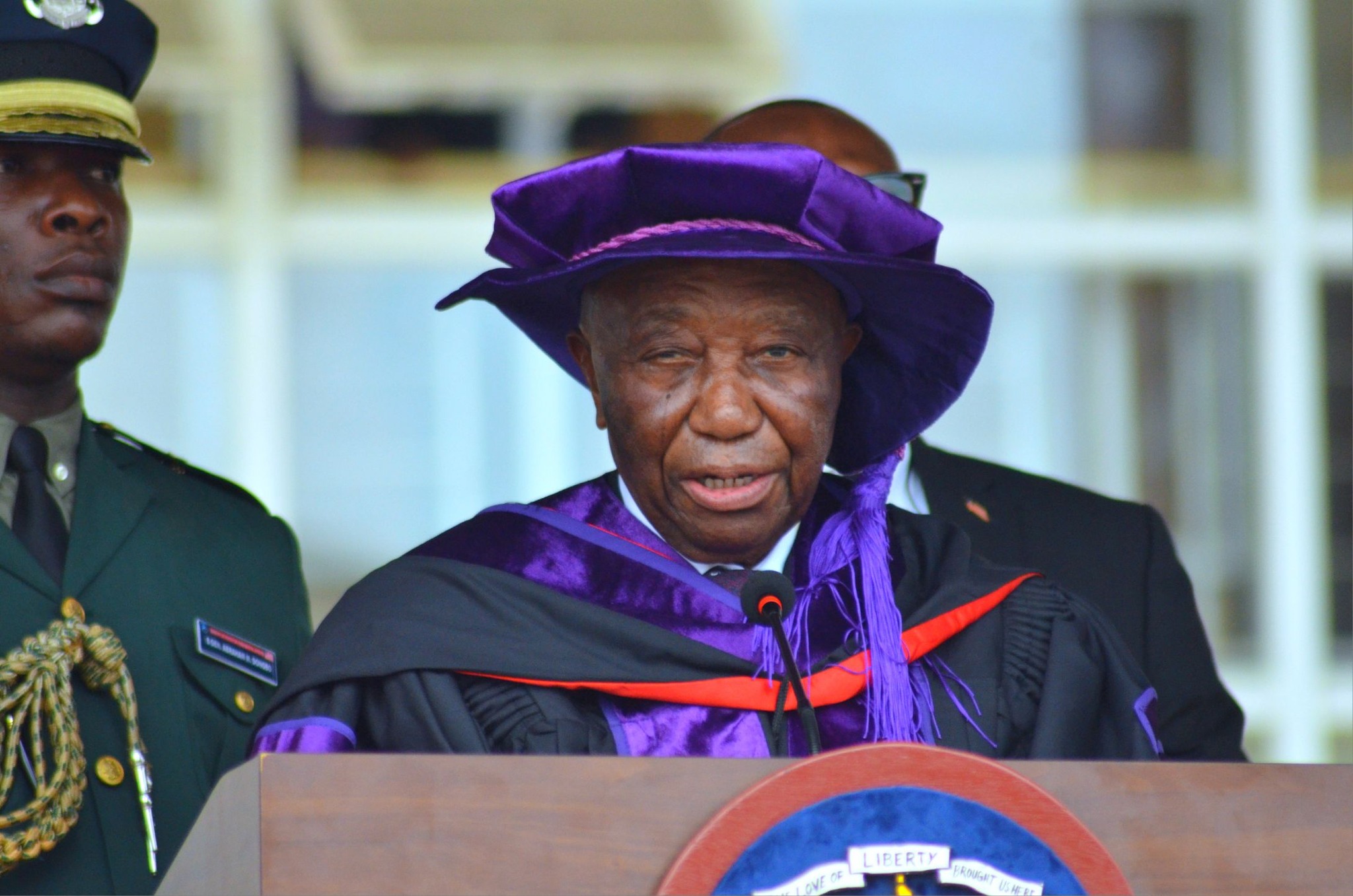
Monrovia — February 27, 2026 — President Joseph Nyuma Boakai Sr.’s pledge of support for the University of Liberia, highlighted by a personal donation of US$50,000 and budgetary assurances exceeding US$6 million, has drawn attention not only to the administration’s stated commitment to higher education but also to the deeper structural neglect that continues to define Liberia’s flagship public university.
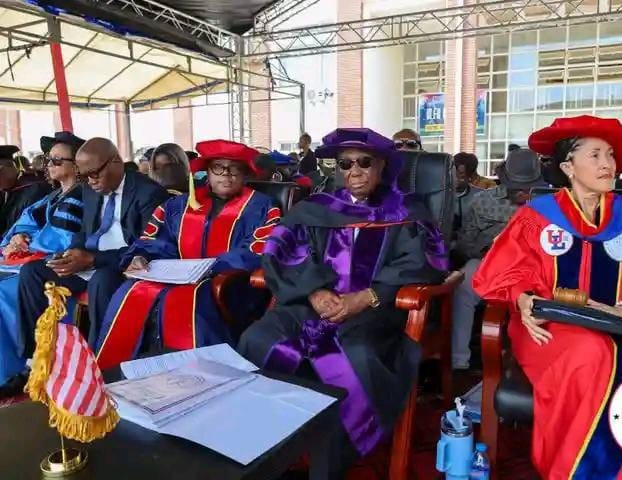
Speaking at the University of Liberia’s 105th Commencement Convocation of its Graduate and Professional Schools at the Fendall Campus in Louisiana, Montserrado County, President Boakai framed higher education as central to Liberia’s development agenda. However, his announcement also underscored the stark reality that decades of underinvestment have left the institution dependent on symbolic gestures and periodic government pledges rather than sustained systemic reform.
The President disclosed that his personal contribution of US$50,000—derived from savings generated through his voluntary salary reduction—would support the establishment of a modern research laboratory. While the gesture was presented as an example of personal sacrifice and national commitment, it also exposed the extent to which Liberia’s premier public university continues to rely on individual interventions rather than predictable, institutionalized funding mechanisms.
Boakai further revealed that more than US$6 million has been allocated in the Fiscal Year 2026 national budget to improve infrastructure and learning conditions at the University. Yet, this announcement raises a critical policy question: why has the country’s leading higher education institution remained in such fragile condition despite years of successive national budgets, international partnerships, and repeated political promises?
The President emphasized that improving infrastructure is essential to academic excellence and called on the University’s administration to strengthen academic, financial, and disciplinary governance. His remarks reflected long-standing concerns about institutional management, accountability, and performance standards—issues that critics argue cannot be resolved through funding alone without deep structural and governance reforms.
“Excellence is never accidental; it is the product of discipline, integrity, and the courage to uphold standards,” President Boakai stated, signaling his administration’s expectation that the University’s leadership take responsibility for restoring institutional credibility.
However, the statement also implicitly acknowledged a broader governance dilemma: the University’s decline has not occurred in isolation but within a national environment where higher education has often been deprioritized in favor of short-term political and fiscal considerations.
Addressing the graduating class, President Boakai praised the graduates’ resilience and described them as part of Liberia’s emerging skilled workforce. He urged them to embrace ethical leadership and national service, calling on them to prioritize public good over personal gain.
At the same time, his remarks to alumni highlighted another persistent challenge—the absence of a strong, organized alumni financing culture capable of supplementing government support and strengthening institutional sustainability.
As Visitor of the University and an alumnus himself, Boakai’s call for renewed alumni engagement and peaceful student participation reflected an awareness of the University’s historical role as both an intellectual center and a platform for national political discourse.
Yet beyond the ceremony and financial pledges lies a more fundamental test: whether the administration can move beyond symbolic contributions and episodic funding announcements to deliver the comprehensive, sustained investment and governance overhaul required to restore the University of Liberia’s academic competitiveness and institutional credibility.
For many observers, the central question is not whether US$50,000 can build a laboratory—but whether the government can build a lasting system that prevents Liberia’s most important public university from repeatedly needing rescue.


