


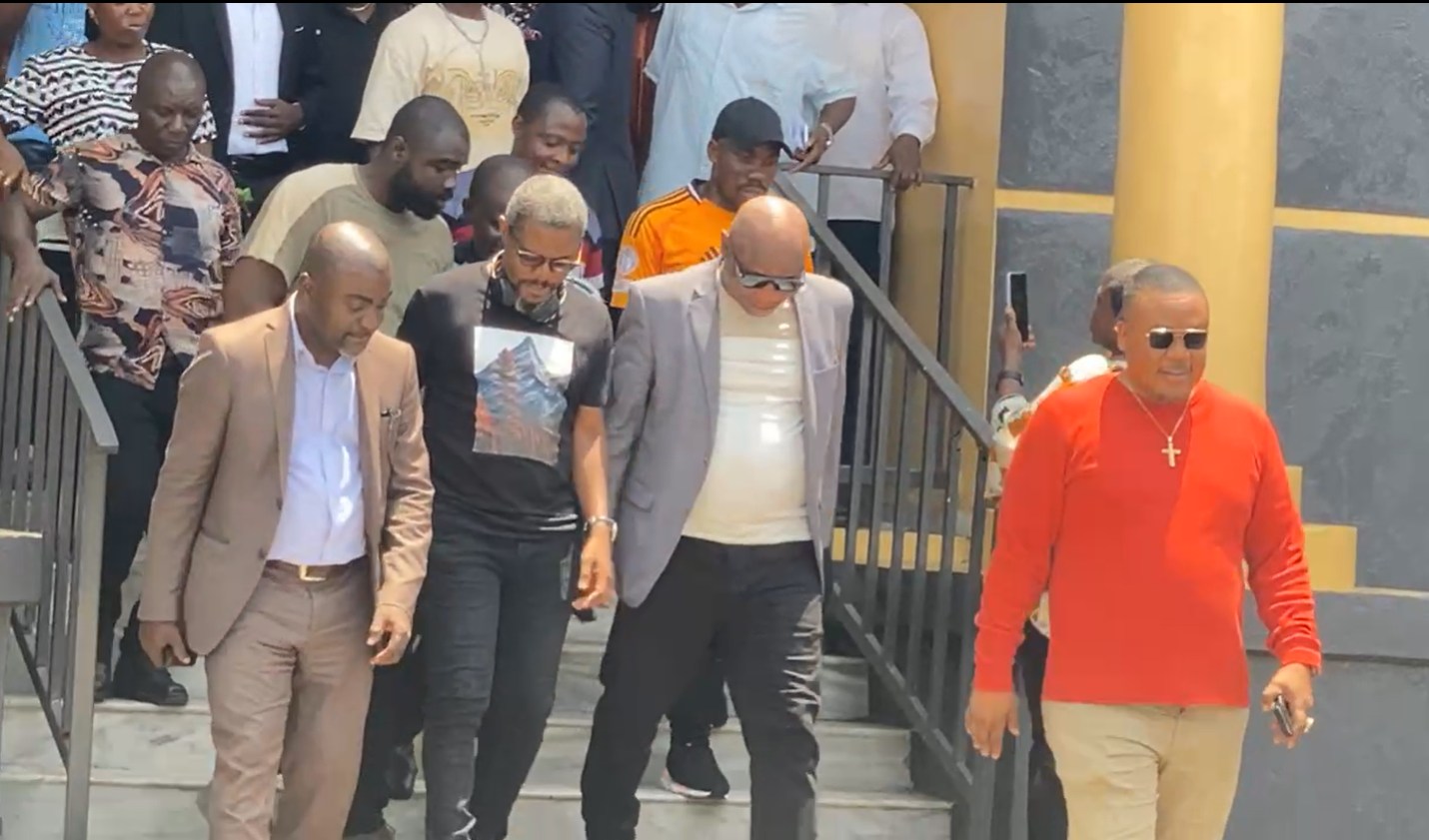
A high-profile corruption trial involving former Liberian officials has entered a critical phase, raising legal and political questions about transparency, due process, and the integrity of judicial proceedings in Liberia.
Nine out of the fifteen jurors required for the trial have already been selected in the economic sabotage case involving former Finance Minister Samuel D. Tweah and several other former government officials accused of mismanaging approximately US$6.2 million in public funds.
The case, widely known as the “Tweah and Others” trial, is currently being presided over by Judge Osuman F. Feikai of Criminal Court “C” at the Temple of Justice. As jury selection progresses, the courtroom battle has increasingly shifted toward procedural disputes between the prosecution and the defense.
Defense Challenges Evidence Disclosure
Defense attorneys have raised significant objections regarding the prosecution’s handling of evidence, arguing that they have not been given full access to documentary materials the state intends to use during the trial.
During Thursday’s proceedings, defense lawyers formally requested that the court compel prosecutors to immediately disclose all relevant records. They maintained that access to such materials—commonly referred to as “discovery”—is guaranteed under Liberia’s Constitution and statutory law.
According to the defense, when the case was initially called for trial before Judge Willie, prosecutors informed the court that they had not yet obtained all relevant evidence. At that time, several institutions had reportedly been subpoenaed to produce key financial records.
Those institutions include the Ministry of Finance and Development Planning, the Financial Intelligence Agency, and the Central Bank of Liberia.
Defense lawyers argued that despite the prosecution’s earlier assurances that the documents were being collected, the materials have yet to be fully produced.
“The defense cannot adequately prepare its case without being fully acquainted with the evidence intended to be used against the defendants,” counsel argued, describing the situation as both unfair and prejudicial.
Request for Court Sequestration
Beyond the discovery dispute, one of the defense attorneys also requested that the court order sequestration for the duration of the trial. Such measures are typically used in high-profile cases to prevent outside influence on jurors and protect the integrity of deliberations.
Prosecution Rejects Claims
Prosecutors pushed back against the defense’s claims, stating that discovery had already taken place during an earlier pre-trial conference.
According to the prosecution, members of the defense team—including Cllr. Arthur Johnson—were present when the evidence was presented and discussed.
State lawyers therefore maintain that they have complied with all procedural requirements and that the defense has already received the relevant information necessary to proceed with the trial.
Judge Restricts Public Commentary
Meanwhile, the court has taken an additional step to control public discourse surrounding the case. Judge Osuman F. Feikai has banned lawyers and defendants from granting media interviews related to the trial.
The decision followed a controversial press conference held by Liberia’s Solicitor General, Augustine C. Fayiah, during which he reportedly stated that the defendants had pleaded guilty—an assertion disputed by the defense.
Judge Feikai warned that any lawyer or defendant who discusses the case publicly could face contempt of court, emphasizing the need to protect the judicial process from undue public influence.
A Trial Under National Scrutiny
With jury selection nearing completion, the case continues to attract widespread public attention. The proceedings are not only about the alleged misuse of millions in public funds but also about how Liberia’s justice system handles politically sensitive corruption cases involving senior officials of a former administration.
As the trial moves forward, a key question remains: will the legal process reinforce public confidence in accountability, or deepen political divisions surrounding one of the country’s most closely watched corruption cases?


