


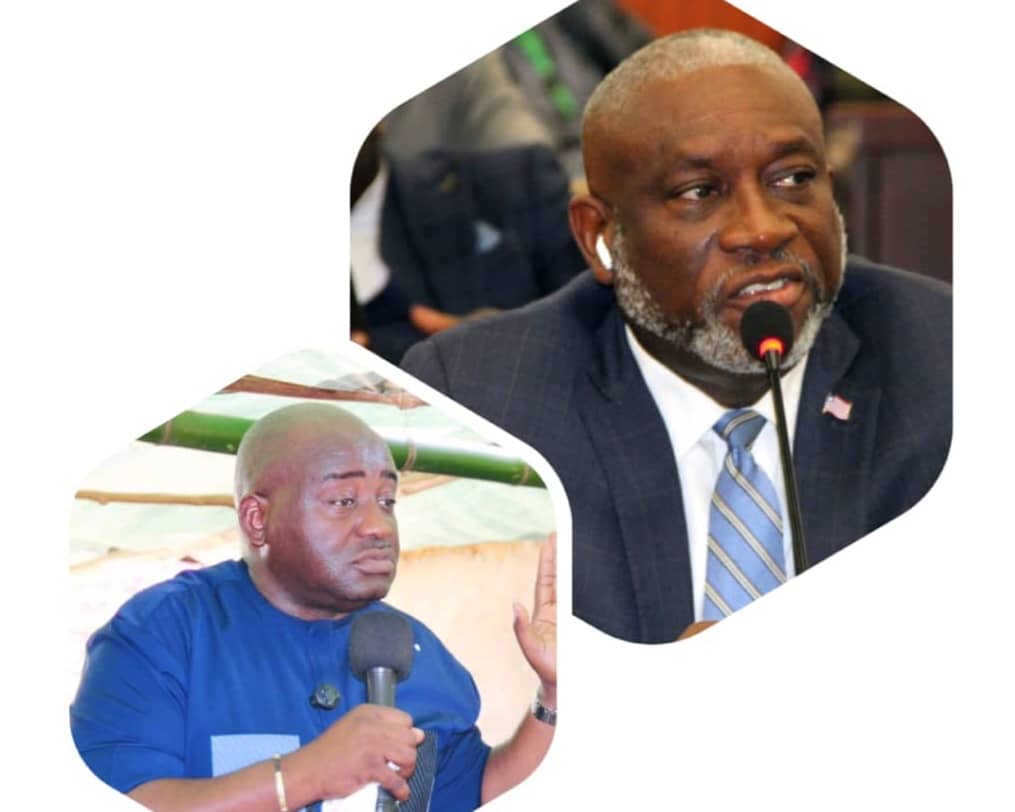
A notable divergence is emerging within Liberia’s opposition politics as a senior official of the Citizens Movement for Change (CMC) has offered a far more favorable assessment of President Joseph Boakai’s administration than the party’s political leader.
Jerry Yogboh, the CMC Vice Chair for Finance and Investment and Representative of Montserrado County District #12, has graded the Unity Party-led government 75 percent for its performance so far, citing progress in several governance areas.
Speaking in an interview on a local radio show in Monrovia, Yogboh acknowledged that the administration of Joseph Boakai has recorded “notable improvements” in sectors such as road connectivity, healthcare delivery, anti-corruption initiatives, and accountability mechanisms.
According to the lawmaker, it would be inaccurate to claim the government has achieved nothing since assuming office. Instead, he argued that while progress has been made, significant work still lies ahead to address longstanding national challenges.
Yogboh stressed that constructive criticism from the opposition remains a necessary element of a healthy democratic system, noting that acknowledging progress does not weaken the role of political opponents.
“UP should have done more for the Liberian people; however, the argument has been put to us there, and we will do better. This is normal politics for us, the opposition,” Yogboh said.
The Montserrado legislator also expressed optimism that the administration still has ample time to improve its performance and potentially reach what he described as “100 percent achievement” before the end of its mandate.
However, Yogboh’s remarks highlight an emerging contrast within his own party. The CMC’s political leader, Musa Bility, has repeatedly criticized the Boakai government, arguing that it has failed to fulfill key campaign promises and calling for what he describes as a “total change” in national leadership direction.
Bility has maintained that the government’s performance across critical governance sectors has been insufficient, framing its progress as falling short of public expectations.
The differing assessments suggest a nuanced dynamic within the opposition landscape, where some figures acknowledge incremental gains while still pushing for stronger government performance.
As Liberia’s political debate continues to intensify, the contrasting views within the CMC could shape how the opposition positions itself in holding the government accountable while also recognizing areas of progress.


