


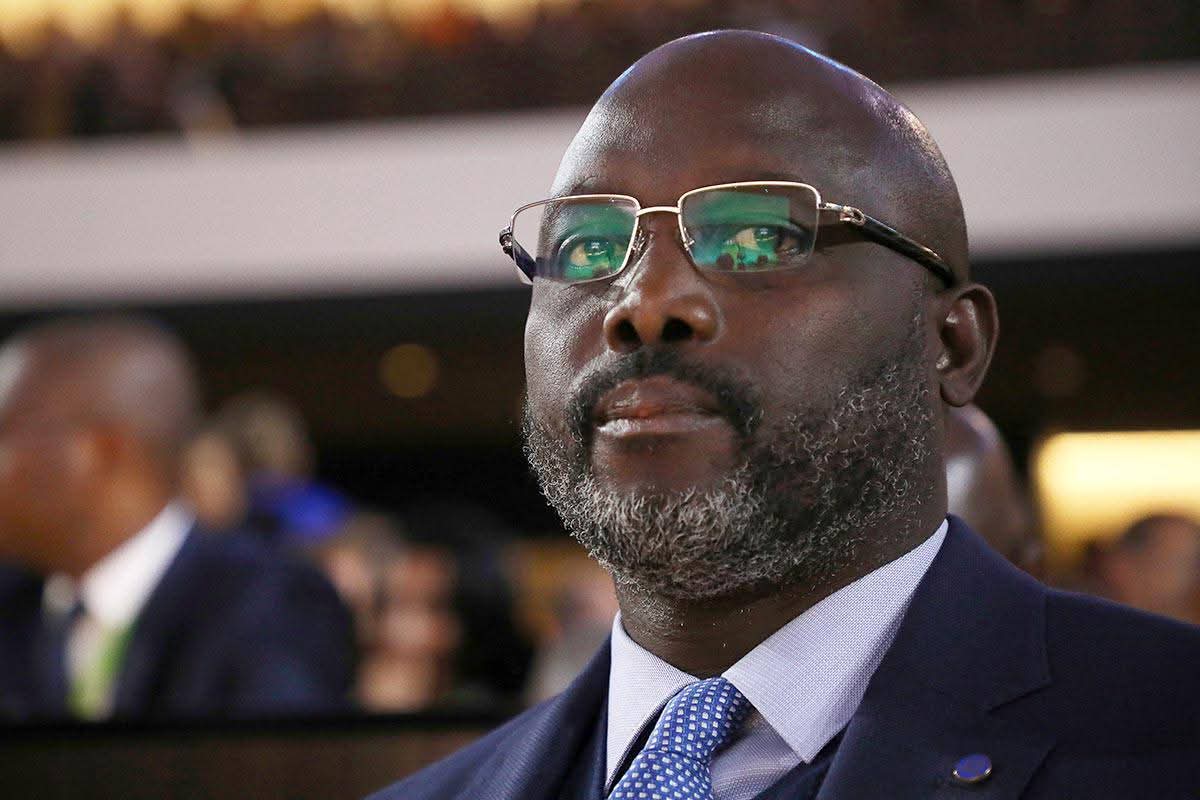
Liberia’s political landscape could soon witness a rare moment of institutional confrontation as the House of Representatives of Liberia moves to invite former President George Weah to appear before lawmakers for a high-stakes discussion on governance and national development.
The decision followed the approval of a motion introduced by Melvin Cole, Representative of Bong County, during a legislative session on Thursday. Lawmakers overwhelmingly supported the proposal, describing the engagement as an opportunity to reflect on key policy decisions made during Weah’s presidency.
According to Rep. Cole, examining the experiences of the former administration could provide important insights as the country continues to navigate complex governance and development challenges.
“Former President Weah’s tenure, marked by both accomplishments and difficulties, offers lessons that are important for Liberia’s progress,” Cole told fellow lawmakers during the debate.
Weah served as Liberia’s president from 2018 to 2023, a period defined by ambitious infrastructure projects and initiatives aimed at youth empowerment. However, his administration also faced sustained criticism over economic hardship, governance concerns, and allegations of corruption that frequently dominated public discourse.
The move by lawmakers to invite the former president comes at a time when calls for accountability and transparency remain prominent in national political debates.
Speaker Richard Nagbe Koon emphasized that engaging former leaders is an important democratic exercise that allows policymakers to evaluate past decisions and refine future governance strategies.
“We must learn from the past in order to guide the present and shape the future,” Koon said. “Dialogue with former leaders gives us the opportunity to critically examine policy choices and strengthen Liberia’s governance framework.”
Political observers note that the invitation could carry broader implications beyond legislative review. With the nation already looking ahead to the 2029 presidential elections, any public discussion involving Weah—one of the most influential figures in modern Liberian politics—could reignite debates about the country’s political direction and leadership.
While the exact date for the appearance has not yet been announced, legislative officials say arrangements for the engagement will be finalized in the coming weeks.
If the invitation is accepted, it would mark a rare moment in Liberia’s democratic practice where a former president returns to the legislative chamber not as head of state, but as a political figure reflecting on his time in power.


