


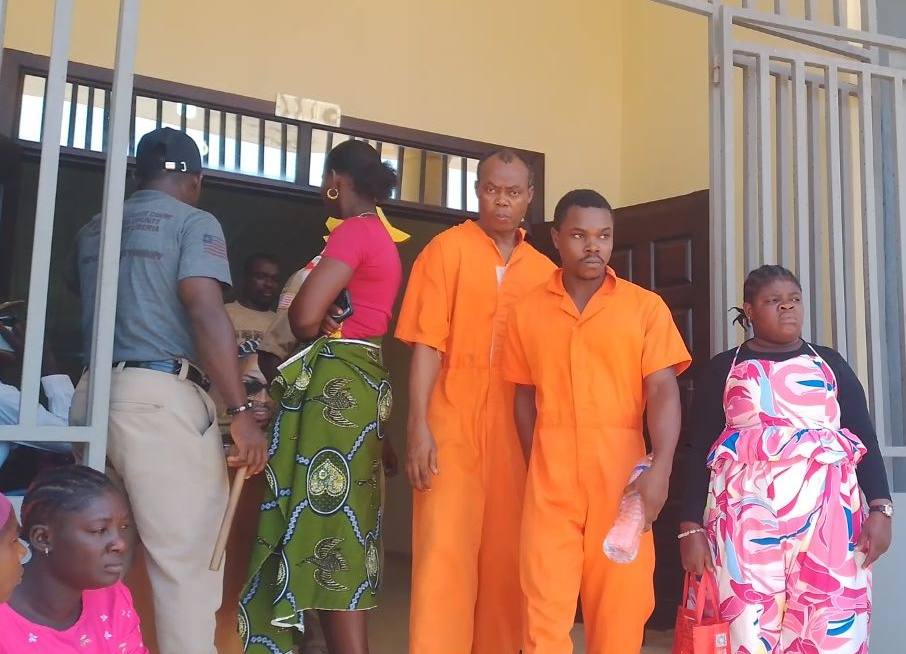
The dismissal of the arson charge against Sand Beach resident Charles Kangar by the 14th Judicial Circuit Court in Cestos City raises serious questions about prosecutorial strategy, statutory drafting, and access to justice in Liberia’s interior courts. At first glance, the ruling appears legally sound; on closer inspection, it exposes gaps in the criminal law and highlights how poorly constructed charges can undermine accountability and public confidence in the justice system.
What the Court Decided
Judge Onesimus Banwon dismissed the arson charge against Kangar after defense lawyer Cllr. James B. Kaba, Sr. argued that the objects allegedly burned — a gold mining machine (“katakata”), water pumps, tarpaulins, and other materials — do not fall under Liberia’s statutory definition of arson.
Under the indictment, Kangar faced multiple counts: arson, criminal mischief, and disorderly conduct. The court clarified that only arson is an indictable offense under the circuit court’s jurisdiction, while the other charges belong in a Magisterial Court. Once the arson count fell, the circuit court effectively had no legal basis to keep the case, forcing it to relinquish jurisdiction and send the matter back down.
The prosecution, notably, did not oppose the defence motion, effectively conceding that the law was on the defendant’s side regarding the arson statute. Judge Banwon concluded that “this court is left with no other alternative but to dismiss the arson count in favor of the defendant,” and redirected the case to the Cestos City Magisterial Court for the remaining charges.
The Legal Loophole: What Counts as Arson?
At the heart of this outcome is a narrow legal definition of arson. As argued by the defense and accepted by the court, Liberia’s criminal law defines arson primarily in relation to buildings and immovable property, not movable equipment or materials such as mining machines and tarpaulins.
This creates a stark disconnect between public understanding of “burning property” and what is technically chargeable as arson. For the victims and the community, the destruction of mining equipment valued at about US$7,360 and L$18,000 looks and feels like a serious, possibly “arson-like” offense. Legally, however, it fits more comfortably under criminal mischief, which carries lower weight and sits in a lower court.
The result is a perception that a serious, organized act of destruction is being “downgraded” not because the facts are weak, but because the law is outdated or too narrow.
Prosecutorial Choices and Weak Case Framing
The case also exposes potential weaknesses in prosecutorial judgment. Instead of charging the matter solely as criminal mischief and related lesser offenses in the proper forum, the prosecution chose to elevate it through an arson count that could not withstand basic legal scrutiny.
This has several implications: It risks overcharging, which can appear politically motivated or aimed at public appeasement, rather than grounded legal reasoning. It wastes judicial time and resources, forcing a circuit court to address a defective indictment and then send the matter back down. It can unintentionally strengthen the defendant’s narrative that the state is either incompetent or overreaching.
When the same prosecution later concedes that the defense is right on the law, it further undercuts confidence in their capacity to correctly apply statutes in complex or high-tension cases.
Impact on Victims and Community Perception
For the private prosecutor and affected community members in Markpah/Mahkpah, the legal technicality does not erase the alleged riot, burning, and destruction of valuable mining properties. They still claim significant financial loss and disruption.
However, the shifting of the case from a higher court to a Magisterial Court, combined with the dismissal of the most serious charge, may be read locally as: A downgrading of the seriousness of the offense. A sign that those who damage property can escape harsh consequences if the law is poorly structured or poorly used. Another illustration of how technicalities sometimes favour defendants over victims, especially in remote counties.
If the Magisterial Court proceedings are slow, weak, or compromised, this could deepen feelings of injustice and possibly fuel tension around mining operations and local disputes.
The Court’s Position: Correct but Limited
From a strictly legal standpoint, Judge Banwon’s ruling appears correct and restrained. The court cannot stretch the meaning of arson beyond what the statute allows, even if the facts look morally or socially severe. Upholding the law as written is part of judicial integrity.
However, this also exposes a structural problem: when the law fails to reflect the realities of modern economic activity (like mechanized small-scale mining), certain harmful acts may not attract the heavier charges the public expects. The judge’s decision, therefore, indirectly highlights: The need for legislative review of criminal laws related to property destruction. The importance of distinguishing between trivial mischief and large-scale, economically significant damage to movable property.
What Happens Next?
The Cestos City Magisterial Court has already issued a writ of arrest for Kangar and others on charges of criminal mischief and disorderly conduct. The private prosecutor alleges that they traveled to Markpah/Mahkpah, rioted, and burned or damaged mining equipment and other materials, causing losses in the thousands of U.S. and Liberian dollars.
Key questions going forward include: Will the Magisterial Court treat the alleged damage with seriousness proportionate to the loss, even without an arson charge? Will the prosecution present stronger, more coherent arguments under the correct statutes? Will this case trigger broader discussion about reforming Liberia’s criminal code to better reflect present-day economic and security realities?
Critical Takeaways
The dismissal of the arson charge is grounded in a narrow and arguably outdated statutory definition, which does not cover movable mining equipment. The prosecution’s decision to frame the case around arson, only to concede its inapplicability, shows weak legal strategy that risks undermining public confidence. Victims may experience the outcome as a loss of justice, even though the case technically continues under lesser charges in the Magisterial Court.
The ruling underscores a pressing need for legal reform so that serious destruction of movable commercial property can be prosecuted with penalties that reflect its impact. How the lower court handles the remaining charges will determine whether this case becomes an example of effective accountability or another story of justice diluted by technicalities.


