


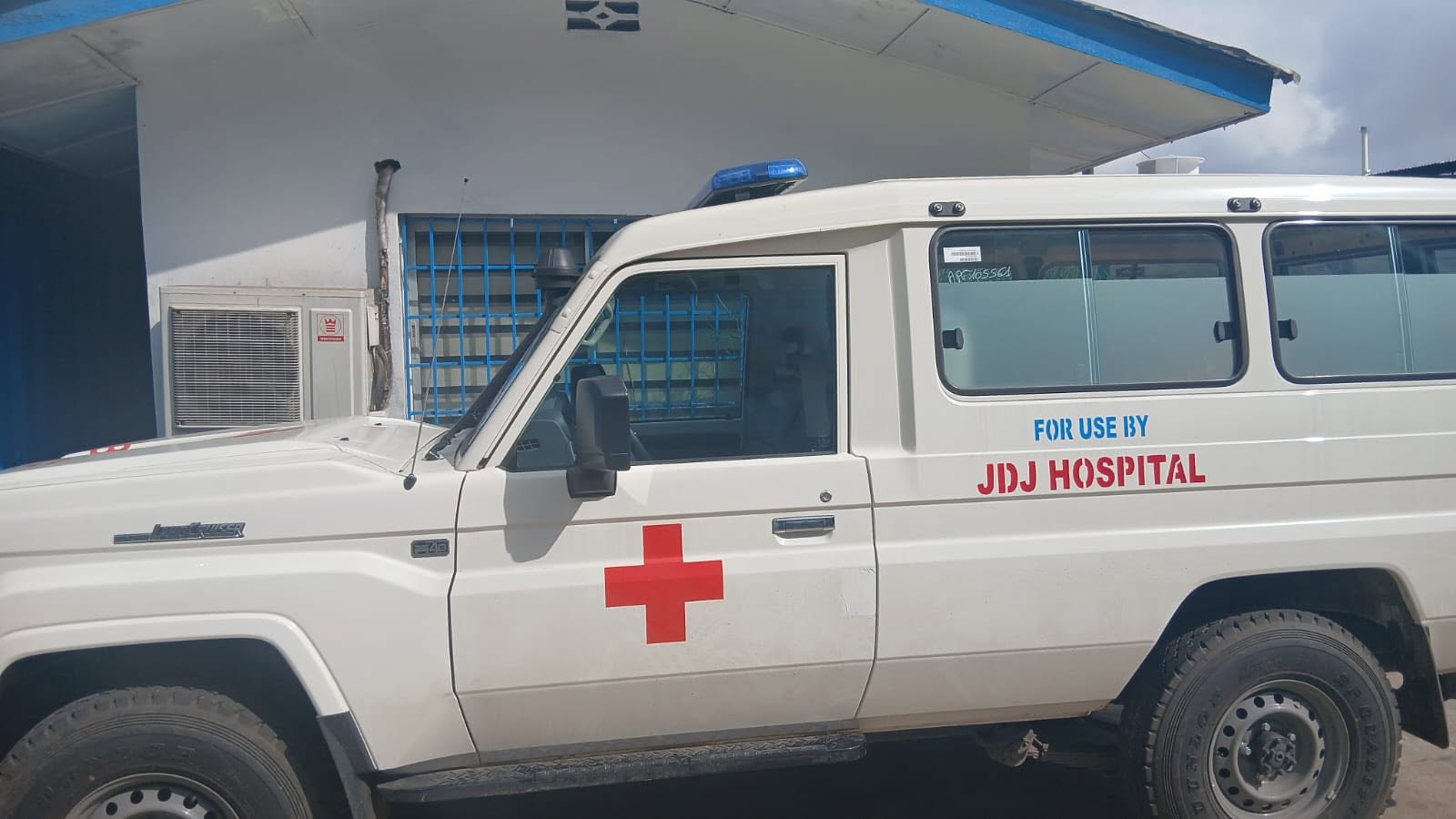
MONROVIA, Liberia — Liberia’s ongoing effort to strengthen emergency healthcare services received a boost this week as the Ministry of Health delivered a new ambulance to James David Medical Center, enhancing the hospital’s ability to respond to critical medical cases and improve patient referral services.
The vehicle is part of a nationwide government initiative to distribute 25 ambulances to health facilities across the country in an effort to improve emergency response systems and ensure faster access to specialized medical care.
For James David Medical Center, the arrival of the ambulance marks a significant milestone. Hospital administrators say the facility has operated for years without a dedicated ambulance, relying instead on the national Emergency Medical Services (EMS) system whenever patients required transfer to higher-level healthcare institutions.
Speaking in an interview, the hospital’s General Administrator, Mr. Acquoi N. Mulbah, said the new ambulance will help address long-standing challenges associated with patient transportation and emergency referrals.
According to Mulbah, the Ministry of Health recently commissioned the fleet of ambulances before distributing them to selected health facilities nationwide, with James David Medical Center among the beneficiaries. The hospital formally received and commissioned its ambulance on May 8 during a ceremony attended by management and staff.
The administrator explained that as a maternal and child health institution operating as a secondary-level hospital, James David Medical Center frequently encounters medical cases that require specialized treatment unavailable at the facility.
“Some patients require advanced medical interventions beyond our capacity, and those cases must be referred to larger hospitals,” Mulbah said. “Having our own ambulance means we can now facilitate those referrals more quickly and efficiently.”
He noted that prior to receiving the ambulance, the hospital depended on EMS for patient transfers. While EMS provided valuable support, response times were sometimes affected by traffic conditions and the broader demands placed on the national emergency system.
“Whenever a patient needed urgent transfer, we had to contact EMS and wait for an available vehicle,” Mulbah explained. “The new ambulance will significantly improve our ability to respond promptly to emergencies.”
Despite those challenges, Mulbah praised the Emergency Medical Services program for its consistent support over the years, describing it as a vital component of Liberia’s healthcare system. He commended EMS for providing reliable and affordable transportation services to patients across the country.
According to him, EMS currently charges a modest service fee of approximately LD$800 to help offset fuel and maintenance expenses associated with ambulance operations.
Healthcare professionals at the facility believe the dedicated ambulance will be particularly beneficial for pregnant women, newborns, and critically ill patients who often require immediate referral to specialized hospitals.
The ambulance distribution initiative forms part of the government’s broader strategy to improve healthcare infrastructure, strengthen emergency response capacity, and expand access to quality medical services nationwide.
Health sector officials say improving patient transportation remains a critical component of reducing preventable deaths and ensuring that patients receive timely care, especially in cases requiring advanced treatment.
For James David Medical Center, the addition of its first dedicated ambulance is expected to improve service delivery and strengthen the facility’s role in providing essential healthcare to women, children, and surrounding communities.
The Ministry of Health has indicated that the nationwide ambulance deployment program reflects the government’s commitment to building a more responsive healthcare system capable of meeting the needs of citizens across Liberia.


